In the slipstream of Berlin’s late-night tango scenes and the structured legacy of modernist architecture, Teresa and Ossian have cultivated a life defined by “Kairos” — the art of the right moment. From founding the legendary Salon am Moritzplatz in a former architectural office to reviving a rural farm in Lower Bavaria, the couple has made a career out of creating spaces where people truly meet. Today, settled in Munich, they balance Ossian’s meticulously staged “situational creativity” with Teresa’s deep-rooted focus on social structures and somatic movement. In this conversation, we explore the beauty of “Munich mundane” rituals, the transformative power of dust, and why, in an era of polished perfection, the most radical act one can commit to is simple kindness.


-
FvF
After the high-stakes adrenaline of your busy projects, what is the first “Munich mundane” thing you crave?
TeresaFor me, it’s a ritual between me & Ossian: one of us is taking the kids to school and the other is preparing coffee, then we meet at our favourite spot by the river and jump into the freezing water together. It’s our moment together, taking time for ourselves, a mini-date.
I love starting the day with cold water – I also have a cold shower every morning, even in winter, when our river date ritual turns into a coffee moment at home. I can’t start the day without it. A fresh mind, the adrenaline, a perfect morning.


-
FvF
Ossian, your practice – blending sculpture and photography – requires a surgeon’s precision with light and material. Does this make you hyper-aware of your senses during everyday tasks?
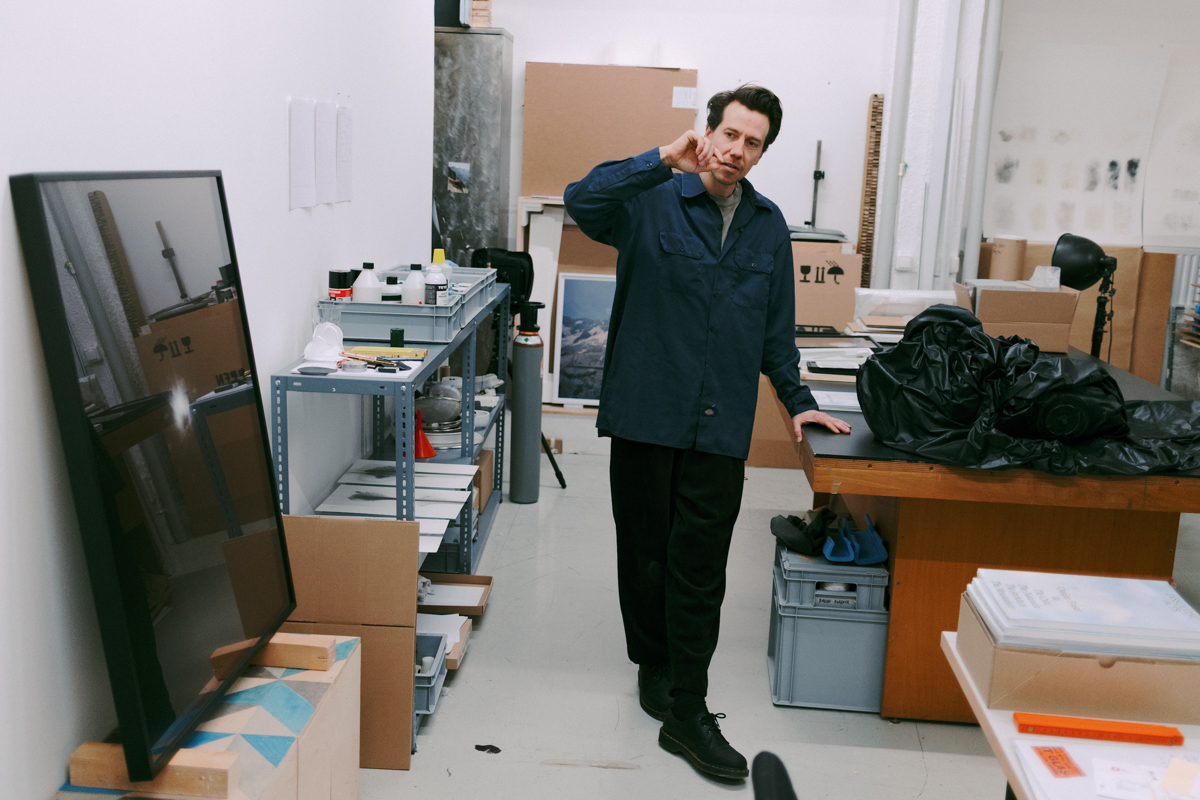
OssianYes, I think hyper-awareness and observation are among my main tools. I work less in the sense of “inventing” and more through a kind of situational creativity. In that sense, I relate to certain aspects of the Situationists – their use of found materials, which they slightly altered, painted over, or recombined. Without wanting to mystify the creative process, I often allow myself to be guided by the atmosphere of a situation: exploring a city through aimless wandering, beginning a process without knowing the outcome, establishing connections where none seem to exist.
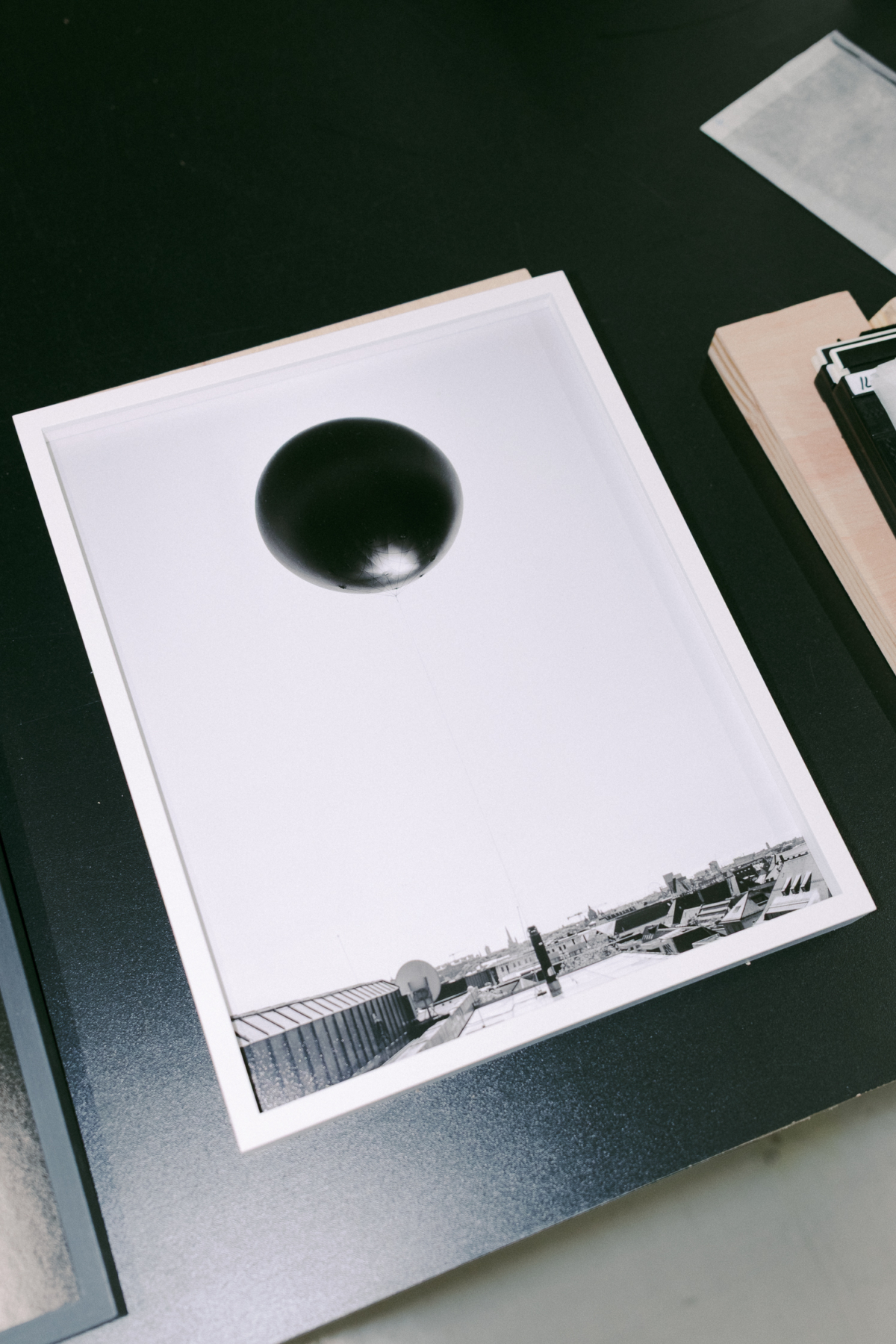
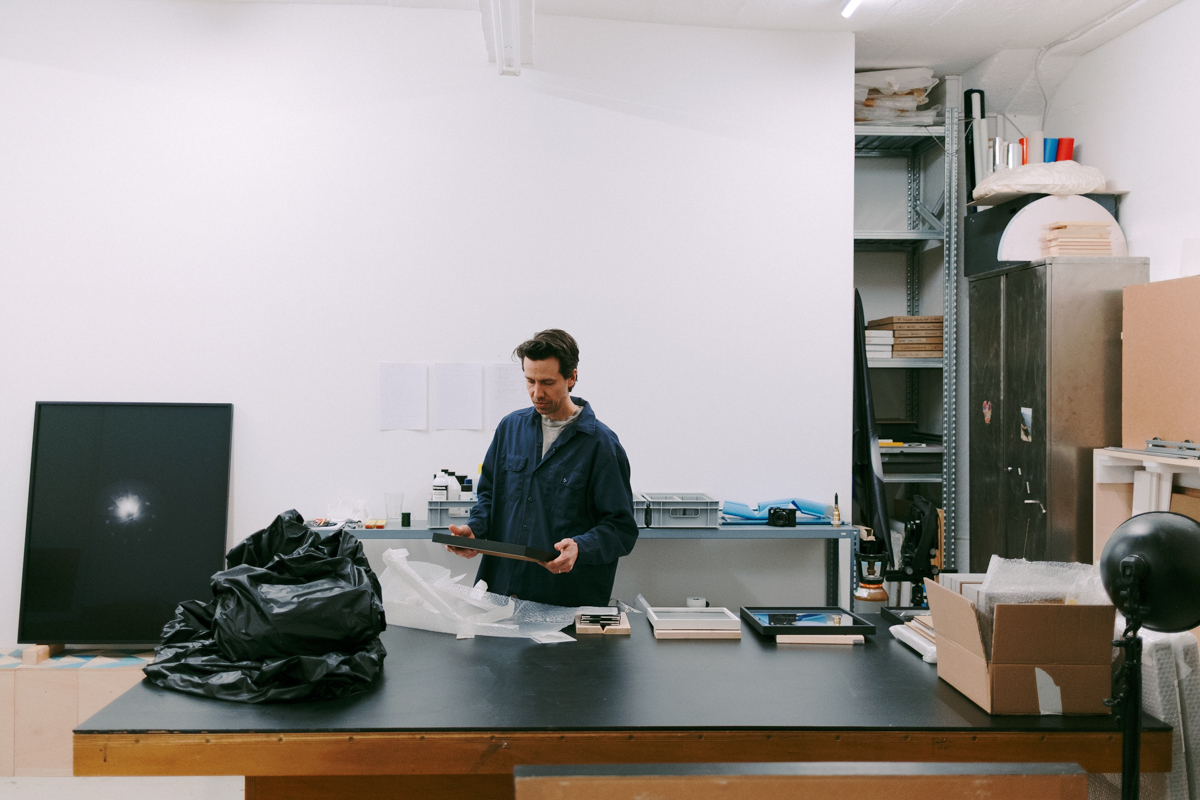
I work in a process-oriented and material-driven way. My images often emerge from mundane situations rather than from forced creativity. At the same time, the final photographs or sculptures are often meticulously staged – anything but snapshots. Many of my works are also designed to change over time: they evaporate, dissolve, or transform. The materials I use are often inherently volatile.

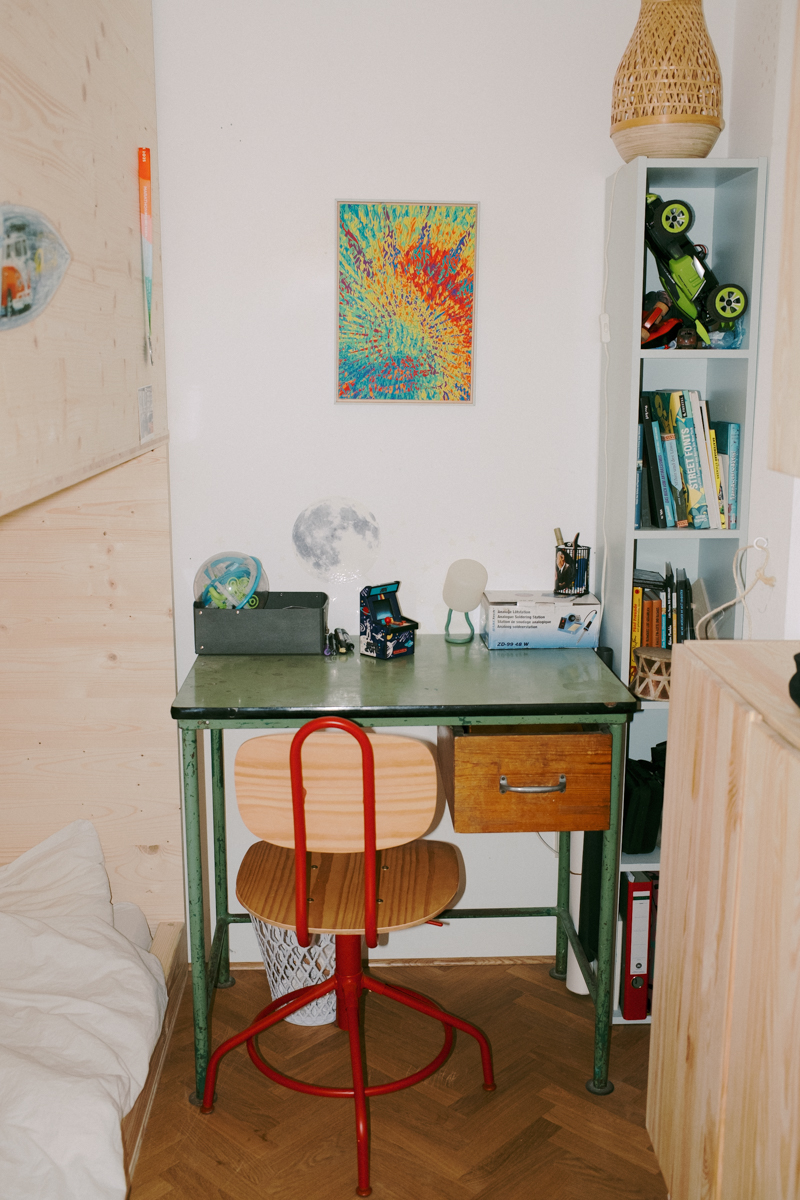
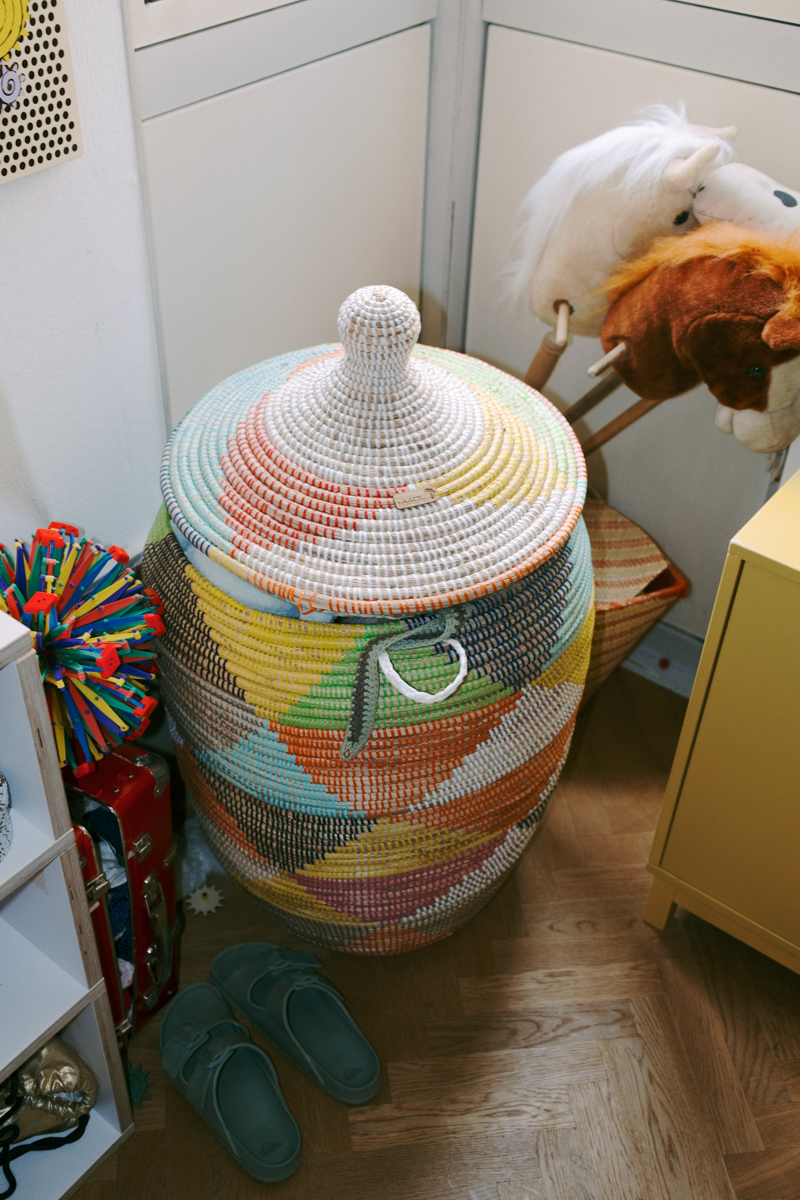
-
FvF
Tell us about a recent project of yours …
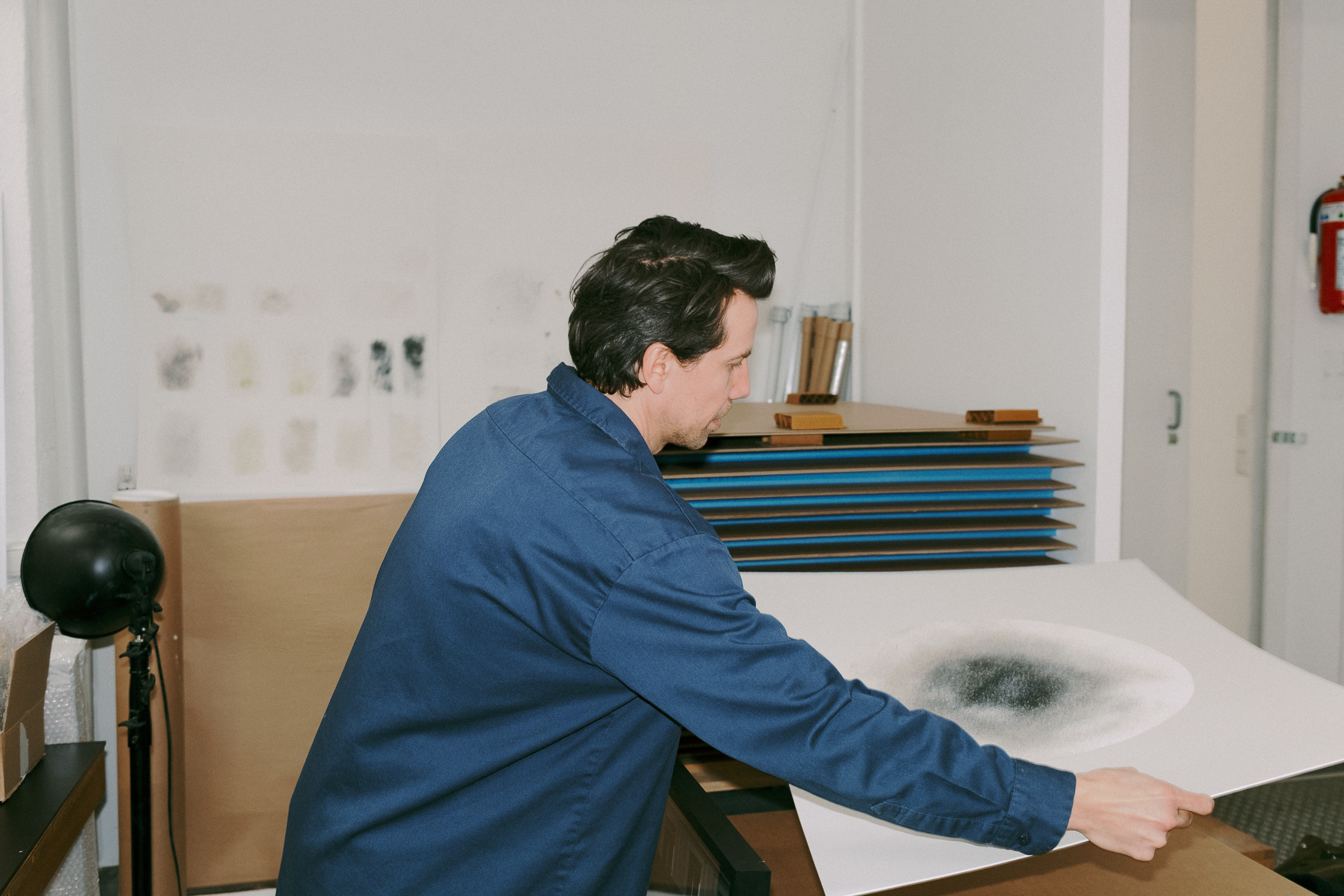
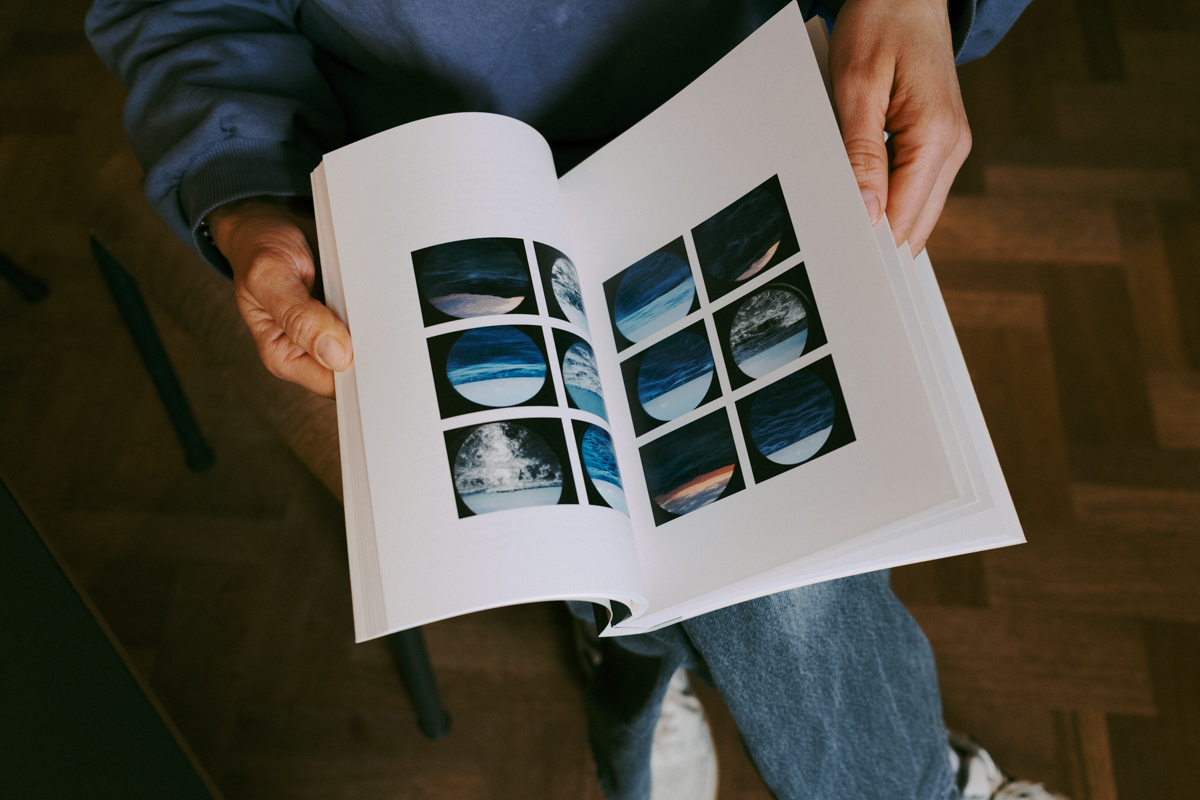
OssianI have long been fascinated by small particles like dust – the smallest material object still visible to the eye, existing at the threshold between the visible and the invisible. I’m interested in taking something maximally inconspicuous seriously: isolating it, shaping it, giving it presence. For a recent series of 20 new works for a hotel in Munich, I collected dust, dirt, and debris directly on site – from vacuum cleaners, construction residue, trash, and buckets filled with leftover renovation material. I ground and refined these materials into fine dust and used them to create 20 different “dust circles” on paper, which are now permanently installed in the hotel. In a way, the very material everyone tries to remove and fight against was transformed into something worth looking at.

-
FvF
Teresa, even though you didn’t become an architect like your father, Otto Steidle, his influence seems present in everything you do. How would you describe your relationship to the ‘spaces’ and values he left behind?
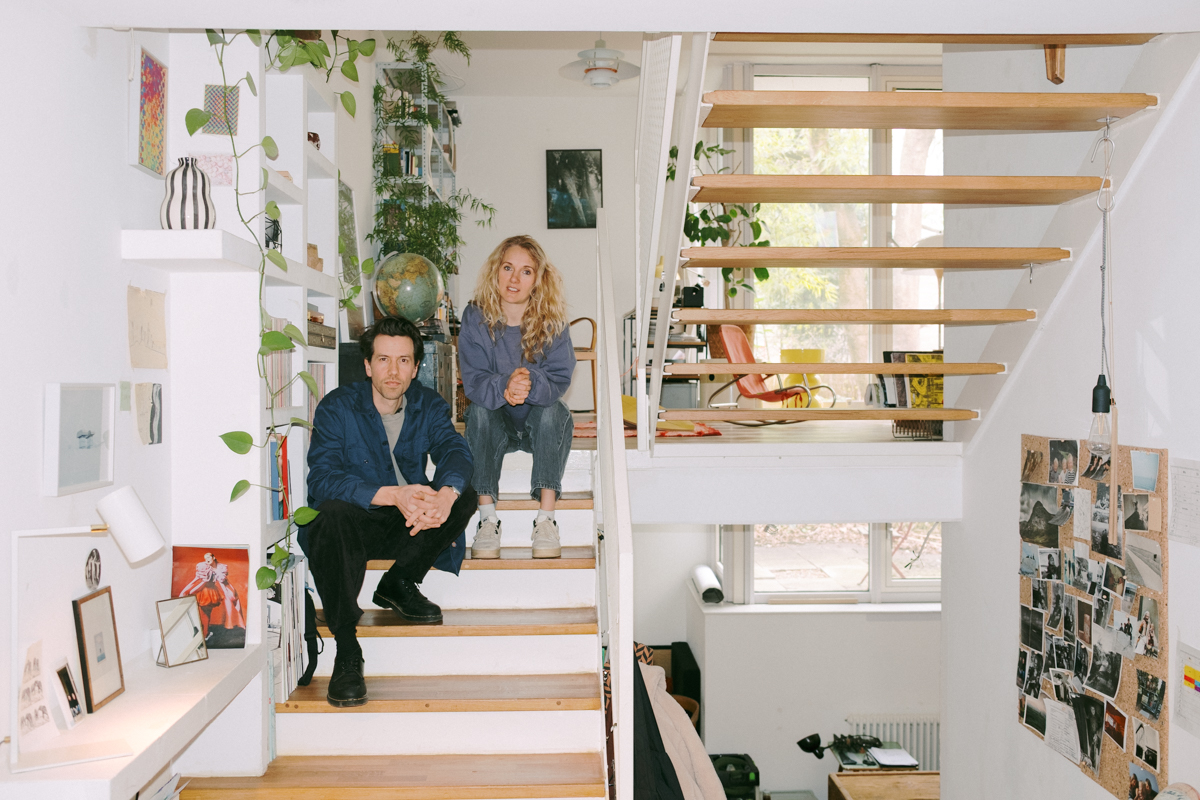
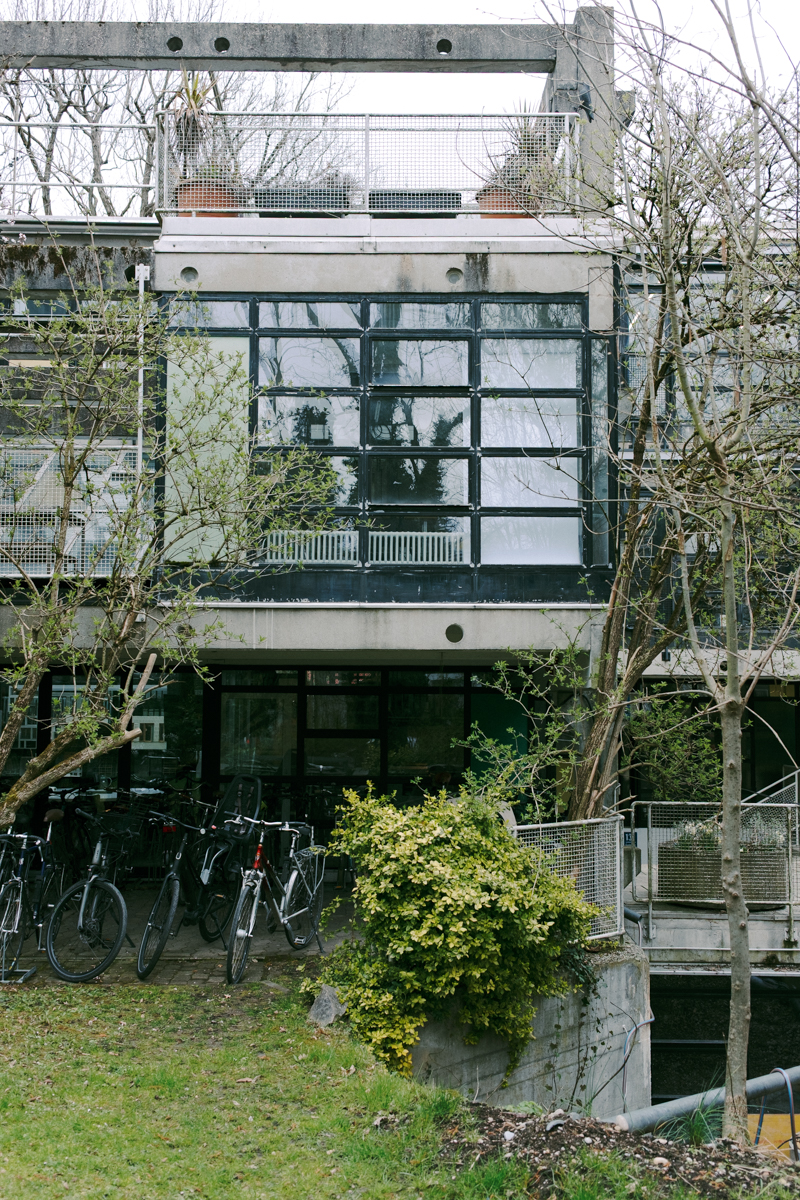
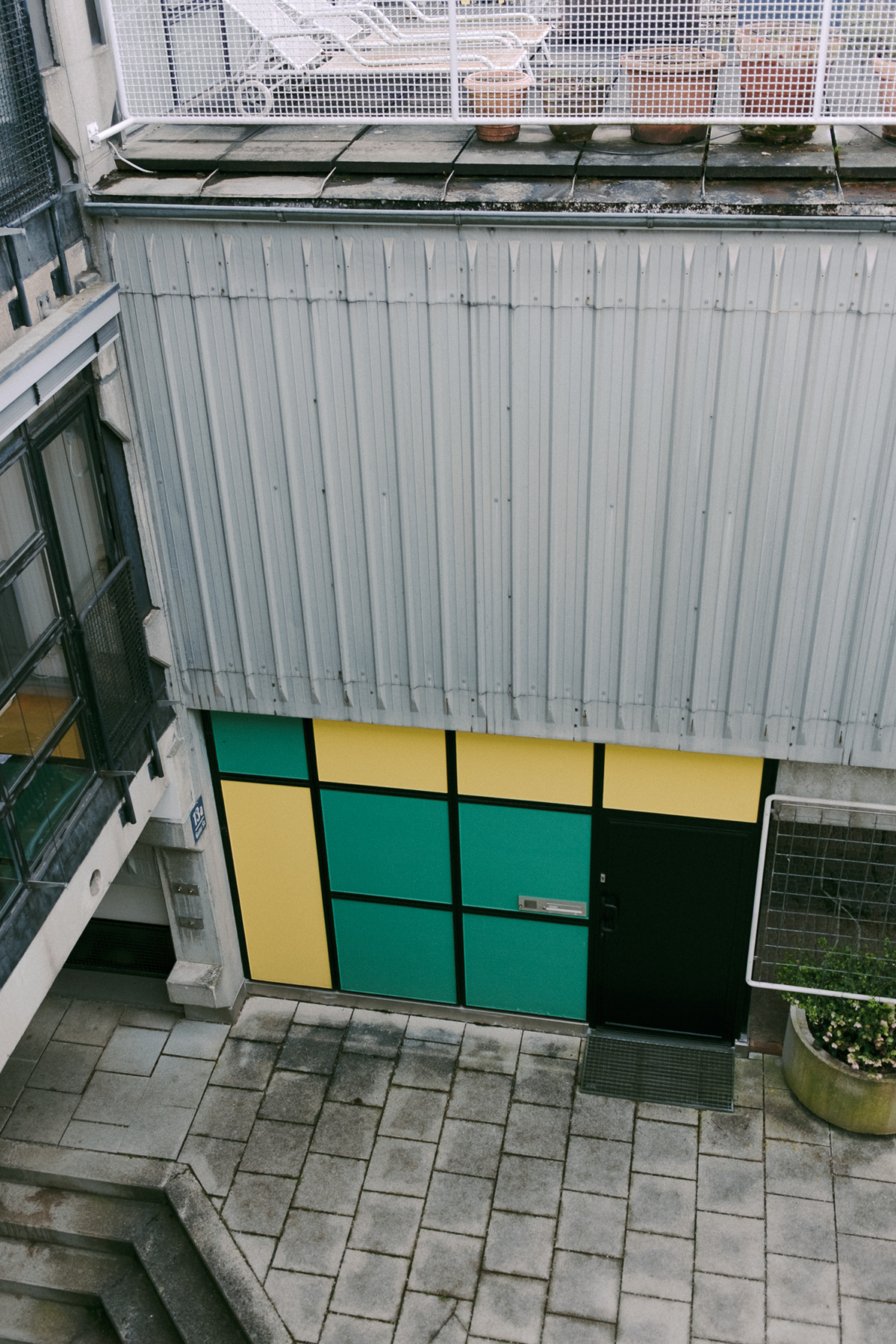
TeresaEven though I’m not directly involved in managing my father’s archive, his work is a natural part of my everyday life – simply through living surrounded by his architecture and everything he left behind. His understanding of form, aesthetics, and above all his focus on creating spaces for encounter has shaped me in a quiet, almost self-evident way. I did not go into architecture myself, but the values behind his work – especially his interest in social structures and community – continue strongly in what I do and what interests me. Living in a space he designed, we experience it every day. We have a very strong connection with our neighbours, it’s very lively.
Recognising his architecture has always been interesting to me. Sometimes I see his building from a train, in the corner of my eye – it’s like a smell you remember from your childhood. I would always recognise my father’s buildings. It’s not something I can explain, it’s just there.


-
FvF
This seems to connect very well with the Salon am Moritzplatz, which you two founded many moons ago.
TeresaAbsolutely. Even though it began in Berlin as a very concrete, physical place, it was never exclusively tied to one location. It emerged more from us – as a couple as well – and from a shared interest in creating spaces for exchange and presence.
Today, it feels less like a fixed place and more like an attitude or a form of hospitality. At the same time, it still takes on very concrete forms – for example at our courtyard of our farm in Lower Bavaria, where friends and artists come together to work, spend time, and let something grow collectively. This is something we want to continue developing – in the spirit of the salon, but in a different, more rural context.
Underlying all of this is a certain way of moving through the world: staying open, sensing when something wants to emerge, and not trying to force it. The concept of Kairos describes this very well for me – a trust in the right moment, rather than following a fixed plan.

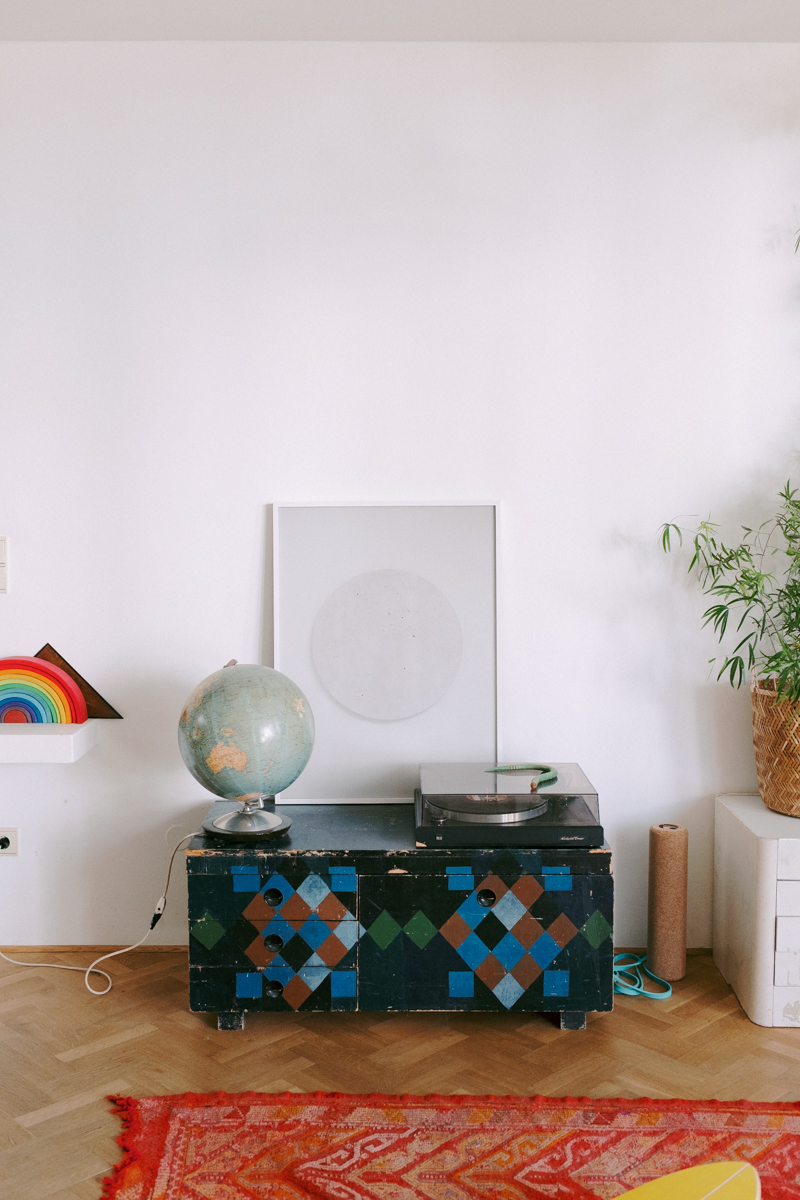
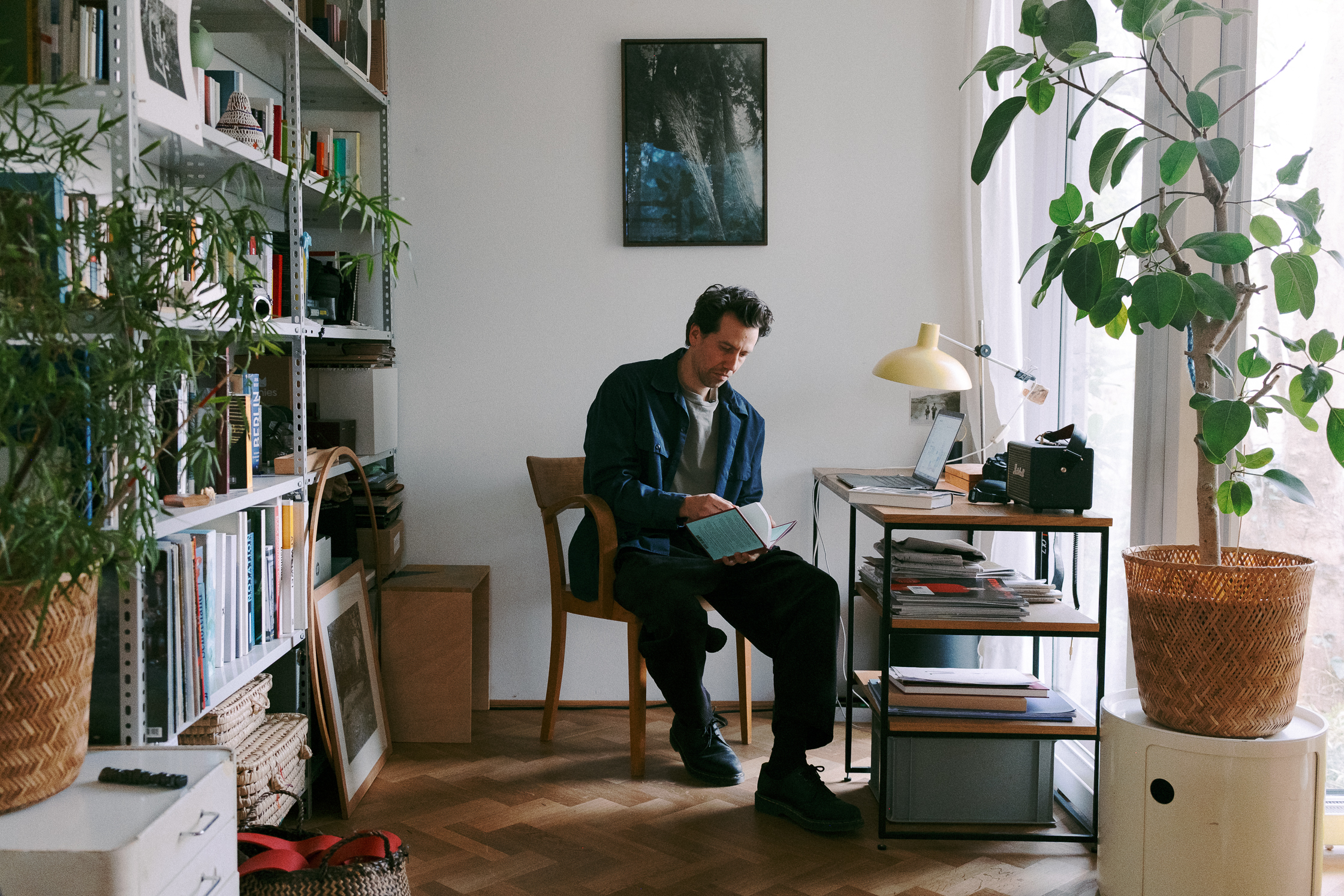
-
FvF
Tell us a bit more about the Salon.
TeresaWe started the Salon at Moritzplatz in Berlin, as we had the chance to use the space: It was my dad’s office, and when the architects moved out – that was our chance, something that had already lived inside of us, as we’ve always loved to invite people, to host, open doors. That was eventually manifested in that room that became empty. It started with an exhibition of Weissensee students, with Tango nights, jazz gigs organised by friends of ours – it soon became a place for really good concerts, and then unfolded a life of its own.
OssianWe started to call it a salon a year later. It was our extended living space – we lived in the back of the building, private and public were strongly connected. It was an attitude, not an institution. Here Otto’s spirit came in, too. The salon is about exchange, nothing is predetermined. We just let things happen.
Running the space together with Teresa had a strong influence on both my artistic practice and the way I think about community. We were both never interested in creating a space based on a strict curatorial masterplan, but rather in building a framework in which something could happen. In a way, that also defines my own artistic work: I create a setup that allows situations, encounters, or images to emerge without fully controlling them.


-
FvF
And then you moved to Munich …
TeresaThe main reason for the move was the place where I grew up: a farm in rural Lower Bavaria, where my mother still lives. It had always been a very lively place. My father used to bring students and colleagues there to work on projects or prepare for competitions, so although it was a very remote place, it never felt isolated.
At the same time as our move to Munich, my brother Leonard Steidle joined Steidle Architekten, the office founded by our father, just a few minutes from where we live today. Since then, we have continued to run the farm together. Munich allows us to move naturally between two very different worlds. During the week we are in the city, where our kids go to school; weekends and holidays we mostly spent on the farm. There is always lot of work to do on the farm, but it is equally a place where we recharge – through the openness of the landscape, nature, the horses, and the physicality of working with our hands.
Artists and friends come to the farm throughout the year. In many ways, it feels like a quiet continuation of the Salon in Berlin, and we are currently developing ideas for a residency.
OssianThe general understanding of the salon hasn’t really changed since moving to Munich – it simply adapted to a different city and a different moment in life. In 2024, I founded Atelier Auen, a shared studio for artists, photographers, filmmakers, writers, and other creatives. Again, much of the exchange and sense of community grows through daily proximity: different people working side by side, film nights, open studios, regular dinners, and parties. People from very different backgrounds pass by for studio visits, so there is almost always something happening.


-
FvF
What were the most surprising elements of Munich for you?
OssianI found a place for Atelier Auen in a rather central location, and it was a total surprise that you can still find a place like this, with a landlord who’s really supportive of our work, in a city like Munich.
What surprised me most when we moved from Berlin to Munich was that things here feel very much in motion. Some venues and initiatives are gradually bringing new energy into the art scene, and several young, exciting galleries have opened in recent years. That feels important in a city shaped by many long-established institutions and museums. In 2024, I had my first exhibition and collaboration with NOUVEAUX DEUXDEUX, a gallery founded in 2023. Then there is Various Others every May, which creates strong connections within the local scene while also making Munich more international and visible from the outside.
Of course, these are only snapshots, and it is hard to know how things will develop in the current climate. It certainly won’t be easy, and much more political commitment is needed if culture is meant to remain an essential part of society – and not just a decorative add-on.
TeresaYou have all these clichés about Munich, and particularly after 15 years of Berlin, it felt like an enormous change. I was a little scared of losing the Berlin “sexiness”. But Munich also has a lot of very sexy spots. I was surprised about how many beautiful people we met, who became very close friends in a really short time. The main advantage here is nature, and it seems that it makes people a lot more relaxed. You’re so connected to all the elements, the English Garden, the river – you see the entire team of Haus der Kunst in the river in their lunchbreak. We would have never chosen the city if it wasn’t for the farm and my mother, but now we feel very lucky to live here.

-
FvF
You met in the raw, late-night energy of the Berlin Tango scene …
OssianTango was connected to the night, Berlin Claerchens Ballhaus, Roter Salon, Buenos Aires. Now, we don’t have that much time at night. We still dance Tango, but very rarely.
My parents have a Tango school, which is how I discovered that dance. I heard that Berlin had a proper Tango scene, and I was curious to check it out. We used to dance for years, sometimes almost every night. And that stays with us. We still have the network. It’s a very different crowd from the art world, and it was very refreshing. We don’t miss the scene a lot in our daily life, but when we go out and dance, we can reconnect immediately.

-
FvF
Teresa, after Tango: how has your relationship with movement changed over the years, and where has it led you today?
TeresaMy connection to tango – and to movement in general – has evolved quite a bit.
What began in a more intense and immediate context has, over time, become quieter and more integrated. When we dance, which happens rather rarely now, it still feels like a connection to that original spark – and at the same time to everything that grew from it.
This connection also led me to my work with Gyrotonic, which I originally discovered through tango and which I continue today, alongside other projects, as a trainer. More generally, I notice that I’m less interested in roles or professions and much more in the person in front of me – what moves them, where they are real. For me, that is where a true encounter begins.

-
FvF
In your Munich home, what is one object that is absolutely essential to your well-being but has nothing to do with work?
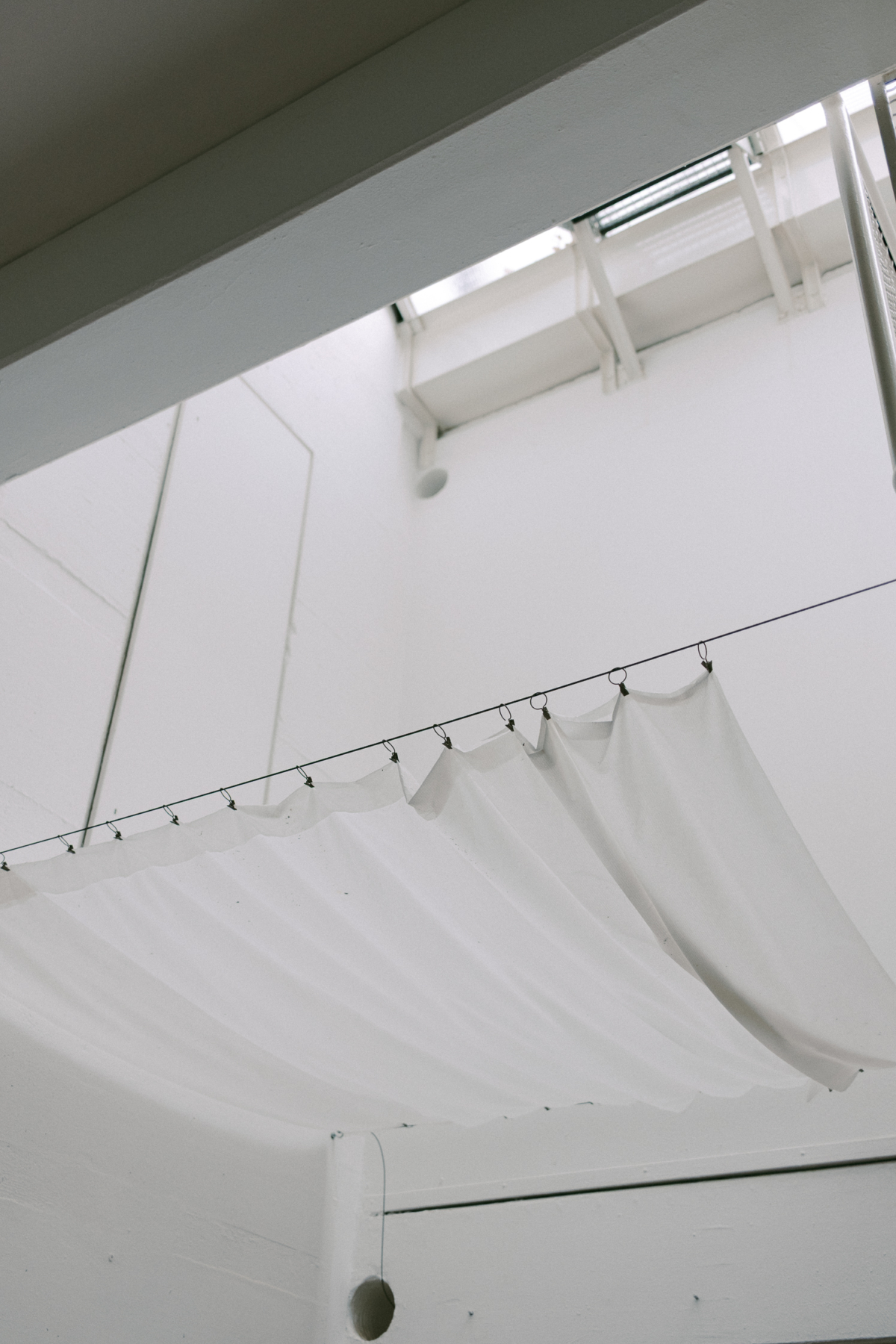
TeresaFlowers. The living space is not the same without flowers. I love arranging them. It’s part of the hospitality philosophy. As soon as spring comes along, I always collect flowers from the farm. It’s such a grounding experience, and connects the farm with our Munich home.
OssianWe often have to stop the car for Teresa to pick flowers on our way back home …


-
FvF
What is your favourite soundscape at home?
OssianSilence (smiles). Obviously our life as a family is full of sound, noise, and everything in between. But its interesting. There is this idea of silence as a construct, something that in its absolute form might never actually exist and could even be unbearable for humans if it did. The researcher Rui Zhe Goh puts it in a very interesting way: “Surprisingly, our work suggests that nothingness is also something that can be heard.”
TeresaIf there’s music, it has to be very specifically chosen for the moment.


-
FvF
And what about your favourite lighting situation?
OssianWe’re very aligned here. We have a tricky situation, as the apartment is relatively dark, it’s in a back yard. I love the paintings of Rembrandt with very little, but very focused light. We like our lighting to be warm, and for it to be rather reduced. On the farm it’s the same thing. It gets really, really dark. And then we have very little light, just a dot, which shows you that people are living there, almost like stars.
TeresaWe always have a candle on our table – a pure one, no smell, rather simple – but we don’t spread candles all over the apartment.



-
FvF
What about favourite scents?
TeresaI love the smell of the first coffee in the morning, and of our flowers, of course. And the most important is fresh air.
OssianOur door is always open, people freeze in our apartment. We hardly ever use the heating. We love the natural smells coming in from the outside. Not the artificial, perfume world.


-
FvF
Where do you allow yourselves to be vulnerable in your work, and in a city that often prizes polished perfection?
OssianThinking about a spot where I feel vulnerable is kindness. I have this book by Robert Adams & Barbara Taylor “On Kindness” – there’s often a misunderstanding between being nice and being kind. Niceness is connected to being polite – it’s more strategic, maybe even manipulative. Kindness is more real, deeper, authentic – it means you’re very aware of your surroundings, something more intrinsic. And it can be suppressed sometimes. It’s so much more common to be professional, and cool, particularly in the art scene. It sounds strange, as most of the people you meet are kind when you really get to know them.
We both have that with other people, and it can be misunderstood, that people think we’re too nice, that we don’t have clear boundaries. For me, that’s such an important quality, we can’t live without kindness, can’t be together without it.
TeresaBeing in the countryside brings the best out of people, and really nourishes kindness. Encounters out there are so different, it’s fascinating. People really get to know me, and I get to know them, once we are out there. The place is magical, somehow.
OssianIf you think of adults meeting children, that’s also something where kindness happens all the time. Imagine children growing up without kindness! So it seems kindness is easier with children than with adults. So strange. Why is that so? It really shouldn’t be a nice add-on, but something fundamental.
TeresaI remember we were in Scotland at a family friend’s gathering, and our three year old son took the camera and took pictures of everyone. Everyone looked so different, such different expressions on their faces. That’s the kindness expression.


-
FvF
If you could have dinner with any creative figure at a local Munich Wirtshaus, but you could not talk about their work, what would you discuss instead?
TeresaNot talking about work is definitely not a challenge. I am so much more interested in the person behind the work, where they feel real, where I can connect with them. There are some people I would love to be friends with, like Zaho de Sagazan (and it’s not just the music), or Teddy the comedian, there are quite a few.
OssianIf I could choose, I’d probably have dinner with Hannah Arendt. Not necessarily to talk about politics directly, but because I’m interested in the way she thought about responsibility, friendship, and how people act within unstable times. When you look at everything happening in the world, there is often the feeling that the people we would need right now – those who could bring clarity, perspective, or the courage to act – are somehow missing. But maybe that is the wrong thought. Maybe they are not missing; maybe the question is whether we are willing to take responsibility ourselves. What I find valuable in Arendt is precisely that she resists passive observation. She reminds us that political life begins in very concrete forms of action – in solidarity, in friendship, in how we decide to relate to others.

-
FvF
Ossian, what genuinely “scares” you in a purely professional sense?
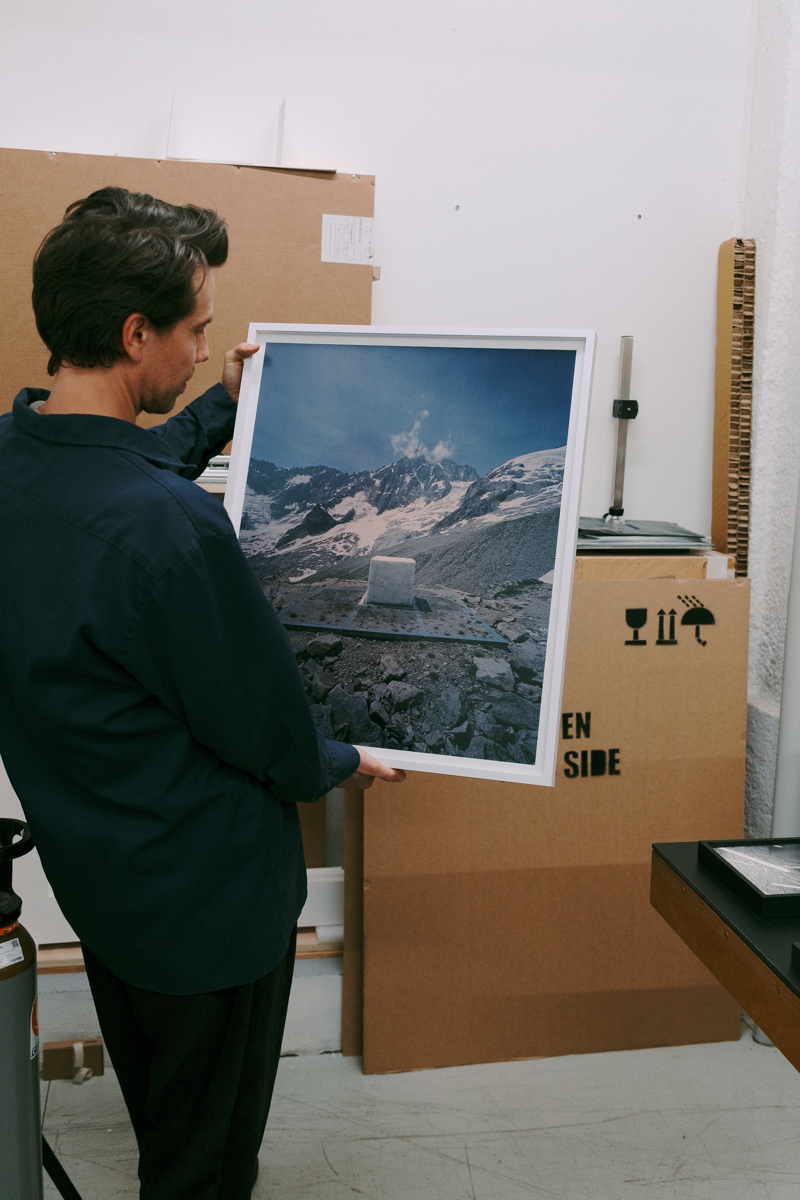
OssianWe have a tray from a museum in Arles by the Thai artist Rirkrit Tiravanija that says “Fear eats the soul”. I was invited to work in a mountain hut in Switzerland a while ago, a project about art meeting mountaineering, and it was very important to the organisers for the artist to be respectful with the mountains. So there was a fear about creating the opposite of what I was trying to do. A fear that this could be misunderstood. And I have these situations every now and then where I doubt if I’m going too far. I often work with materials that I find, and don’t use huge amounts of artificial plastic, but there’s always doubts around whether I interfere too much.

-
FvF
If your home could tell one truth about you that your audience never sees, what would it say about Ossian & Teresa?
TeresaOur friend and neighbour once described our home as intertwingularity, meaning that we live Kairos-style. We always live from moment to moment. We very much trust the process, the flow. Of course we love to be goofy when we’re alone at home, jumping into cozy jumpers. We’re so used to an open door, so the possibility of someone coming in is always there.
OssianWe don’t really have any privacy at home (laughing), but that’s just us, our life.