To the public, Lukas Feireiss is a master of the “curatorial gaze”—a bridge-builder between architecture, art, and spatial theory who translates complex ideas for the world’s most prestigious stages. But to understand the man behind the lectures at UdK, the high-octane exhibition openings, and his Reiki practice, one must look toward the quieter “ways of being” that define his private sphere. For Lukas, curation is not merely a professional output; it is a fundamental act of cura—of care. Whether he is navigating the ecstatic influences of his sprawling library, tending to his balcony plants, or finding “magical” resonance in a wooden stick kept since 1996, Lukas operates with a radical transparency that blurs the line between the polymath and the person. In our intimate exploration, we sat down with the mediator to discuss the “shady” mess of his desk drawers, his intellectual sparring matches with AI, and the profound strength found in vulnerability. It is a look at a life lived not just as a performance, but as a deliberate, tactile collage of memory, ritual, and resonance.



-
FvF
Lukas – would you kindly describe the choreography of your first thirty minutes of the day.
Lukas FeireissMost days, my alarm rings at 6am. Then I prepare breakfast, and lunch, for my daughter. I take a quick shower and then I meditate. By the time I come out of meditation I wake up my daughter and prepare her for school. I meditate every day, 20 minutes purely dedicated to my practice. It’s been 10 years already since I started – back then, I was traveling a lot, and I needed something to ground me. I had always been interested in that field, there was always a fascination. I went to different Buddhist temples at first, then began to incorporate meditation into my daily life, and routine.

-
FvF
You frequently move between the high-octane energy of an exhibition opening, a lecture at UdK, a highly focused Reiki session, and the solitary depth of writing a book. When the ‘curatorial performance’ ends and you return to your private sphere, what is the first mundane ritual you crave to ground yourself?”
Lukas FeireissTaking care of my plants. On my balcony, and in the apartment. There’s lot of plants everywhere. I also smoke out the rooms on a regular basis, like a ritual to cleanse out the space. I love using sage, and frankincense – it feels like proper tabula rasa.


-
FvF
Your primary tools are your ‘curatorial gaze’ and your ability to articulate complex ideas through language. How does this constant scanning for connections and meaning impact your ‘off-duty’ life? Do you ever find yourself reflexively ‘curating’ a grocery shelf or a dinner table, or do you have a way to switch off the analytical lens to simply be?
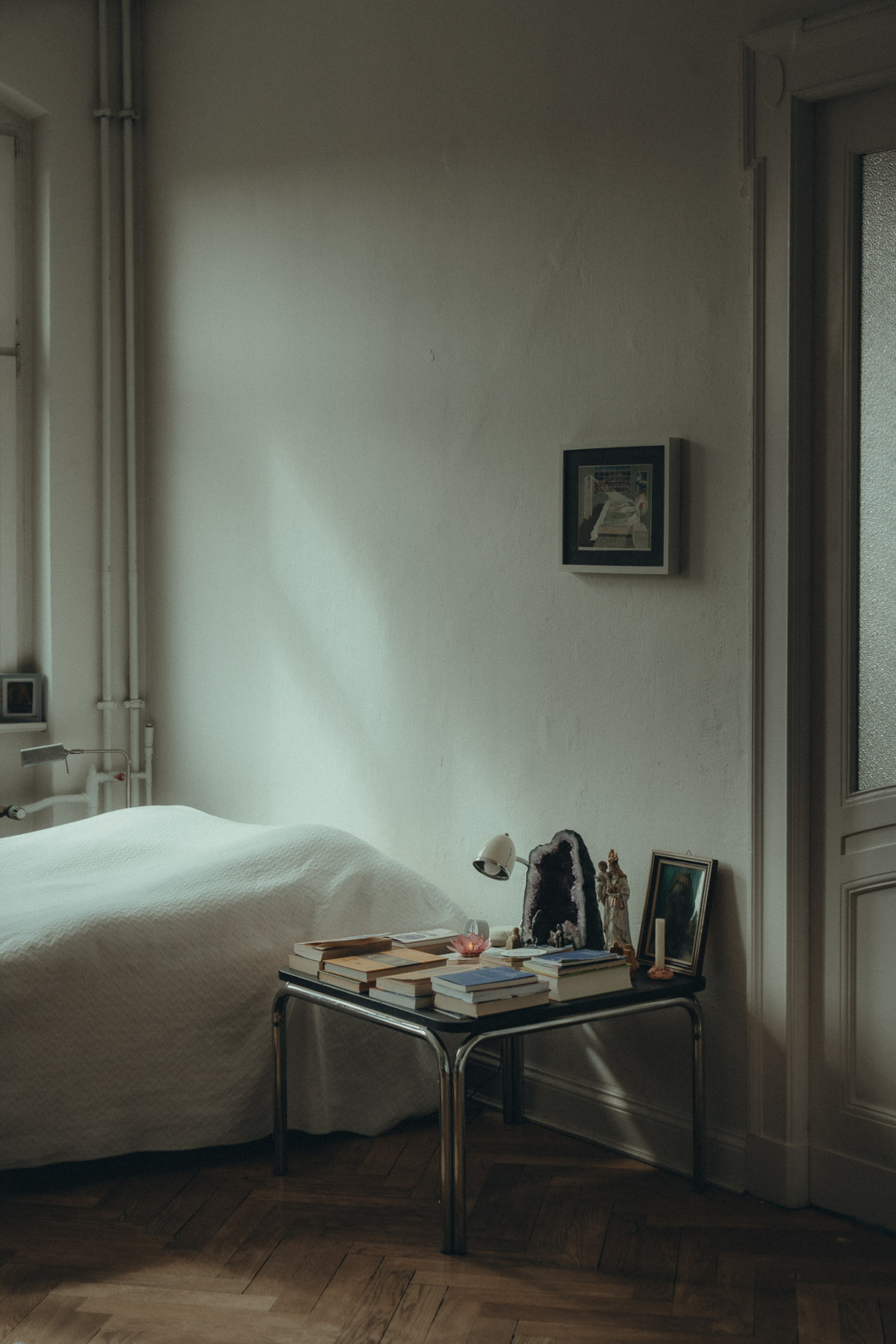
Lukas FeireissI think it’s not so much an analytical lens: Curation for me is a form of taking care. “Curare” means caring for something, both being ‘care-ful’ and taking care. and that’s what I aim to do as much as possible. My work and private life are the same here. The curatorial gaze for me is looking at something with care. I had a high school teacher who had a rather complex personality, but we had a strong connection. He said “Lukas, the core thing about art is ways of seeing. Just look”. He was a very strange character, but his words, and the resulting action, stayed with me until today. To properly look at things. Artists are very well trained in this: They often see a little bit more, see connections that others don’t. I don’t consider myself an artist – I like to connect ideas, people and spaces.
There’s these two books: “Ways of Seeing”, and ”Ways of Being”, which I treasure highly. A lot of people know “Ways of Seeing”, but “Ways of Being”, the newer one, is about a multi-species understanding of the world. We shouldn’t only consider the human perspective in things. I find that absolutely fascinating, and inspiring.


-
FvF
Do you ever feel the weight of your own library?
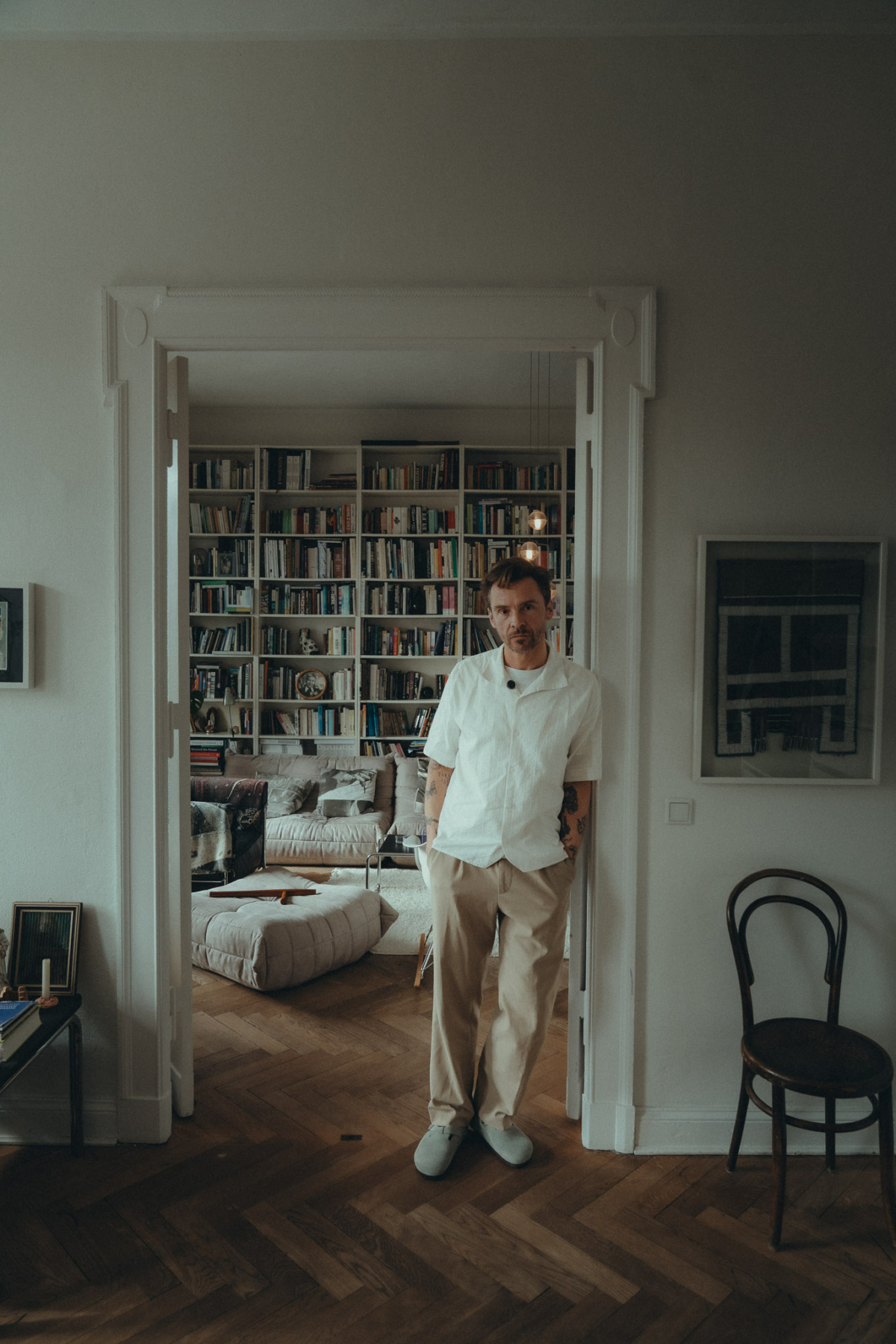
Lukas FeireissMy books are my friends, my companions. The other day I got a new book, and my 8year old daughter said “Daddy, you’re never going to read all these books anyways”. It’s funny how she’s perceiving this. There’s an Essay by Jonathan Latham called “The Ecstasy of Influence” – it’s a play on words of Harold Bloom’s “The Anxiety of Influence”. Bloom’s book is essentially about writer’s block: There are so many influences, it might cause anxiety. Latham says no, it’s not a block, it’s an ecstasy, it should be invigorating. And that is how I work. I don’t attempt to know everything – knowledge works more like a collage for me, and that’s where the beauty lies. If you look at the etymological root of “intelligence”, it’s “inter-legere”, reading between the lines. I’m a nerd for things like that, and they are often very telling.


-
FvF
We often define ourselves by the books and objects we display. But tell us about your ‘shadow archive.’ What is the one drawer, box, or corner of your home that is completely uncurated?
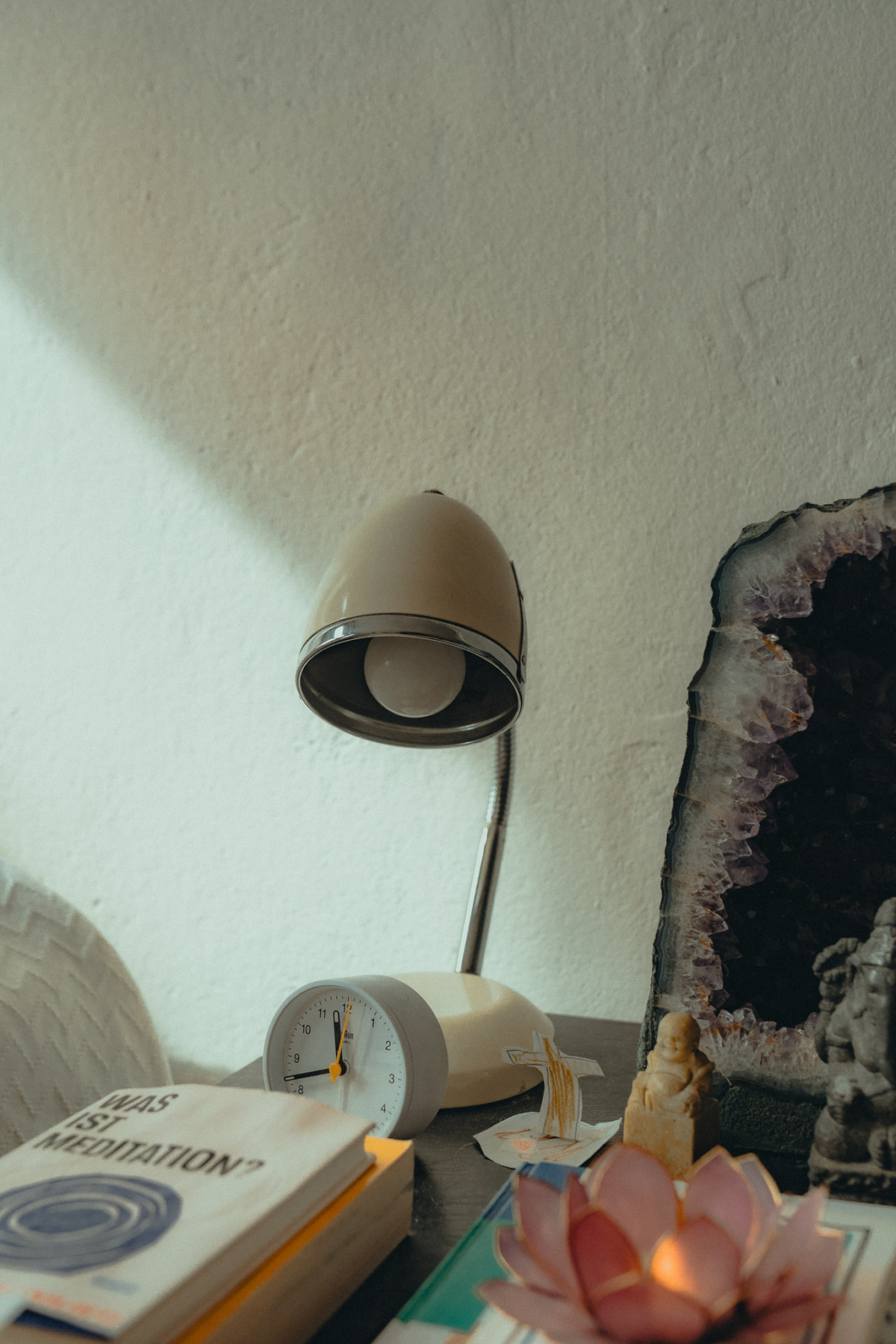
Lukas Feireiss(laughs) It’s a running gag already, as everything in my aparment looks very neat, but every drawer is a complete mess. All drawers are rather “shady”, a proper look into my brain. They look wild. But luckily, they don’t stress me at all. Every time I open them, I have to laugh about myself. Messy is good.

-
FvF
When you are home alone, with no audience and no students, what is the ‘guilty’ or ‘un-intellectual’ activity you indulge in?
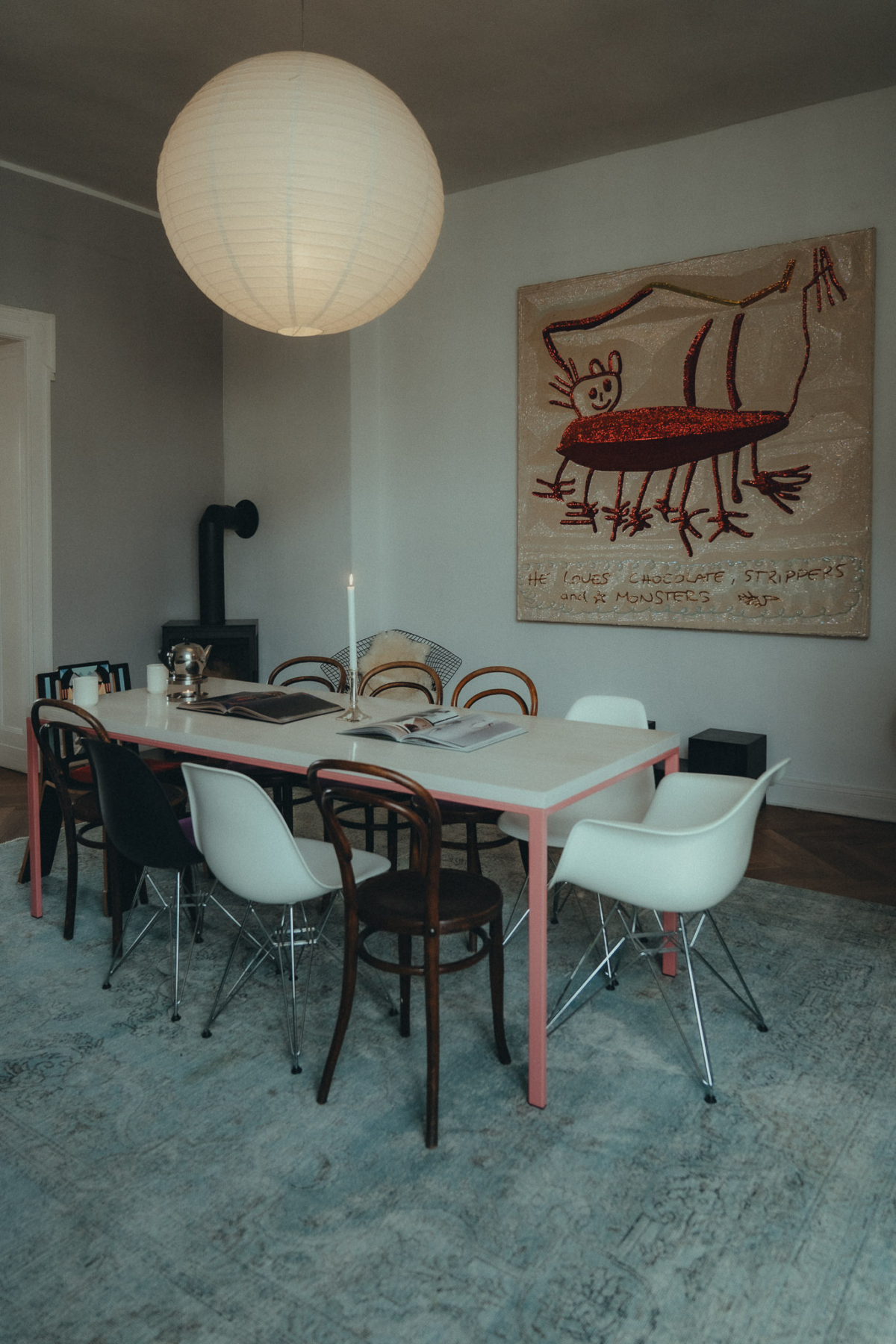
Lukas Feireiss(Smiles.) I sometimes go into a rabbit hole, can be wonderfully entertained with conspiracy theories. I once did a seminar at Gerrit Rietveld Academie in Amsterdam about conspiracy theories in the art world, from Da Vinci to Abramovich. I did it during COVID, completely unintentionally – that was a funny coincidence. There is so much creative potential in conspiracy theories, which I love. One I particularly like is ancient alien theories. The narratives are fascinating.

-
FvF
In a city like Berlin, where social life is often performative and ‘cool,’ how do you curate intimacy?
Lukas FeireissIt’s the same with friends or in my curatorial practice, it all intersects – I have worked with a lot of my friends in one way or another anyways. I love hosting, and that comes with responsibilities. Gathering is an art: How you make people feel seen, and make them feel comfortable. I often appear on stages, hold spaces, but that’s more relational than performative. It’s something I do intuitively. I curate intimacy by creating a safe space. I always have the audience in mind, no matter where I am.
Intimacy is created also by revealing and sharing myself. I try to be transparent, and authentic, which always helps. It’s crucial to act almost like a role model – how I move, and behave has such a big influence on how the room behaves. I don’t believe in bad students, but I strongly believe in bad teachers. I never call it teaching, it’s co-learning for me. I started learning when I started teaching. Everything always starts with how I show up.

-
FvF
Your studio and home are filled with design and art. But what is one object in your space that holds zero ‘aesthetic’ or ‘academic’ value that is essential to your mental well-being?”
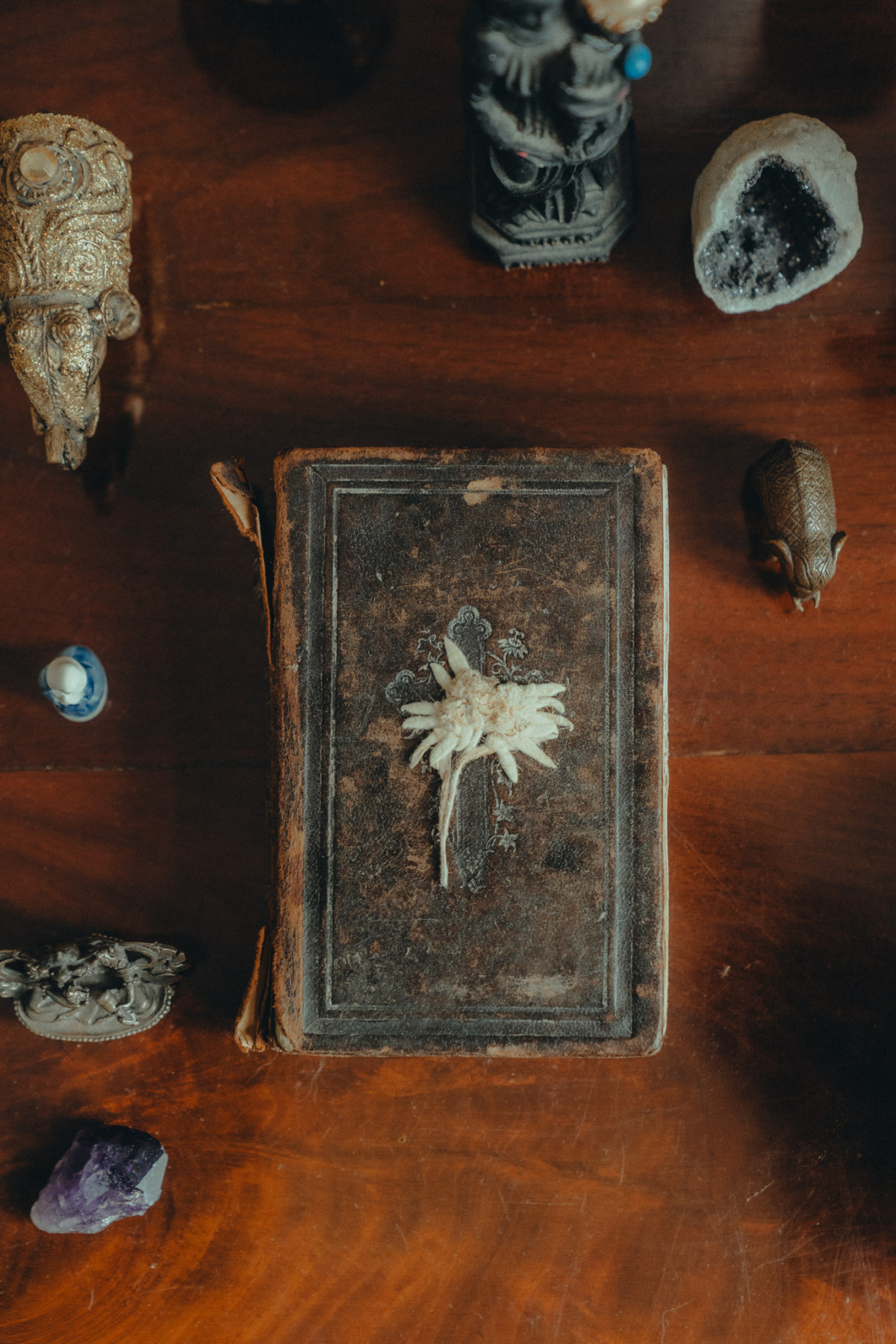
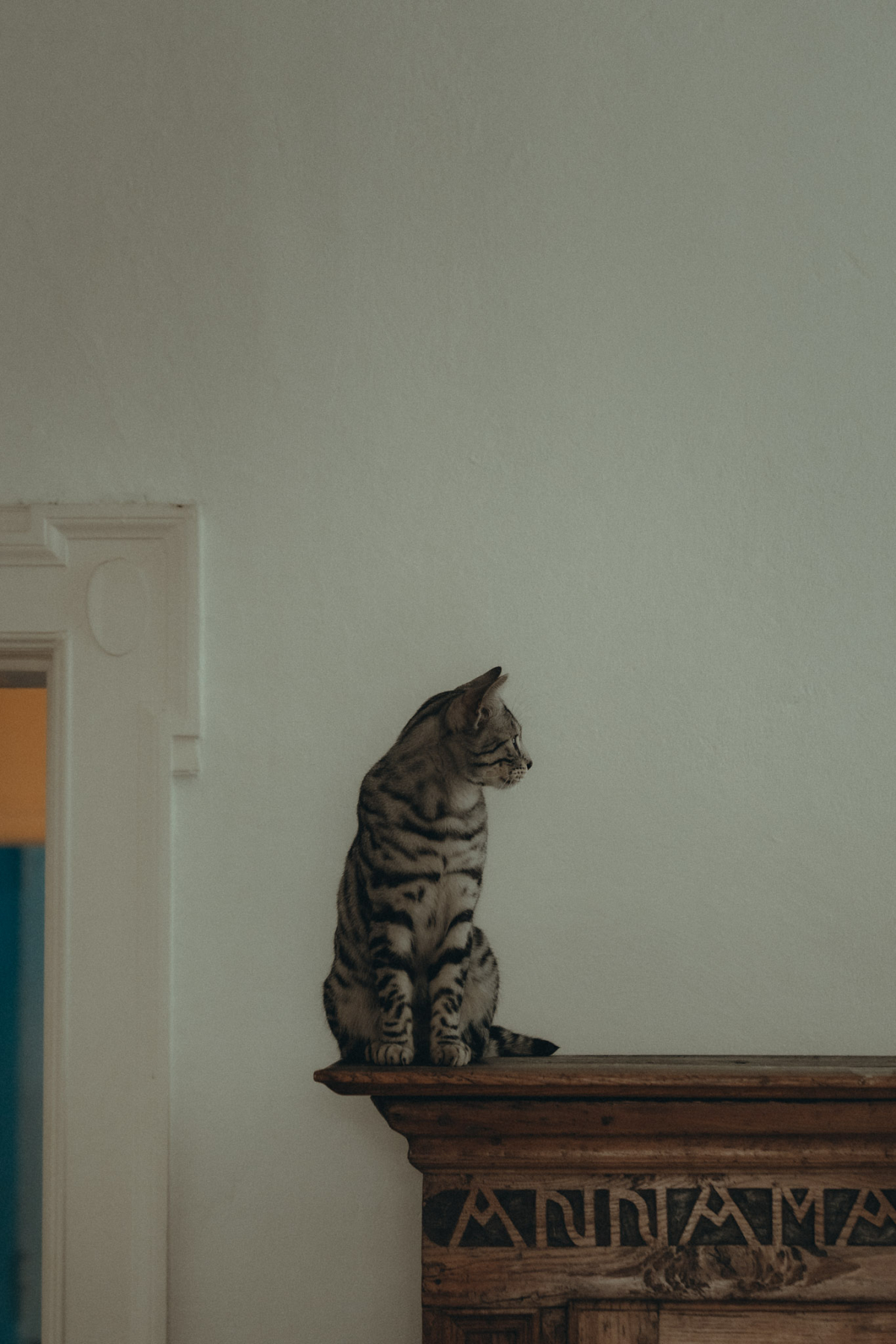
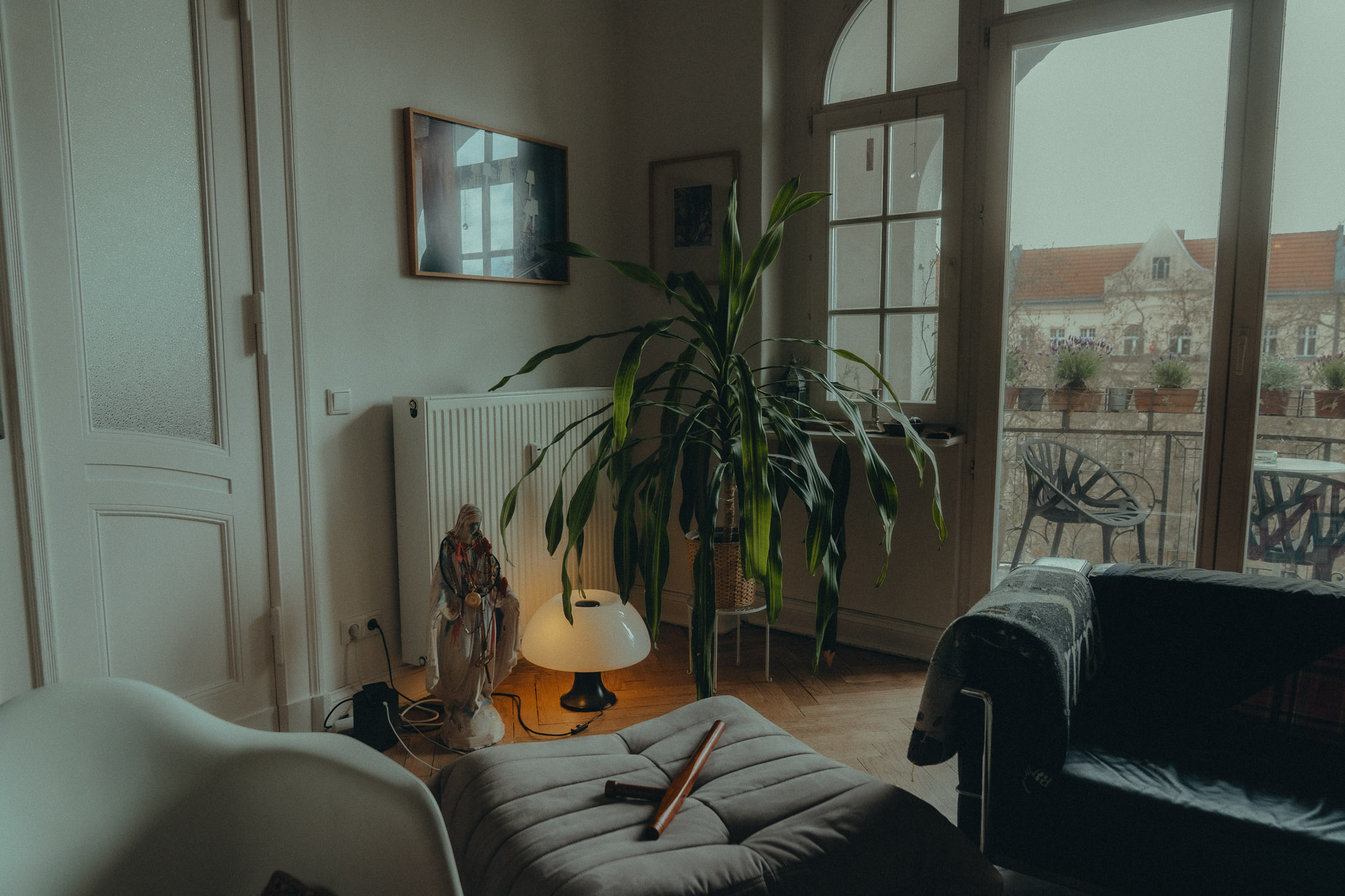
Lukas FeireissI have a huge collection of drawings and sculptures my daughter makes. There are so many of them, and I can’t possibly throw any of them away. In general, I have a lot of family memorabilia that is spread throughout the entire apartment, whether it’s a wooden cross from my grandmother, or a dried Edelweiss from my late uncle. I keep things, I collect things. They don’t have concrete monetary value, but I’m rather sentimental here: I have a wooded stick that I found on an island in 1996 – when I went to Indonesia for 3 months with my closest friends. I carried this stick for the entire duration of my travels, and I still have it now. These things have an aura for me, a magical quality that I cherish.


-
FvF
Does your childhood home “haunt” your current domestic aesthetic?
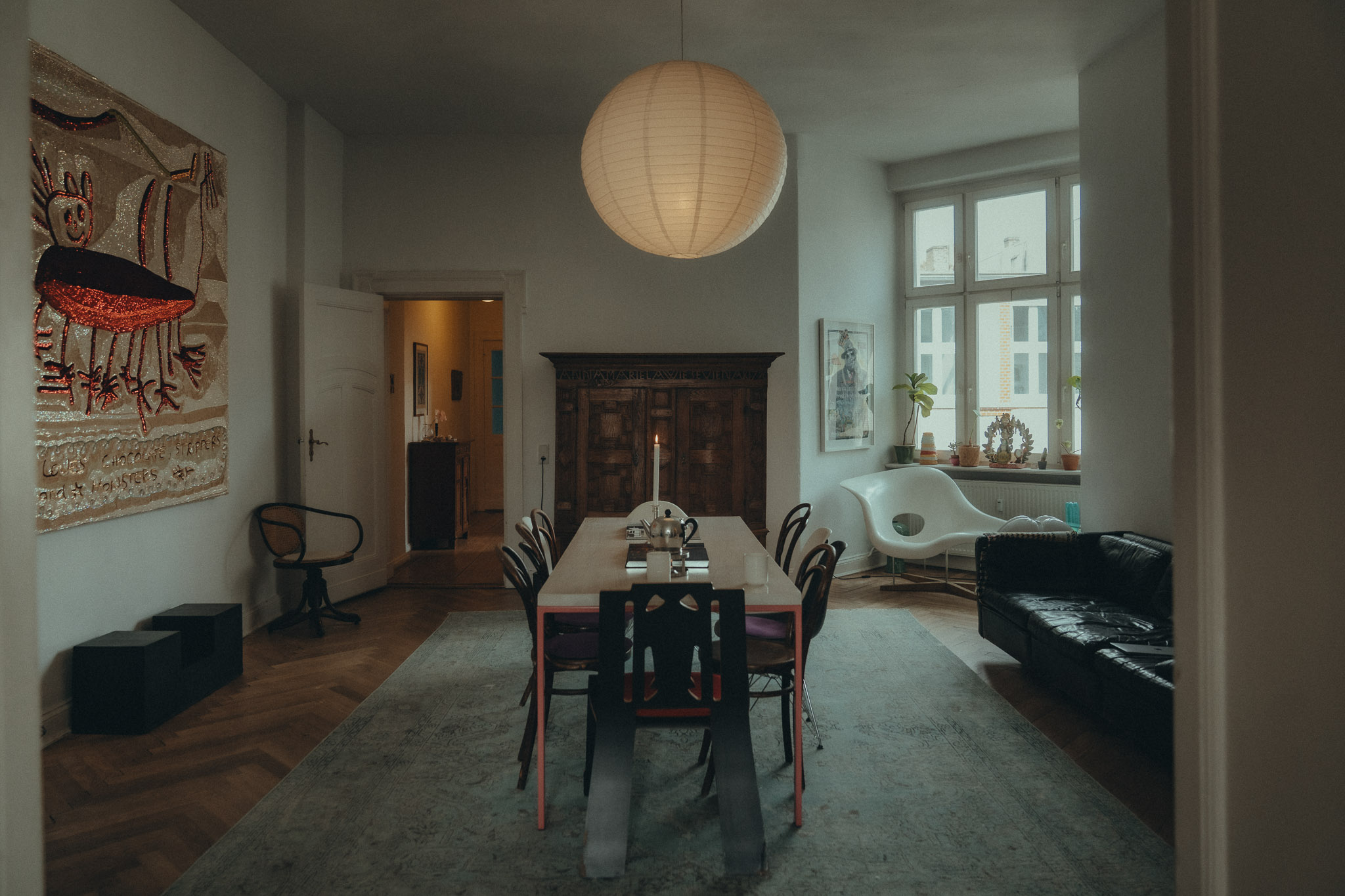
Lukas FeireissMy current home is most definitely a continuation of my childhood home. In my apartment, I have so many pieces from the house I grew up in during the first 18 years of my life. Both of my parents have already passed away, and I got to keep a lot of memories from both their places. If you know my family, every single room contains reminders of my past. They are something that really gives me stability and safety. The couch in the dining room, for example, has been around since I was two years old. There’s real legacy. And yet I do my own collage of pieces old and new, to make it mine.



-
FvF
Every home has a specific ‘base note’. What is the sensory hallmark of your home that immediately signals to your nervous system that you are safe and ‘off the clock’?
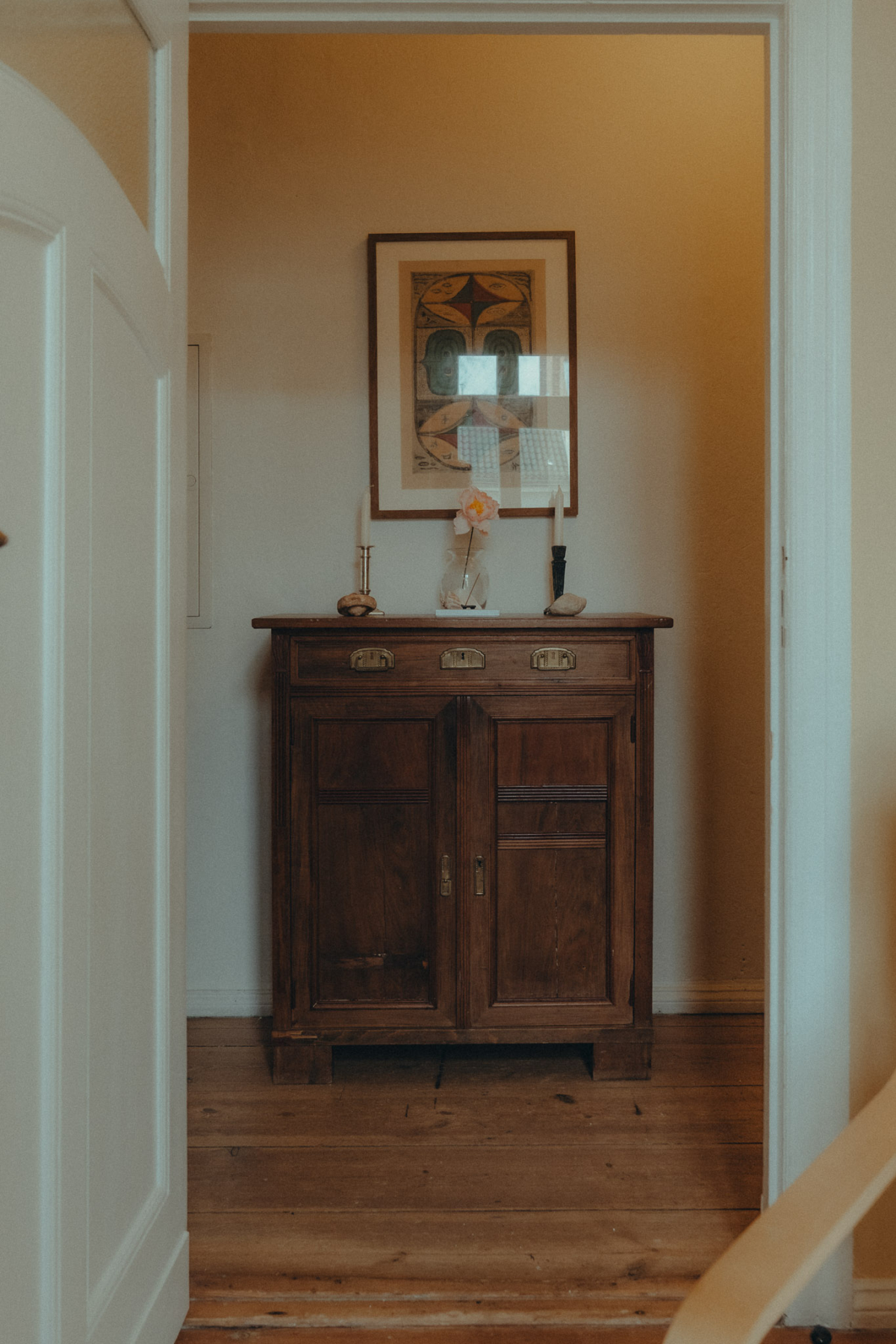
Lukas FeireissMy home has a certain calm when you enter it. I immediately relax when I come home. A year and a half ago I had a moment of “Bildersturm”, where I took down all of the paintings, and then only selected a single one for every wall. Before I had a Petersburg Hanging, layers of images. Then I repainted the entire apartment, and it felt like a cleansing of the space. Now it’s just my all time favourites on the walls, and my basement is full of artworks that might come out again one day…
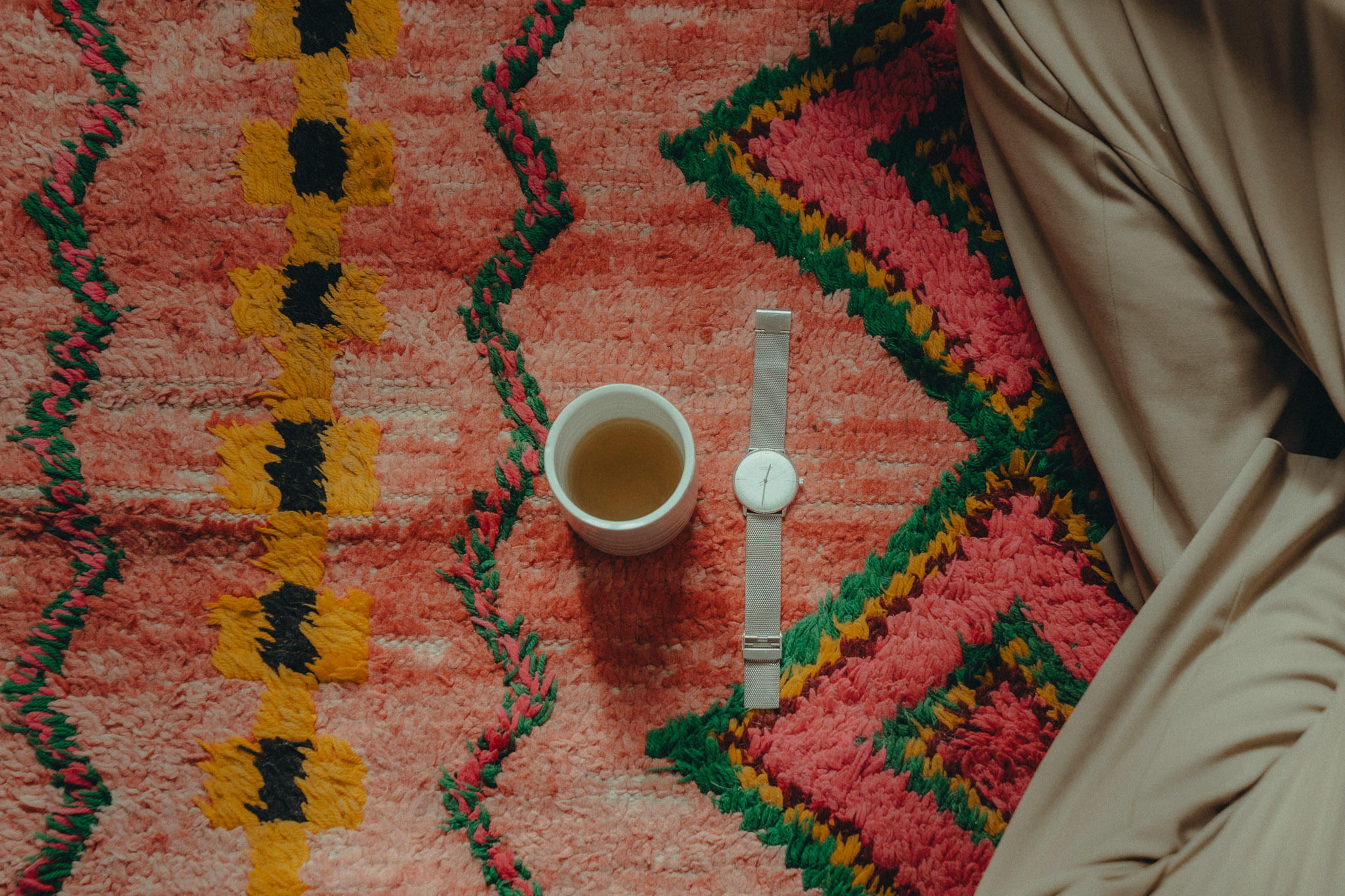
But that’s not a hallmark, so I guess the “base note” is a certain smell. I like scents, love burning incense. And I love lavender, and rose. They bring warmth, are very calming for my system. And I love candles,, am a huge fan of candlelight. Summer, or winter, there’s always candles in every room. It’s a completely different atmosphere with them, and the light is divine.

-
FvF
What is your preferred soundscape?
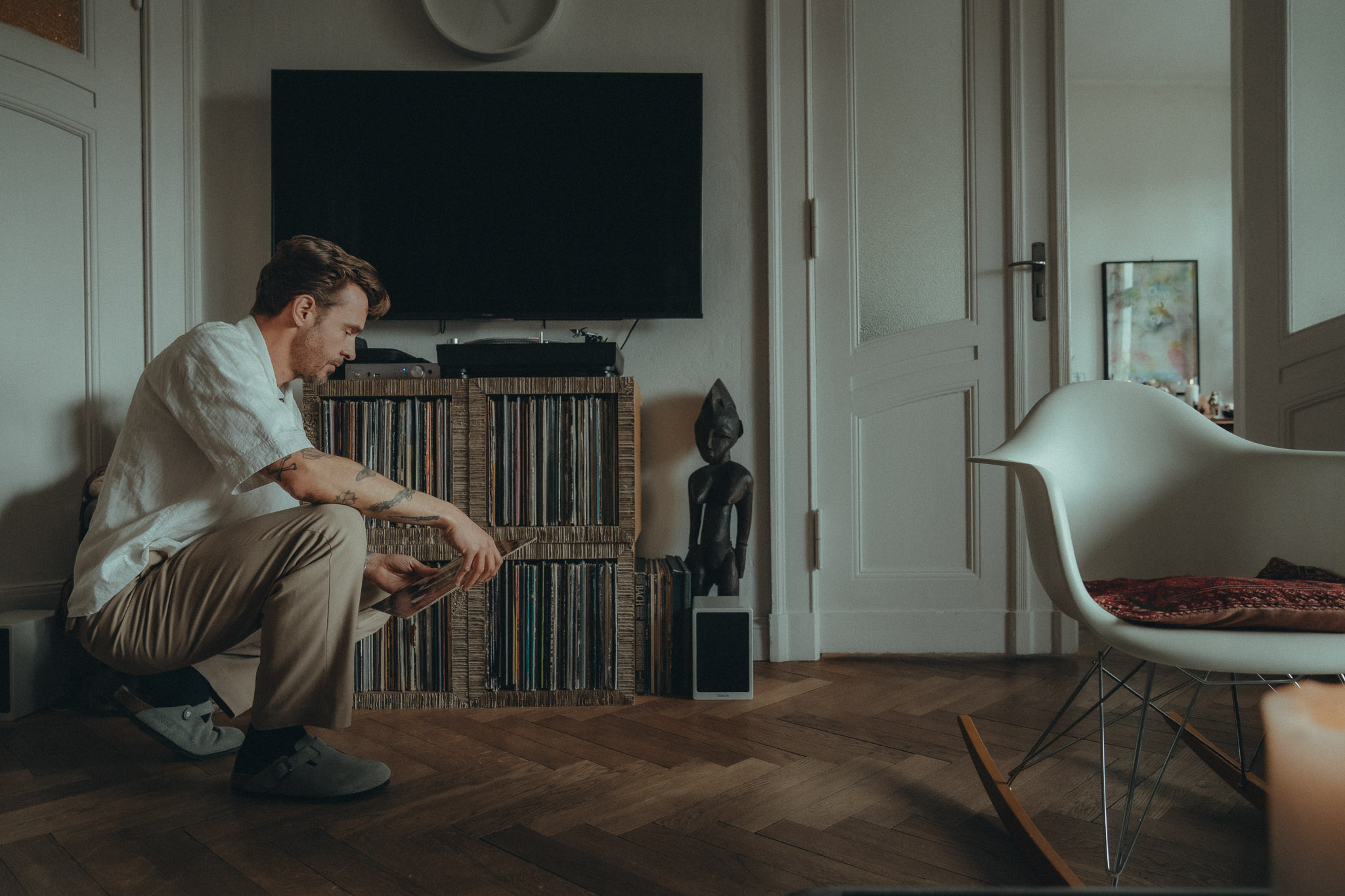
Lukas FeireissWhen I’m working, I don’t have any music on – I think it’s too hard for me to concentrate. I also have a Reiki practice, I do energy work. When I have Reiki clients, I have a very subtle soundscape playing in the background, no lyrics, no voices, that makes it easier for people to relax. I used to start my days with very loud music, with the Foo Fighters’ “The Pretender” or Mobb Deep’s “Shook Ones”. I still love listening to them when preparing for a big events. Other than that, I have a rather substantial vinyl collection that I love listening to. It’s such a different way of listening, of flipping over the sides, it’s more attentive.


-
FvF
How are you currently inviting AI into your workflow?
Lukas FeireissAI is my sparring partner, and it’s a brilliant one. I use it a lot when thinking about topics, contemplating ideas. I address the AI very personally, like a real individual. In a polite manner – I say thank you and please and would you be so kind. There’s so much “commandification” going on with AI, so the next generation is raised giving commands all the time. So there’s a danger that this transcends into personal relationships as well. I believe in manners, so I treat my AI well. But I only find it very fruitful for brainstorming – I still have to do the final work myself. But if you prompt very precisely, I think it’s brilliant. I never use it to organise my life, really only for intellectual sparring.

-
FvF
In an era of digital noise and rapid consumption, does the act of slow, intentional curation feel like a form of resistance?
Lukas FeireissInteresting. I wouldn’t use the word resistance, but transgression. My work is very transgressive in a way that it transgresses disciplinary boundaries and institutional rules. I don’t obey institutional frameworks very well. There’s something inherently non-confirmative in the way I think and work. It’s not deliberate resistance, it’s just the way I am. It’s interdisciplinary, and undisciplined. And in that sense it’s transgressive. I like to challenge status quos and boundaries. I believe in discipline, and boundaries, but also in pushing them.

-
FvF
You are often the ‘bridge’ or the ‘facilitator’ for others. Where do you allow room for your own creative uncertainty, your own vulnerability?
Lukas FeireissThe vulnerability is there all the time. I’ve never approached my work as “I will tell you how things are”. I’m rather sharing the status of my research so far. It’s highly fragile, but it’s my way of sharing where I am at the moment. I really try not to define things. When I write books, or curate exhibitions, they are a form of sharing for me. Of saying: “Here is where I am right now”. That’s the prerequisite of my work, that I’m only showing a part of something much larger. I highly value vulnerability. It’s the ultimate strength, and when people can show it, when they can admit to failure – that is so powerful.


-
FvF
We all have a ‘rejection playlist’ or a specific ritual for when a project doesn’t land or a grant is denied. When you are alone in your kitchen after a professional setback, what helps you reassemble your ego?
Lukas FeireissThat’s a nice one. Soooo many setbacks. On the outside I have accomplished so much. But the rejection list is so much larger. I am so grateful for everything that happened, but the other list is at least four times as long. Working in the creative realm means you have to have a lot of stamina. It’s a marathon. In the beginning it’s sprints, but now it’s a marathon. During my blue hours, hmm, I don’t have a ritual yet, but now I feel inspired to cultivate one. I love Mozart’s Requiem, it brings tears to my eyes, so maybe I should incorporate that, somehow. A friend once recommended that after a break-up I should listen to the same song all the time for 3 weeks, and during the duration of the song, I am allowed to cry as much as I want. A dedicated time for sorrow. I chose a super cheesy Adele song, and it helped so much. A couple of years ago I had a year with a lot of setbacks on so many levels. The way I came out is that I went right into the deep ends of it. Accept it. Immersed myself in it. Do the shadow work, then you come out fine on the other side. If you don’t, that shit will haunt you forever.


-
FvF
If you could share a meal with any historical polymath but you were forbidden from talking about their work, or yours, what would you want to discuss with them?
Lukas FeireissThere’s two people, actually. First of all Hildegard von Bingen – she was a fabulous woman. So smart, all that herbal knowledge, the Christian mysticism. I’d be super curious to meet such an enigmatic woman and talk to her about her herbs, but also go really deep. Spiritual talk, conversations about religion. Understanding her in the context of her time.
I’m also a little obsessed with Sir Walter Raleigh, a British seafarer and explorer, who had a crazy biography, traveling to the Americas in the Elizabethan era. He apparently brought the potatoes back to England, as well as tobacco. And he was the first to smoke tobacco at the British court. He was also a philosopher. But then he fell from grace, and spent his last years in and out of the Tower of London, still leading another excursion, and even teaching the children of the royals though, before being decapitated. He was an explorer, a scientist, in the highest courts and lowest dungeons. Standing straight with an open heart. An uncompromising character. I would love to talk to him about the ups and downs of life. A dinner with both of them together would be wild. We would certainly have a great time.

-
FvF
If your home could speak about you when the public isn’t there, what truth would it reveal about Lukas Feireiss?”
Lukas FeireissA psychogram of my home – interesting. It would probably say that I like comfort, warmth, intimacy, diversity. And that I like to create context and connections – that things are there for a reason. Also that I like resonance, for sure. I have a very extroverted public life, yet I always try to make these gatherings intimate, as at the heart I am happily introverted. Without my home – the physical one, as well as an emotional home inside of me – I couldn’t do anything really.