It is a quiet morning in Palma, and the light – sharper and more golden than the pale grey of his native Stockholm – pours through the open doors of the Dusty Deco showroom. For Edin Memic Kjellvertz, this shift in geography was more than a change of scenery; it was a necessary deceleration. After years of navigating the high-octane “gallericore” scene of the Swedish capital, Edin and his wife Lina traded the industrial grit of the north for the 18th-century palazzos and rugged peaks of the Tramuntana mountains. But for a man whose mind is a perpetual motion machine of curation, “slowing down” hasn’t meant stopping. Whether he is spotting soul in a discarded flea market find or layering melancholic jazz over the scent of Palo Santo, Edin’s world is one of deep intuition and “creative chaos.” We sat down with the self-taught dreamer to discuss the vulnerability of designing for the future, the sanctity of a “hidden” beach, and why a home truly lived-in should always be a little bit messy.

“We trust our gut feeling. And this can go very fast.”

-
FvF
Edin, you moved from the ‘stress of Stockholm’ to the ‘calm of Mallorca’ in 2019. In Stockholm, your inspiration came from flea markets and industrial relics. In Mallorca, you are surrounded by 18th-century palaces and the Tramuntana mountains. How has this change in scenery altered your approach to design?
Edin Memic KjellvertzWhen we moved from Sweden, we had these vintage galleries, and life was moving too fast, so we wanted to take a break, to slow down. Lina’s mother already lived on Mallorca back then, so we were a little familiar with the island. 6 months into living on Mallorca, we decided to close the store in Stockholm to build our own brand with our own design, and with the pandemic we were kind of trapped in Mallorca. Our inspiration have always been things that we really love, that we want for our own house. My wife’s dream has always been to do the set design for an Almodovar film. When we moved to Mallorca we moved more towards this aesthetic. Still: Mallorca didn’t really change our looks much, it probably rather strengthened them. The skies are blue, and the ocean is, too, and that does something to us. And that has also progressed the design into a certain direction.
Neither my wife nor I are trained designers. We are inspired by films, music, people we meet. We trust our gut feeling. And this can go very fast. We see something on the street and it can influence our work straight away. On the island, you see a lot of rounded shapes, a 60ies and 70ies vibe, art deco, it’s all a big mix. It’s always in the back of our heads, and then it pops up at some point, and then it just works.

“When it’s been too intense, I always need the beach…”

-
FvF
What are the very mundane things you crave to decompress sometimes?
Edin Memic KjellvertzWe never slow down, so the adrenaline never subsides. When it’s been too intense, I always need the beach – one of my favourites is between Illetas & Palma, we call it the hidden staircase, as it’s nestled between two hotels and a parking lot. The location is not so nice, but then a few stairs down and the ocean just opens up. It’s often very empty. Me & my wife often go once we dropped the kids.
We have a small house in Porto Christo. It’s got a 90ies vacation vibe, there’s even a Burger King at the beach – Rafa Nadal is from there. We really enjoy it, it’s very authentic.
And Bar Blau restaurant in Portocolom – we really like it there. There are so many places around on the island, you can enjoy a new place almost every weekend. We still enjoy exploring, even after all these years. The kids are getting older, so we can also go to smaller places, finally explore the cliffs, and so the island evolves.
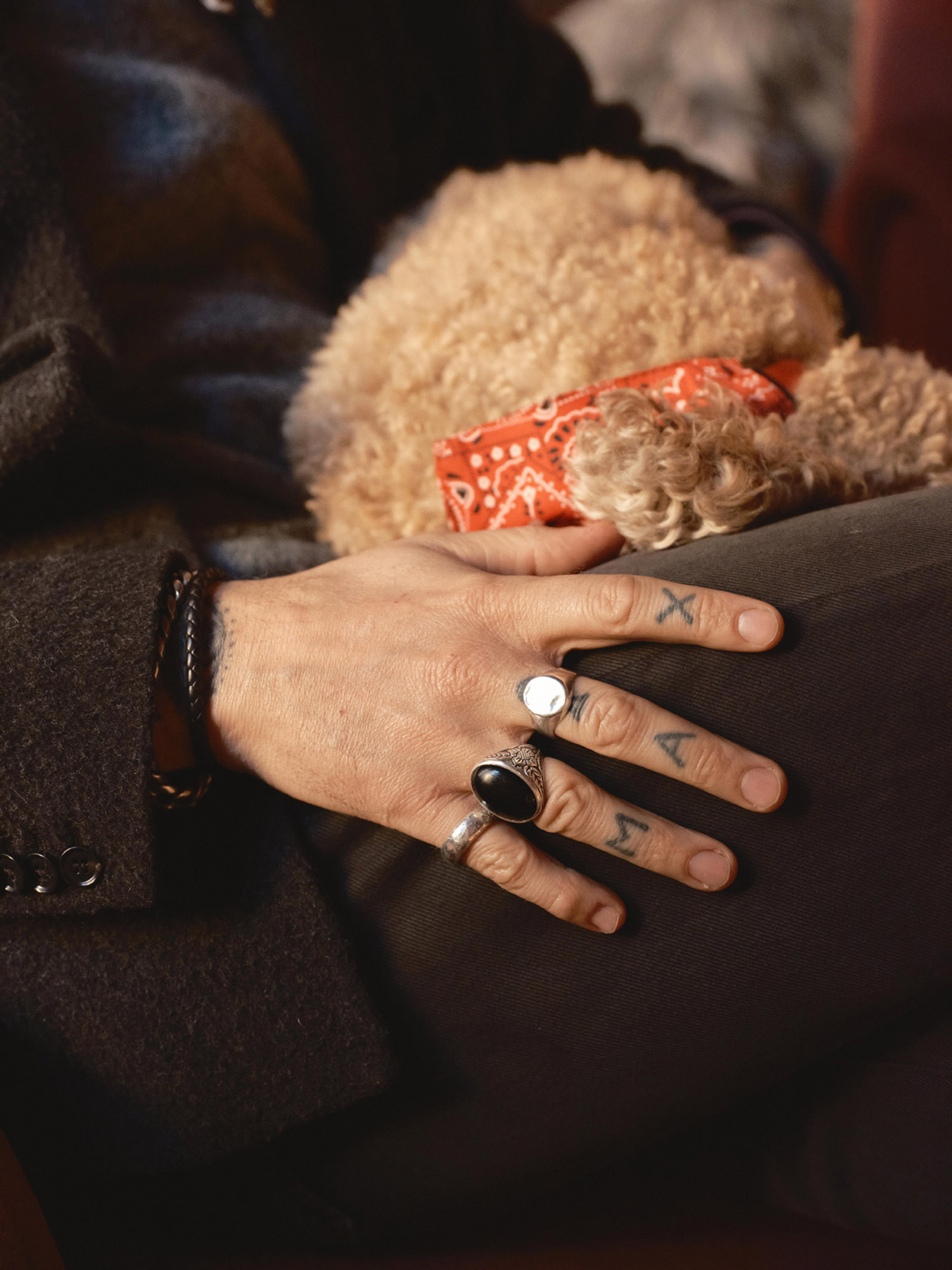
When I’m at the beach, I really don’t care how many people are around me at that moment. I can always fall asleep, I relax immediately. The same is true about coming to the showroom: We don’t live there – so it’s my sacred place. I can put on my favourite jazz album, open the doors, and just stare into the space. It’s great to get the energy back this way.


“I curate all the time!”
-
FvF
As a collector and designer, your primary tool is your eye — your ability to spot soul in an object others might overlook. Does this constant ‘scanning’ for beauty and proportion ever turn off?
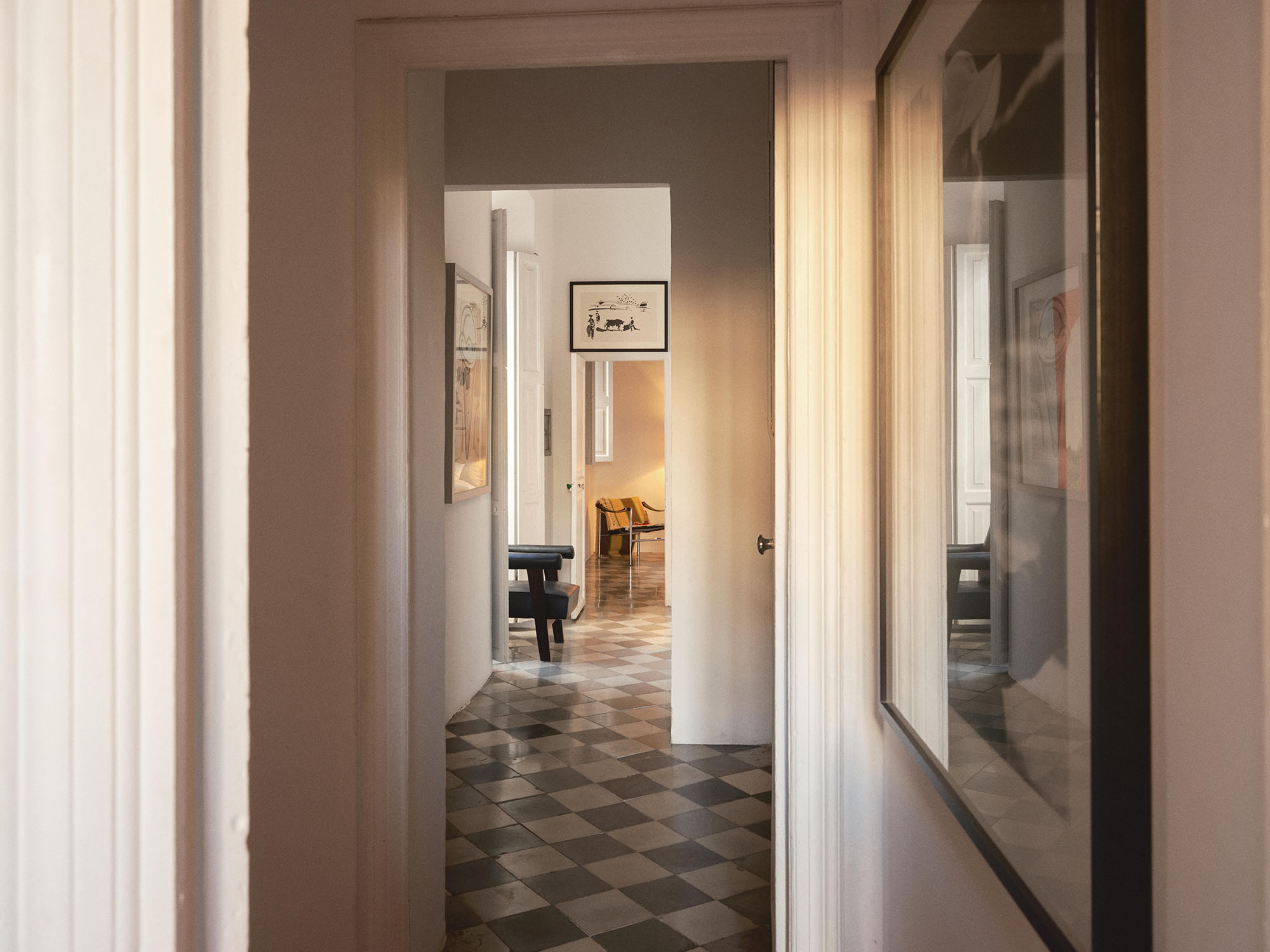
Edin Memic KjellvertzI curate all the time: My mind is constantly either curating spaces or finding new ideas. The head is always turned on. Our design inspiration always comes from things we see in our daily lives. When I see an empty space, I always think about how to improve it, what we could do in it. It takes 2 seconds and it’s fully decorated in my mind. I am a dreamer. I also love looking at properties that are far too expensive, but I love looking at them and imagine what we could do with them.
“The things we really cherish, they are things we picked up during our travels, and the drawings from our kids.”


-
FvF
Your professional life is defined by iconic furniture and rare collectibles. But what is one object in your private home that is absolutely essential to your well-being but has zero ‘collector value’?
Edin Memic KjellvertzMy family. We move houses all the time. We just moved into a new house, and every time we moved it’s kind of our dream house. We’ve moved around 20 times since I met my wife. Our life is packed into boxes. Sometimes we find boxes years later, and are surprised by what we find.
Why am I saying all of this? We’re not too attached to any specific objects.
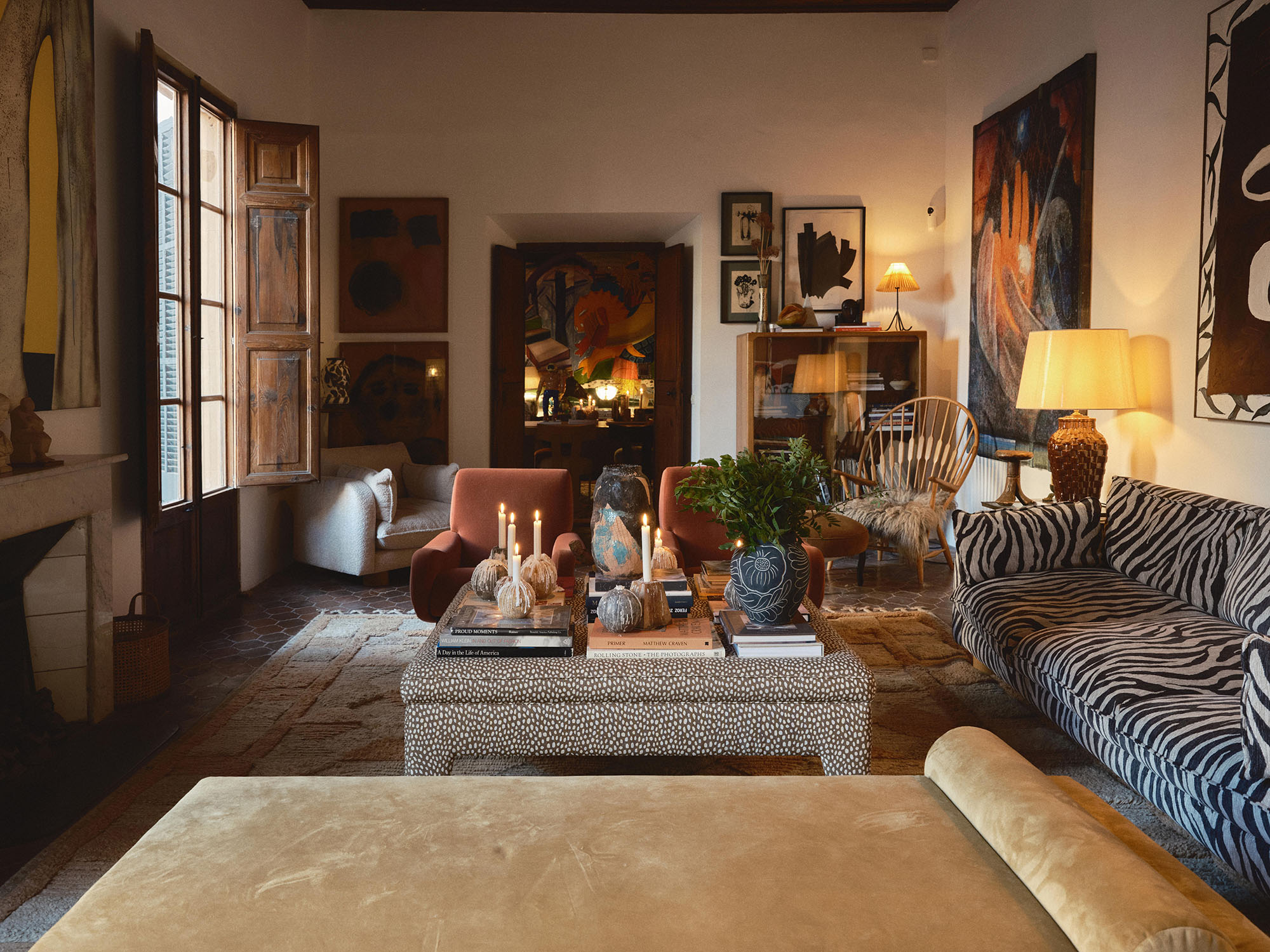
The things we really cherish, they are things we picked up during our travels, and the drawings from our kids. Quite a long time ago we bought a pair of candlesticks – two monkeys holding them. They were not too expensive, but quite expensive for us at the time. And for us the value is the memory. We also have an artwork that has been with us for a long time – a painting of a naked sailor. The kids always make fun of it – so it’s always a fun story to tell.

“When you enter a room, I think it’s important that all senses get a tickle in the first 10 seconds.”

-
FvF
What is your preferred ‘sensory landscape’ you surround yourself with?
Edin Memic KjellvertzI really like to have music around me. I pretty much always listen to music. The first thing that I do when I come to the showroom: I start music. For me, a room is not complete without music. I am quite melancholic in my music taste. My wife is different. We both like the old 60ies, 70ies, rock, indie. I am more of a jazz person, like more classical baroque, slow, piano, light guitars. Melodies are really important to me.
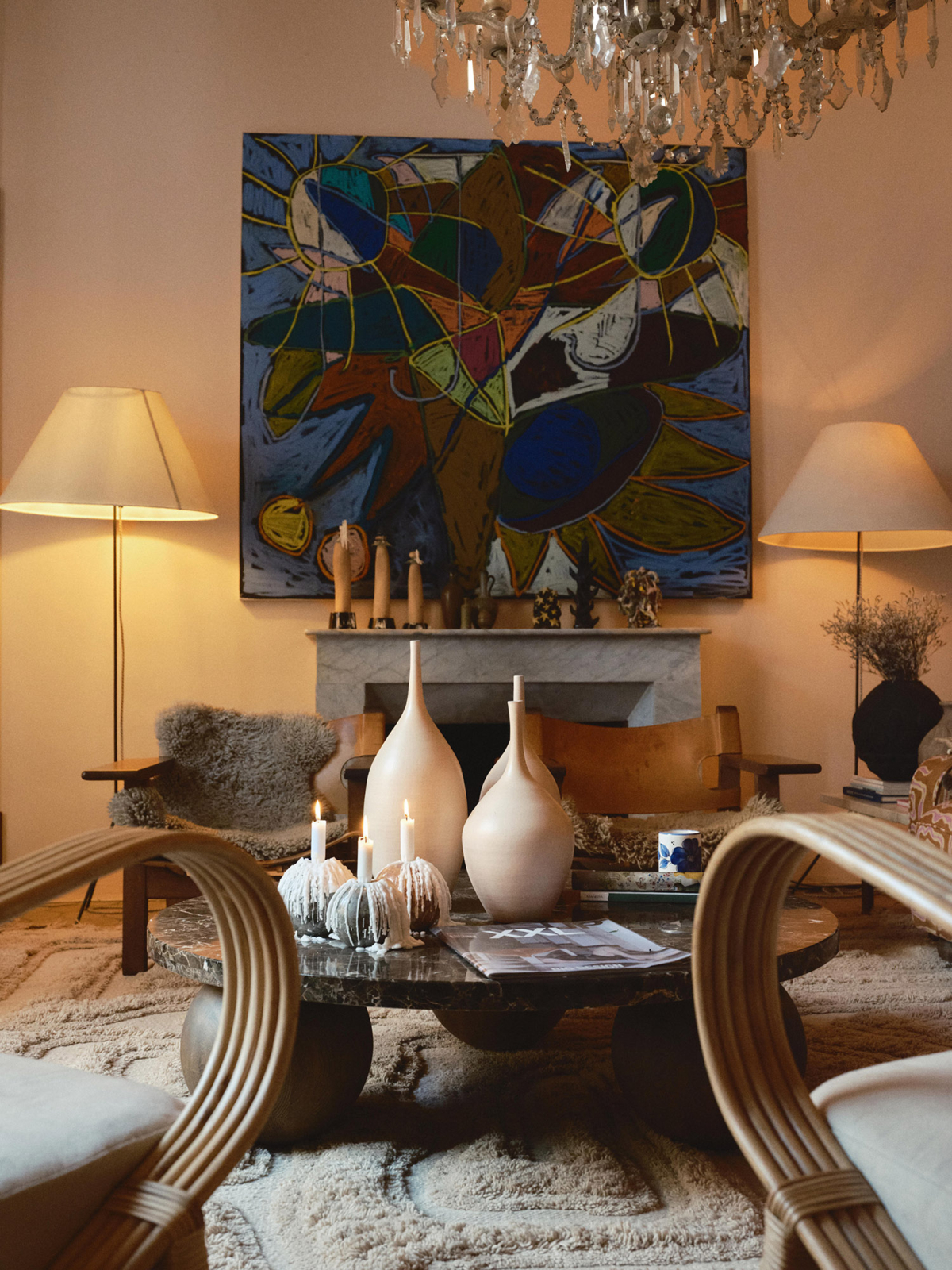
With smells, I am very picky. When it’s the wrong smell, my eyes play up. So when I sometimes visit people and they have scented candles on that I hate: I blow them out. I really like classic incense, burning it just a little bit. I like Palo Santo, just a hint, not too much. When you enter a room, I think it’s important that all senses get a tickle in the first 10 seconds. It needs to hit immediately.
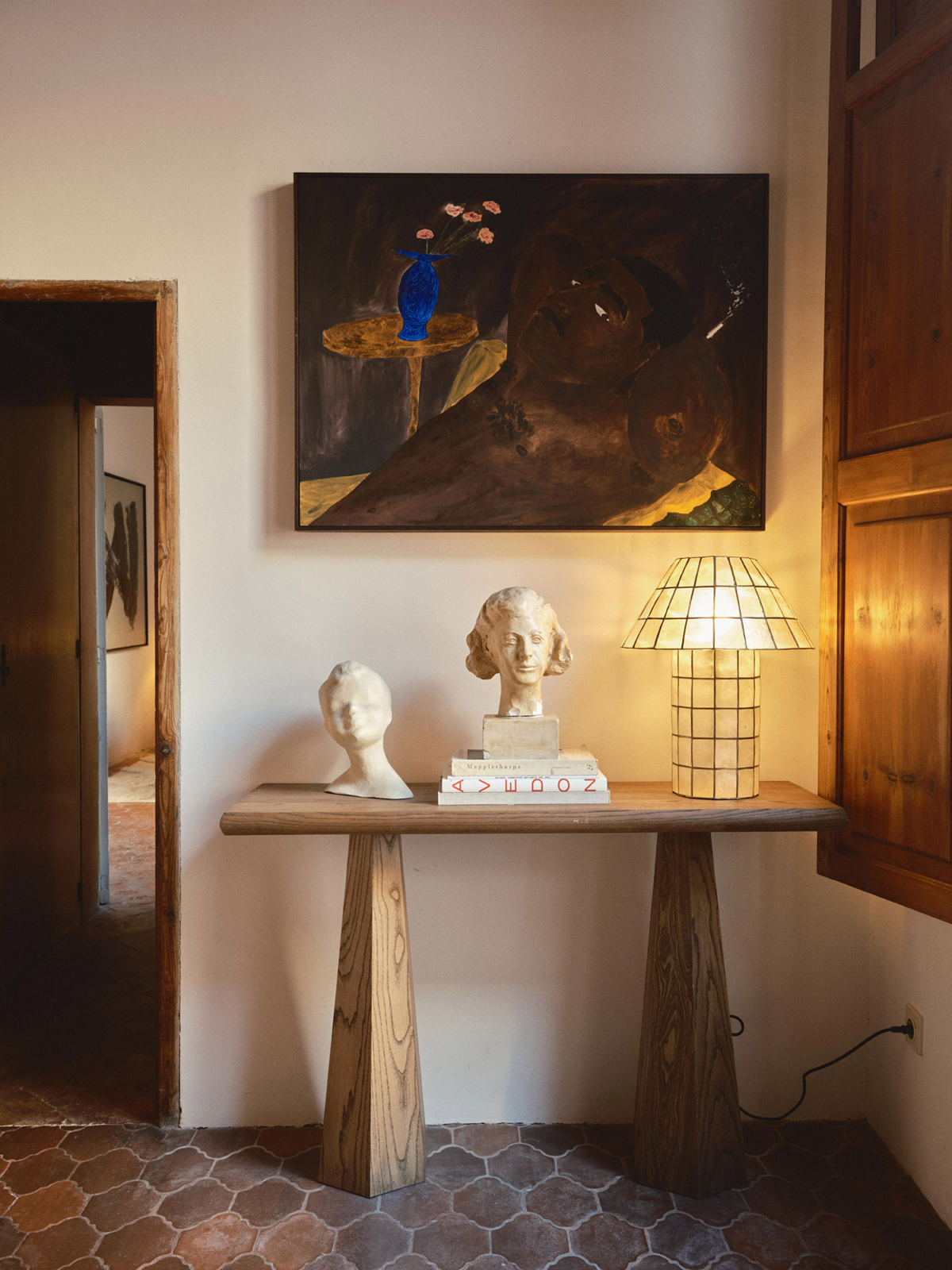
And there’s light. Dimmed light. A lot of dimmed lights, actually. I like it like a scenery, a film set. Spotlights on furniture, on artworks. Mood lights – everything from table lights, floor lamps, on different levels. It shouldn’t hit your eye, you shouldn’t be blinded. Lighting is so important, how you set the scene. Good lighting is an art, it’s something else. I’m more of an evening person, and that’s reflected in my favourite lighting. I love candles, a fireplace. And I definitely spend far too much money on candles.

-
FvF
Mallorca attracts a specific kind of creative—people who have left big cities to find something more authentic. How has being part of this ‘expat-creative’ community changed your perspective on what a ‘home’ should be?
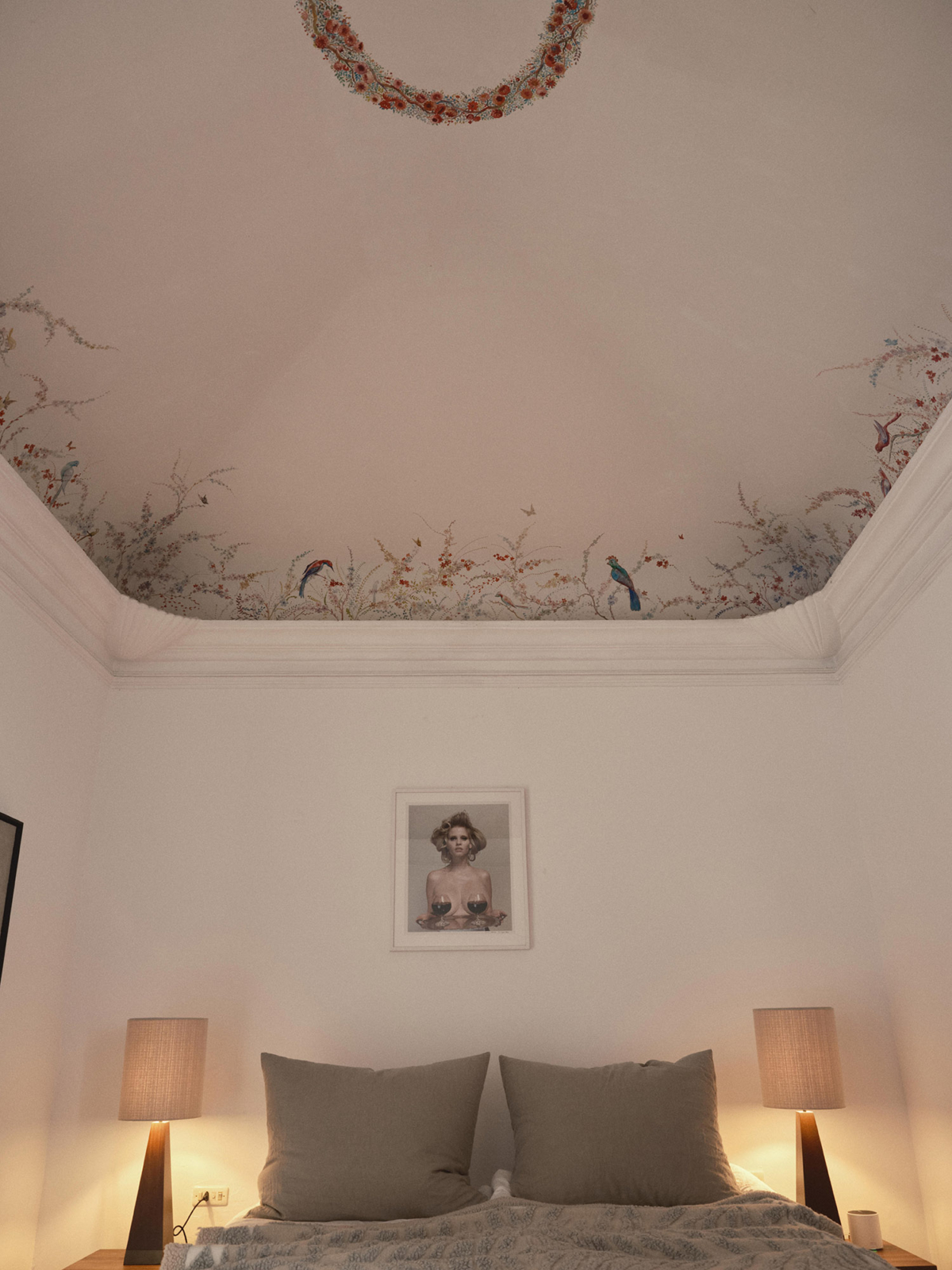
Edin Memic KjellvertzIt definitely changed the perspective quite a bit. Here on Mallorca, you spend more time with more people. The weather allows you to spend so much more time outdoors, there’s longer outdoor dinners all the time. So of course we think significantly more about hosting a lot of people in our house. And it’s so much more spontaneous out here. Especially also now that we have kids. When I go back to Sweden, I need to call my friends three months in advance to book a dinner slot in their diary. Here it’s like “what about now?”
You meet people, and there’s no rush. And people are more eager to have a connection. So you design spaces that involve more people in them.
People in general are more open minded, people dare to connect more, and it’s less stressful, people have more time. Our collaboration with Matthew Williamson came very intuitively, for example – we first hesitated, but then just asked him. He agreed. And that became a friendship.
Now, post pandemic, there are more creative people coming to Mallorca, and that also attracts other interesting people. And it’s growing, and also attracting younger generations now: When I was in my twenties, Mallorca had a different image, but it has shifted. All of Europe are attracted to the island these days. Now there’s even direct flights from New York. The life style is great. The art scene is great, too.


-
FvF
You often speak about pieces having ‘soul.’ Has the process of working with vintage objects —things that have survived decades and owners —changed your personal philosophy on consumption or longevity?
Edin Memic KjellvertzOf course. I still buy a lot of vintage, even now that we produce our own, new pieces. It’s a tricky one. We live in a consumption-oriented society, buy things all the time. I kind of like the mentality of buying things that are old. The design in the past is so much nicer than it is today. It’s also hard to reinvent the wheel again and again. A lot of the best things have already been made. When we now produce things, my dream is that my kids and their friends will buy our pieces in an auction, that our pieces survive over time, and become classics. We want to build a legacy brand that continues long after we cease to be.
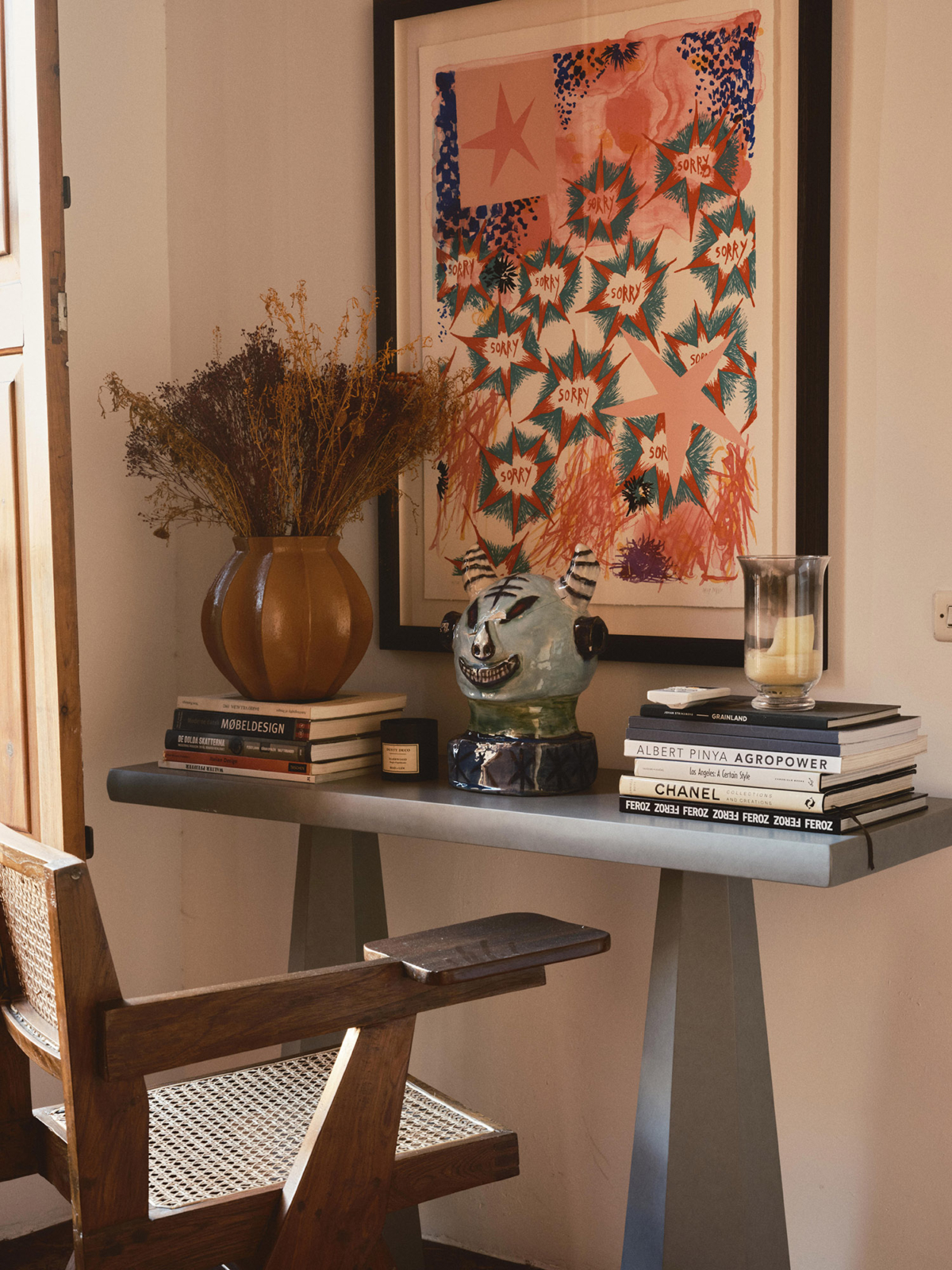
For our own house, we don’t buy new things really, apart from the odd visits to IKEA for the kids, for examples. I go to the flea market every Sunday in Mallorca, so I add something to the mix all the time. It’s the mix that makes it ours.

“As soon as you start hesitating, that’s where the vulnerability kicks in…”

-
FvF
Where do you allow yourself to feel vulnerable in your work?
Edin Memic KjellvertzWhen buying vintage pieces I learned along the road that I should never hesitate. It’s always gut feeling. As soon as you start hesitating, that’s where the vulnerability kicks in. I never went to a design school, I can’t draw. But when I see something, I just go for it. I never let myself become unsure. I usually don’t doubt. And If I don’t, everything takes longer, and then it’s gets very vulnerable. So I don’t really allow myself to feel vulnerable, I don’t think I should.
-
FvF
What, connected to your work, still genuinely scares you?
Edin Memic KjellvertzWhat I’m scared of is that things will break, that our pieces don’t hold what we promise. Production can always do wrong, but in general I’m mostly “scare-less”.
-
FvF
If you could have dinner with any creative figure but you were forbidden from talking about their work, who would it be and what would you discuss?
Edin Memic KjellvertzThere are a lot of people that inspire me. My end goal and dream are hotels. So I would probably go for André Balazs – and I would love to talk to him about Chateau Marmont, how he started the Standard Hotels. But if I’m not allowed to talk about that, our conversation would probably revolve around all the people he met. He must have so many cool stories about all the people that entered his places, his hotels.


-
FvF
If your home could tell one truth about you that your clients and followers never see – what would it say about Edin Kjellvertz?
Edin Memic KjellvertzIt would probably say: He lives in total chaos. When you come to our house you would never think I am the founder of Dusty Deco. We are always buying things, it’s always packed, there’s a crazy mix.
I am very talkative, I talk all the time. When I come home, I want to listen to my kids speak, to my wife. I really change personality when I come home. All this energy that you’re always giving – you also need to give that to the family. It’s a daily exercise of balancing. And that’s the beauty, too.