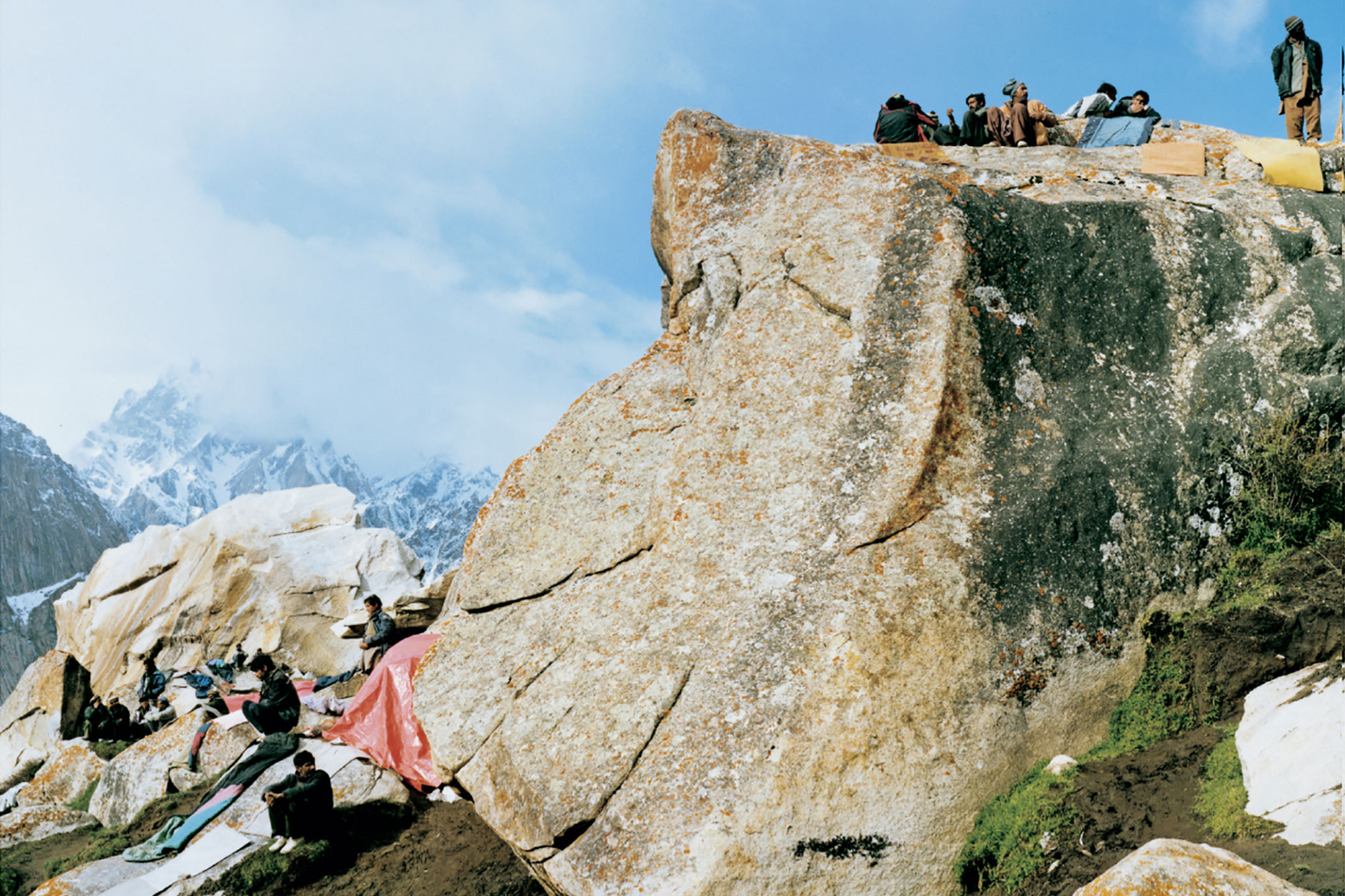
For Yorgo Tloupas, design is not a static profession but a high-velocity system of living. As one of the most influential Art Directors of his generation, Tloupas has spent decades defining the visual vernacular of luxury, culture, and mobility through bold typography and a relentless, kinetic aesthetic. Yet, beneath the high-gloss precision of his public portfolio — spanning from iconic magazine launches to brand identities for global giants — lies a life governed by a different kind of rigour. In this candid dialogue, we step away from the finished mock-ups to explore the mechanics of his world: the briki pots of Greek coffee, the light of Paris, the physical toll of a life spent in motion, and the deliberate philosophy of an artist who views his home, his hobbies, and even his business cards as essential components of a singular, grand design.

“My home is a display of my work, the way I envision myself.”

-
FvF
Yorgo, if your home could tell one truth about you that your audience or collaborators never get to see, what would it say?
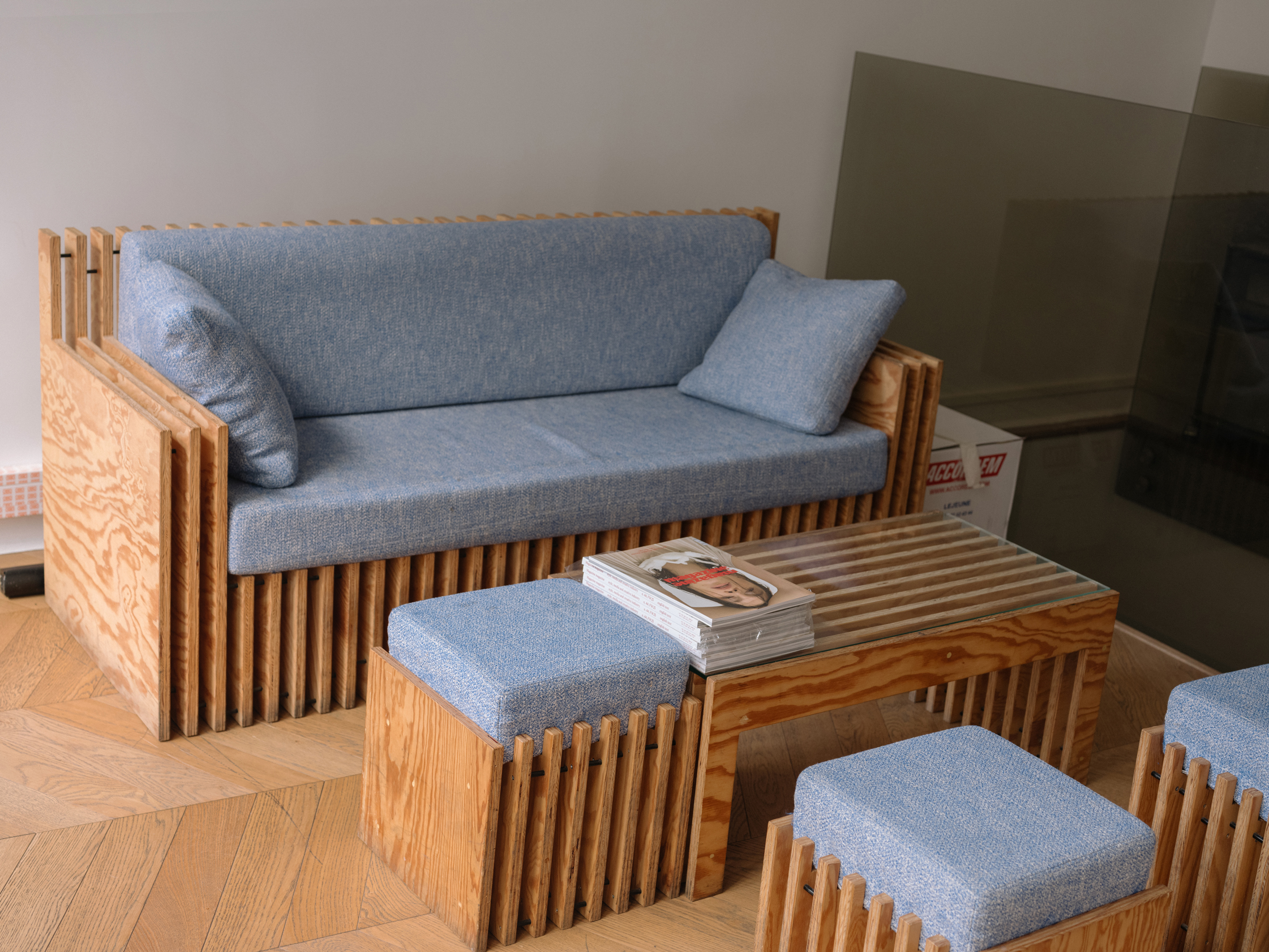
Yorgo TloupasMy father built the house that I grew up in. He did everything. Also every piece of furniture, every cup, literally everything. So from the very beginning a house for me has always been an extension of who you are.
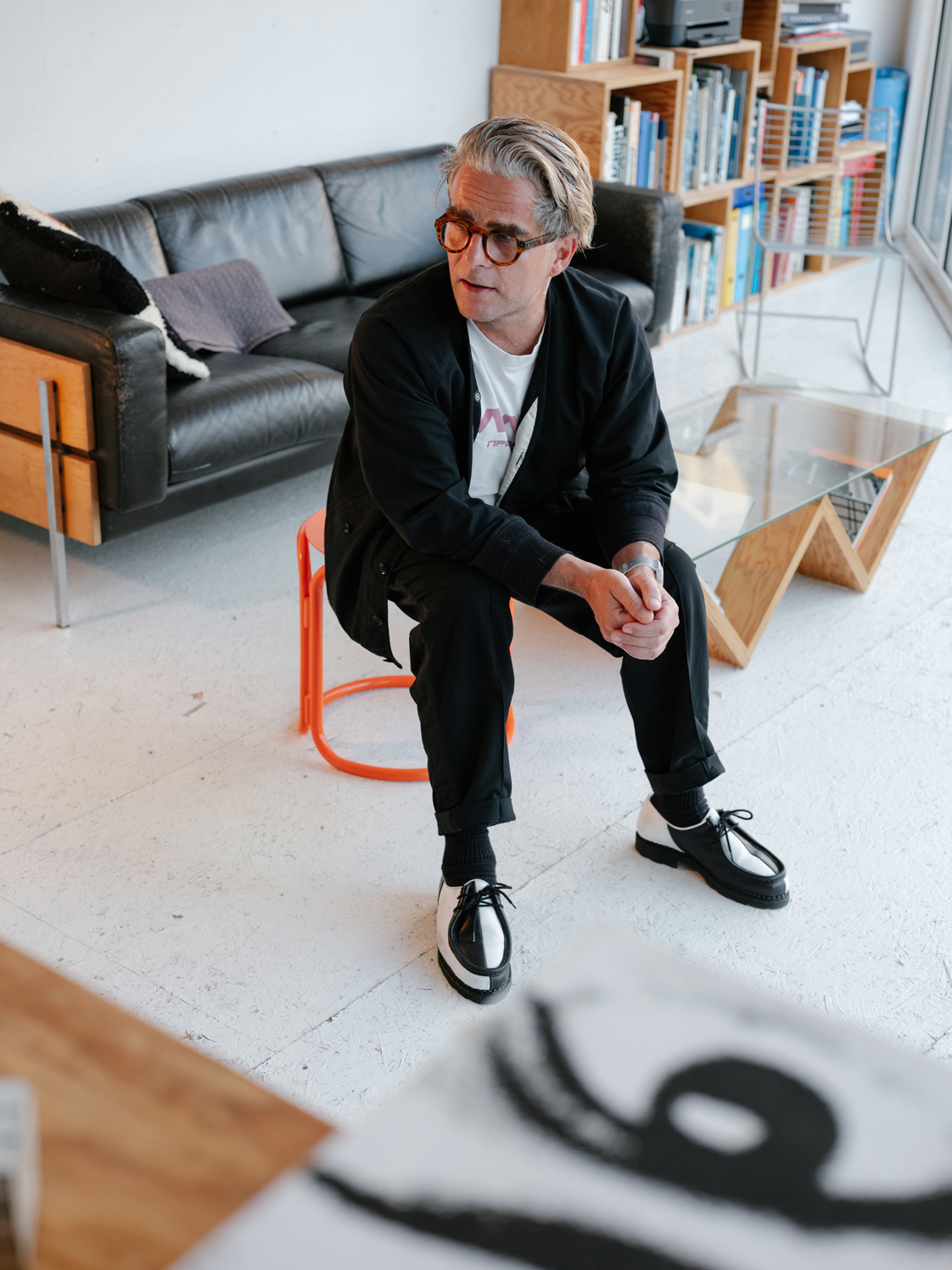
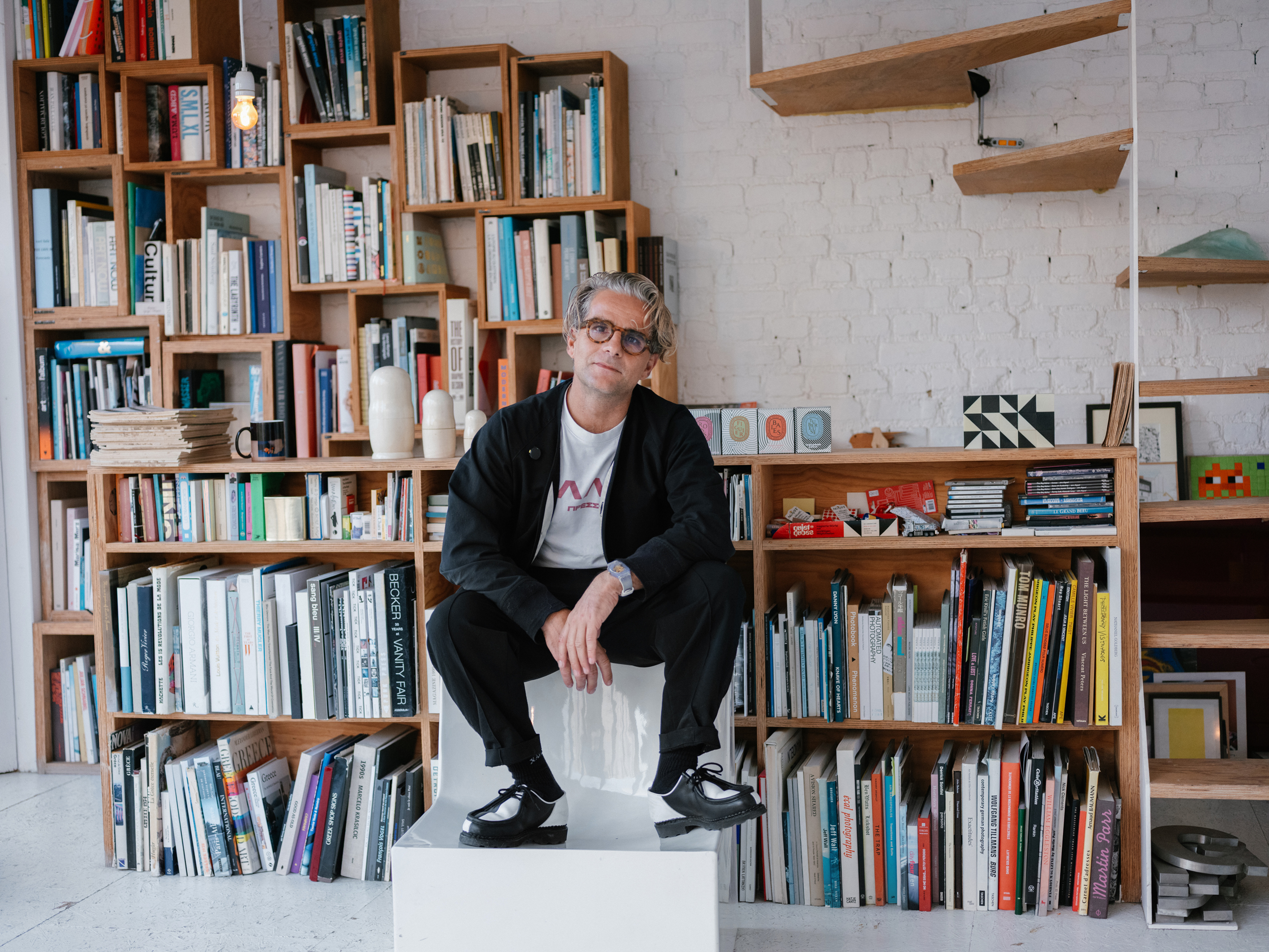
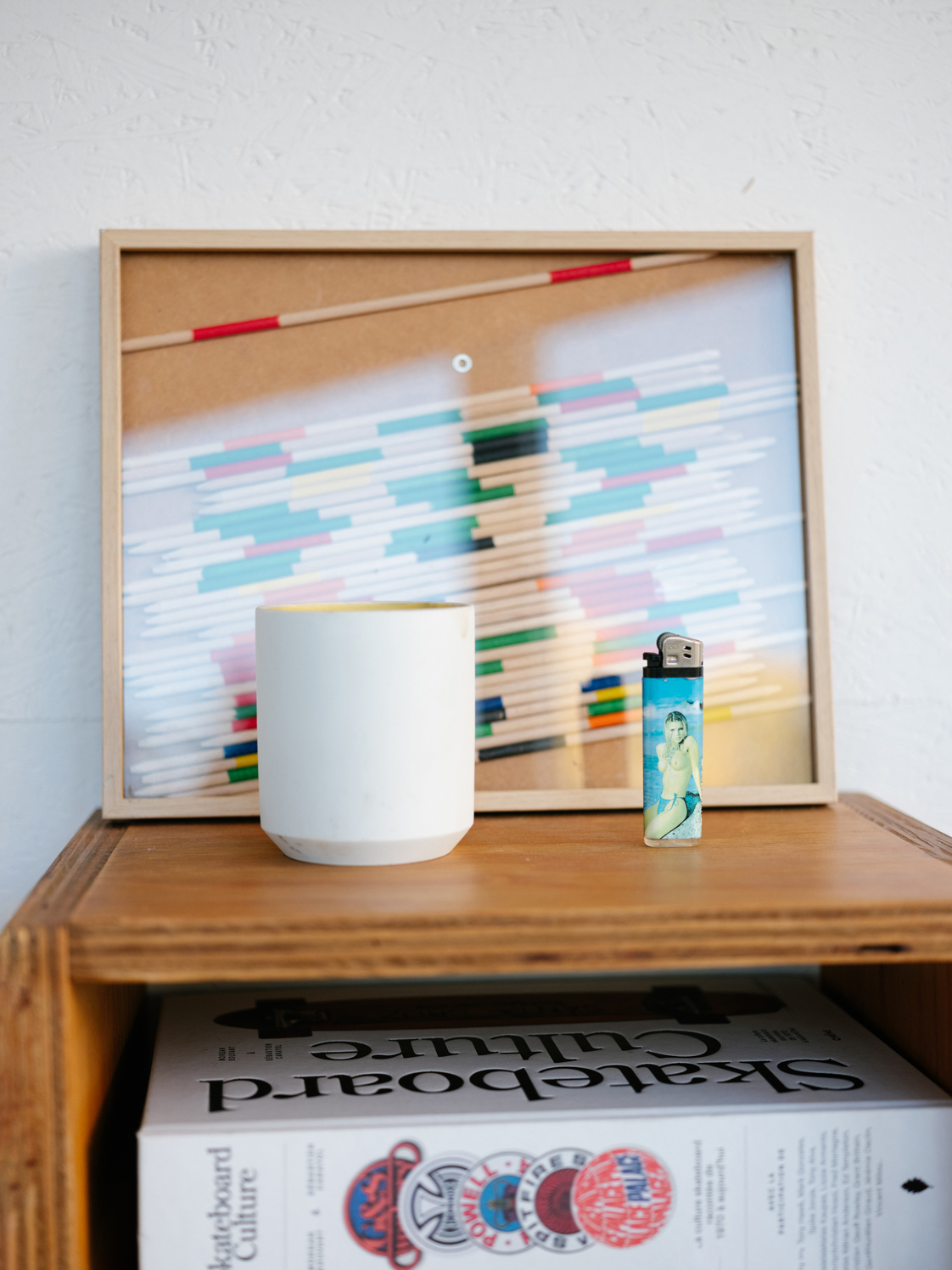
My home is also in a way a display of my work, the way I envision myself. It’s always meant to be visible, it’s almost a media home. I love my home, but nothing in it enters the house without being vetted by my girlfriend and I.
Funny enough, I think our current house reached the end of that: Every 15 years I need a new house, recreating the same adventure of building something from scratch. If we do find a house and we do what we want to do, this time I would take a step back and leave it to my girlfriend, the artist Camille Menard. That would be a funny reversal to my mum & dad’s relationship, as my mum had no say in the house. I’m completely ready for someone else to take over the design. But it will most definitely be in Paris – the city is unbeatable right now.

“In front of us is a church, we hear the bells, and on weekends the choir is singing. I like to think of these sounds as God sending me notes almost every day.”

-
FvF
As a creative whose work is so focused on visual clarity and powerful image-making, what is the ‘sensory landscape’ of your preferred daily environment?
Yorgo TloupasThe street we live on is not that busy, but we have thin windows, so we can hear a lot. In front of us is a church, we hear the bells, and on weekends the choir is singing. I like to think of these sounds as God sending me notes almost every day. I listen to French radio a lot. We’re lucky enough to have the best radio in the world in France – FIP. We have a multi-level house, and we have Sonos speakers everywhere.
Regarding favourite smells: We do have candles – my girlfriend has done some work with Maison Francis Kurkdjian, and we have Diptyque. We like them, but we’re not that attached to a specific smell. I have these boxes that my dad made from a Cypress tree – they still smell, and I’m rather fond of them.
And other senses, light: The third floor of our house is at the same level as the street lights of Paris, and we almost never turn the light on there. The city of Paris brings us light instead. I’m much more obsessed about lighting in restaurants. Before looking at the menu, we look at the lighting situation.

“I’m making a lot of sacrifices for the sake of the design every day…”


-
FvF
What is one object in your primary living space that is absolutely essential to your well-being but has nothing to do with your work?
Yorgo TloupasThat’s a good question. Every morning I prepare Greek Coffee – and you need a “briki” for it. You can’t make Greek coffee without it. I love the ritual of doing it – you wait for the coffee to rise, you have to concentrate. I have tons of brikis. I drive to Greece every year, and I bring a lot of them home all the time. The best ones are copper, but they don’t look as good as the red ones. I’m making a daily sacrifice for design’s sake. Actually, I’m making a lot of sacrifices for the sake of the design every day, not just the briki.


“Magazines are the best tool to connect and meet people.”

-
FvF
Your life and work often require you to bridge worlds—from Paris and London to the diverse visual landscapes of your global clientele. How do you actively cultivate and maintain meaningful connections?
Yorgo TloupasIt’s difficult. When I did my own magazine, Intersection, we used to travel so much, as we had editions all over the world. Magazines are the best tool to connect and meet people – most of my network comes from the magazine days. There’s a book by Malcom Gladwell that came out in the early 2000s, The Tipping Point, about social interaction modes and how we all fit into three specific categories – for some people that’s mostly through connecting & interacting socially – and that fully resonates with me. The illusion that social media keeps you connected with people is very dangerous. Luckily my travels often keep me connected.
I still have business cards, which is kind of funny in this day and age. They are rather particular: They have a crazy optical effect & are very tactile, people remember them, so they are not that easily discardable.


“With my work, I’m not supposed to be vulnerable.”

-
FvF
Creating high-impact, highly visible brand identities and editorial designs for clients and the public requires immense strength and conviction in your visual choices. But where do you allow yourself to be vulnerable within your creative process or life?
Yorgo TloupasWith my work, I’m not supposed to be vulnerable, and I try to be as confident as possible. I’m vulnerable with my team, they are often younger, and know things I don’t know. I encourage them to give honest feedback, tell me “Yorgo, this is shit”. But in the end, confidence brings confidence which brings quality.
I am very much shielded, and I’m grateful for that. I really wouldn’t want to be a public person. I don’t often mention politics in public, as you trigger people’s basic instincts immediately, so I try to avoid that.

“My work-life balance is super regimented, which can sometimes lead people to think it’s mostly leisure.”


-
FvF
Yorgo, you’ve just completed a significant project – the intense focus on visual problem-solving and narrative shifts. What is the very first, truly simple, mundane thing you crave in that post-creative space?
Yorgo TloupasIs there such a thing as a post-creative space? In the studio we work on around 30 simultaneous projects. It’s non-stop. In an average week we have at least 3 major presentations. My work-life balance is super regimented, which can sometimes lead people to think it’s mostly leisure. Every weekend, sports is super important – we go skiing, I go surfing, or cycling. We have a car in the alps and one in Biarritz – at any given moment I can decide to cycle to the train station, take a train, and then be in Chamonix or Biarritz soon. This is the system – the way I function. I used to compete in bike polo, actually did the world championships in Berlin, Geneva, and Seattle, and that was a way to escape work pressure for another kind of pressure. I kept on losing games though. And there’s my Brompton bike – the best object that was ever invented. The efficiency of it is mindblowing. I am a brand ambassador now, very passionate.


“We start most of our projects from sketches.”


-
FvF
Beyond mood boards, explicit mock-ups, or typographic sketches, how do you capture or retain the fleeting, often nascent, ideas that you intuitively know will later inform a new project?
Yorgo TloupasFor decades, I was really against the idea of looking at other designers’ work, mostly I would buy art & architecture books. I was never really into mood boards. At some point we started to add some references though, like “this is the shape of the moon, plus a piece by Sol LeWitt”. We start most of our projects from sketches. I write one list, a mind map of what the subject is about – for example for a glassware brand I would write the words dinner, washing machine, transparency, broken, water, alcohol, factory, cheers, Murano, flask, bottle, etc., and another list about the brand; then I draw some lines and create parallels.
I use a German brand for my notebooks – Leuchtturm – as it has lots of small dots, which is great for drawing, to test logos, do early sketches. In art school we were actually not allowed to use computers. I now draw less than I used to. My phone is a means to archive stuff that I see on the screen. And then at some point I classify everything in folders. My dad, Philolaos, was a sculptor, and he had a very specific way of organising archives. He always put the name and year on the side of the folder, which I found very inspiring.
I do have reference folders, but I often forget about them. I love the book Ill Studio have produced called Moodcyclepedia, which showcases their projects and a whole host of inspirations that were in some way responsible for the finished articles. I even wrote the intro for it.
One thing that sets our studio apart is that I recruited an archive person about 8 years ago, maintaining the archive of everything we do. It is a physical and a digital archive. Valeria Fiorentini helps me find things, and helps to collect imagery and information from a project, and also magazines etc. that our ads appear in. We also have an in-house photographer, Emmanuelle Lubaki, and our own photo studio. Everything you see on the website: We shot ourselves.
Jefferson Hack once said that his biggest mistake was not archiving the early work at Dazed. They had signed pictures of Nick Knight and others, and they threw them away, straight into the bin. Now they only have 5 copies of the first issue of Dazed left.


“With AI, I am at the same time curious, disdainful, scared and grateful.”


-
FvF
The integration of artificial intelligence into creative workflows is rapidly redefining paradigms of artistic production. How do you currently perceive or actively engage with AI tools?
Yorgo TloupasI am at the same time curious, disdainful, scared and grateful. Curious about questions like “What’s the added value?”. Disdainful, as I’ve rarely seen something that I really find interesting and inspiring. In terms of taste it’s very limited, the quality is often rather low. Scared, as it’s my job that’s endangered. And grateful, for when Google search doesn’t work, doesn’t deliver what you need, you can enhance pretty nicely. We do mock-ups and animation with AI, too – a good time-saver.
But: In the end design is about making choices, and AI won’t make these for us. The risk is that someone in charge of commissioning something creative uses AI and makes that choice instead of giving that task to a creative. We’re still very far away from AI doing everything. Even if by miracle it proposes a good logotype, designers would still have to make changes, and then would have to deploy it, use the right formatting etc. So all in all I’m not too scared at this stage. If AI takes my place, I will just make Greek coffee, as AI will never be able to do it.


“I don’t really do trendy stuff.”

-
FvF
You’ve likely mastered significant technical and conceptual challenges in graphic design and publishing. What, in a purely artistic or technical sense, still genuinely challenges or even ‘scares’ you?
Yorgo TloupasI’m definitely scared of injury: A lot of the sports I do often come with major injuries. And I’ve done it: I’ve broken every joint in my body at least once since I was 11. Elbow, ankles, finger, you name it. No more please.
But that’s not 100% work-related. So: Not having work, maybe. Losing inspiration, but I don’t really see how this could happen: Or losing my talent, if I actually define myself as a graphic designer, but I don’t really do that. I pre-emptively dealt with that, I don’t really do trendy stuff. Our studio doesn’t follow fashion. There are lots of trends, like all Matcha bars use very similar typefaces. I started a folder of pickle brands, pizza brands and others that use mascots. Trends come & go. I’ve been very careful about not getting drawn in.