In the landscape of contemporary design, Sam Chermayeff is a rare voice of radical candor. Known for a practice that challenges the boundaries of privacy and domesticity, he operates at the intersection of high-concept spatial planning and the sticky, uncurated truth of human behavior. A veteran of the legendary Japanese firm SANAA, he has traded the pursuit of pristine, untouchable structures for something far more vulnerable. In this conversation, Sam opens up about the “victory of the home story” over sterile architectural photography, his personal journey through addiction and recovery, and why he’d rather see a “trashy” toy on the floor than a perfectly designed one. From the scent of two-pack-a-day habits to the “fuck you” energy of collaborative breakthroughs, we sit down with Sam to discuss why our homes — and our lives — actually need a little more friction to survive.
-
FvF
Sam, your work often feels like a series of questions posed to the walls and objects we take for granted. From your collaborative beginnings in Tokyo to your Berlin-based practice, you’ve consistently challenged how “private” and “public” spaces should behave. These questions explore the person behind the floor plans—the intersection of your architectural convictions and your daily life.
You’ve just finished a project where every millimeter was debated—perhaps a complex apartment renovation in Berlin or a furniture series for a gallery. When the intense coordination ends and the ‘site’ becomes a ‘home,’ what is the first mundane thing you crave? Is it a specific neighborhood walk, a particular chair you didn’t design, or a meal prepared in a kitchen that doesn’t follow your own radical rules?
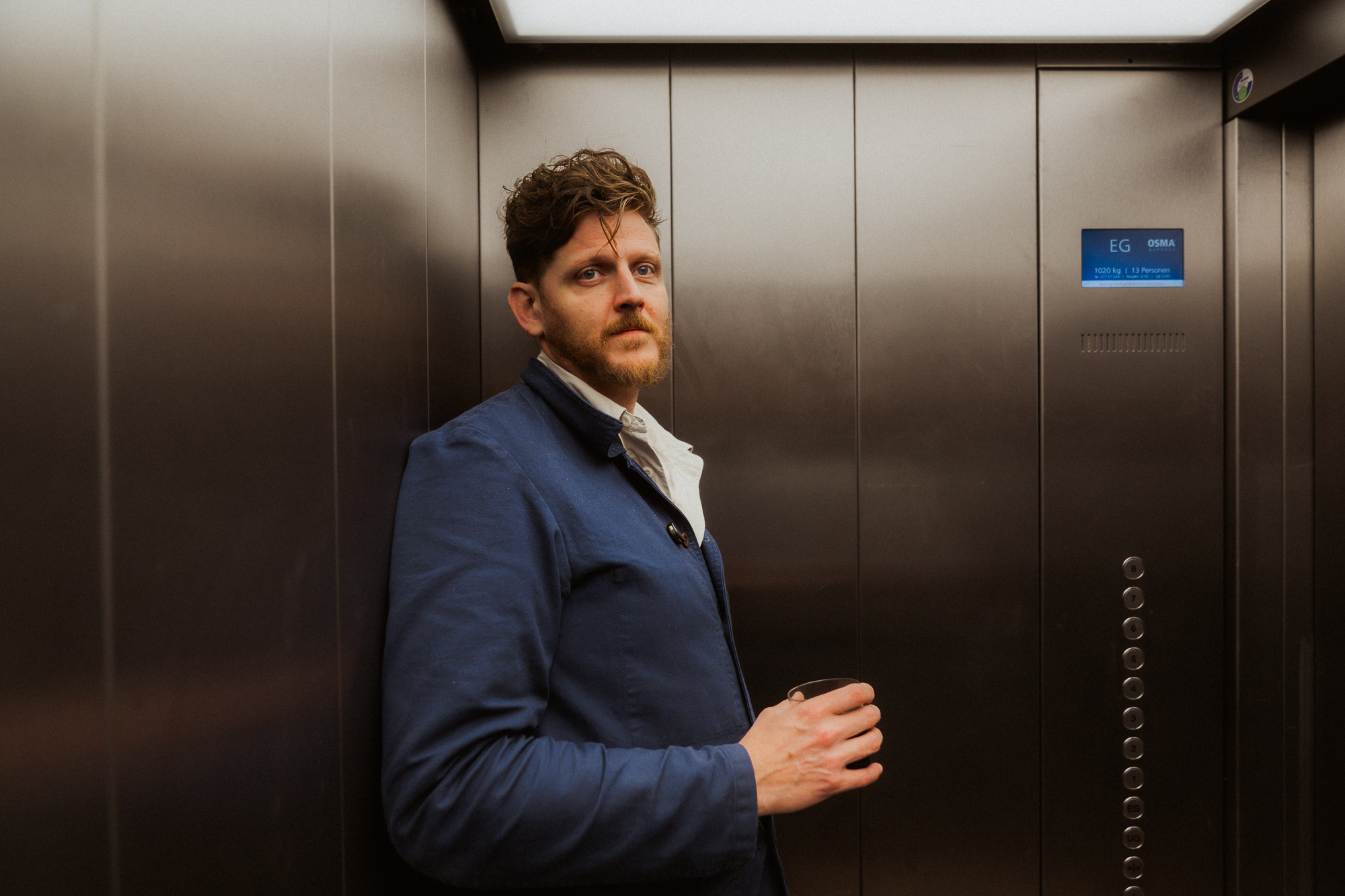
Sam ChermayeffWhat a funny question. The problem is that even when I’m done I still see the issues. Like I still don’t like how certain things turn out, how I could do this better. It takes a long time to fade away, takes me a lot of work to switch off. I strangely need people to validate that what I did was good. I’m always unsure.
I’m a proper addict of all sorts of things. I was an alcoholic, now go to Alcoholics Anonymous. I used to smoke, like 2 packs a day. The next cup of coffee would be the fifth. I buy the same food all the time. Not that I have endless routines, but I’m all in at whatever that is.


-
FvF
You spend your professional life analyzing how people move through space and touch surfaces. Does this ever ‘turn off’? When you are in a poorly designed transit hub or a friend’s cluttered apartment, do you find yourself mentally moving walls, or have you developed a way to simply exist in ‘imperfect’ spaces without redesigning them in your head?”
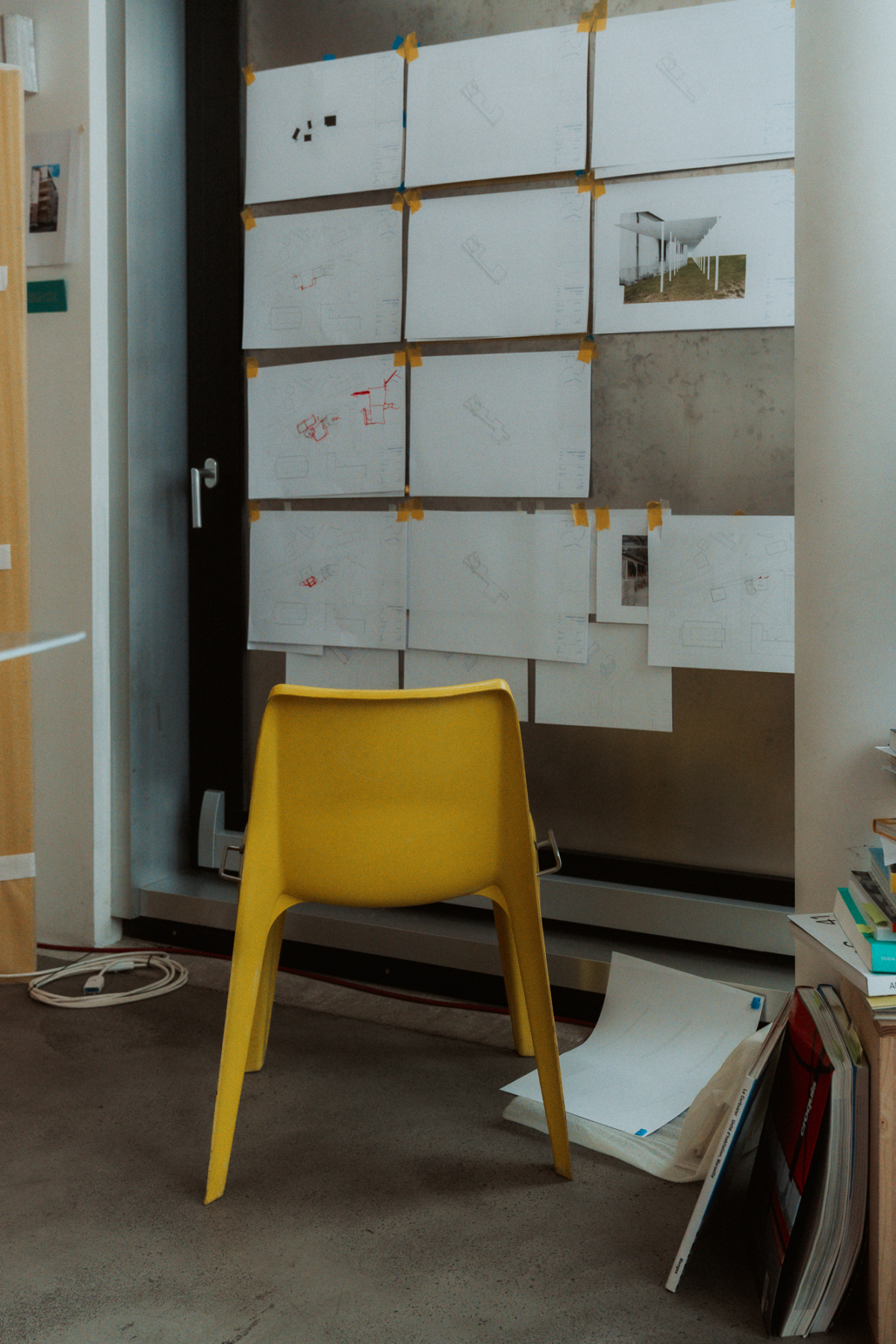
Sam ChermayeffI can switch it off in a transit hub, but not really in a house. I don’t know why – I always ask “why would you do that?”. I can understand how the British Government made a lot of mistakes that led to Gatwick. I rarely use AirBnB as I can’t deal with domestic situations. Even when I’m in an aesthetically off situation, I do catalogue solutions and it comes back to me years later. I try to keep that to myself. It’s not helpful, and I don’t want to be responsible for fixing it. The old Sam would have told them how to do it better.


-
FvF
When you walk into a stranger’s house for the first time, what is the very first thing you unconsciously ‘sniff’ out? Is it the lighting, the smell of the kitchen, the height of the ceiling, or the way the furniture is grouped?
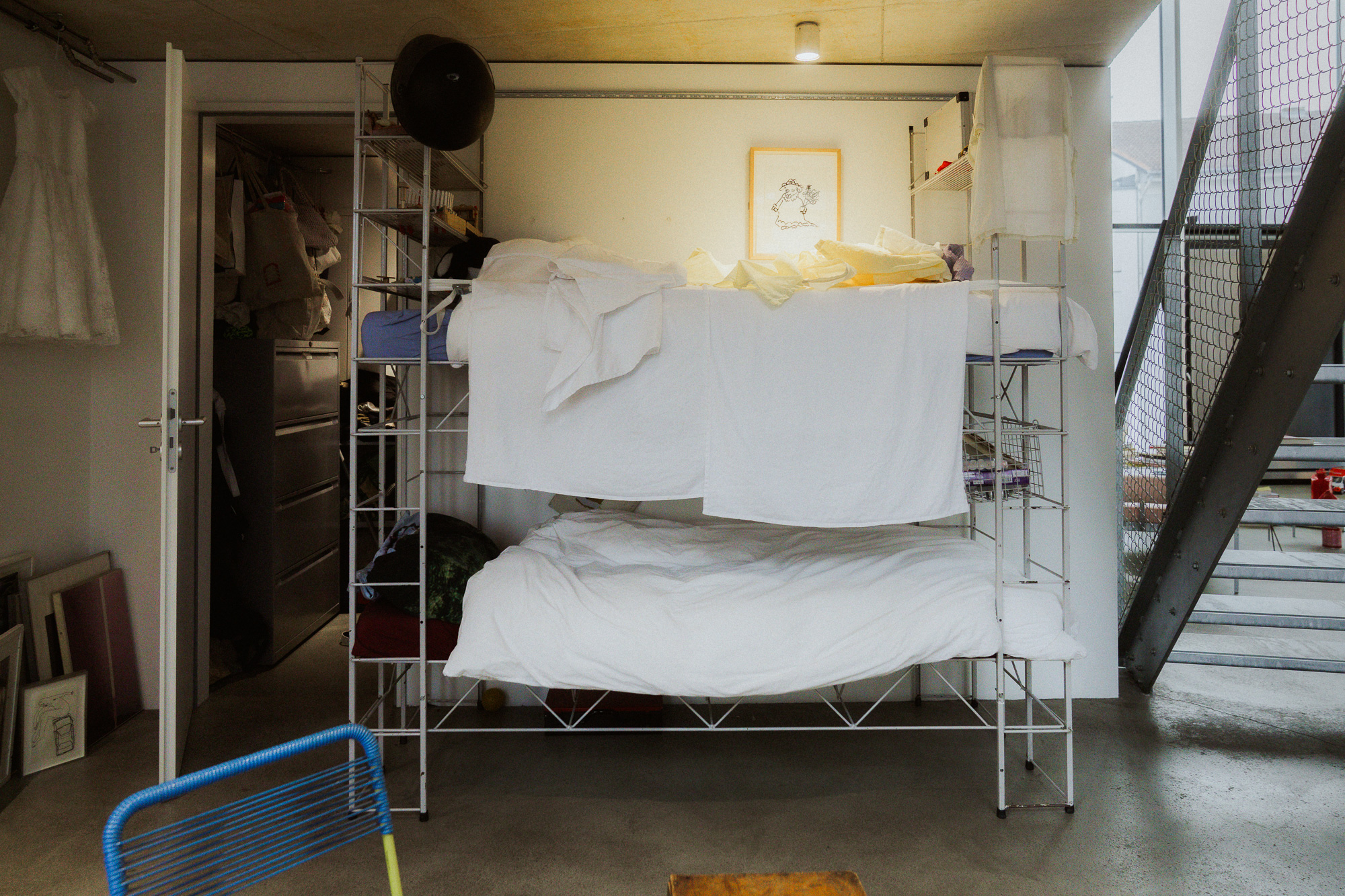
Sam ChermayeffI guess I look at people’s furniture first. And I try to be positive, try to find their best thing. But I can be a total furniture snob. It seems people have less and less good furniture. There’s no middle ground for contemporary furniture – either super cheap, or very classy. When people somehow cobble things together in an affordable way, I really appreciate it.



-
FvF
Your office and home are likely filled with prototypes and intentional pieces. But what is one object in your home that is absolutely essential to your well-being but has nothing to do with architecture or design? What is its story, and why does it earn its keep in your environment?
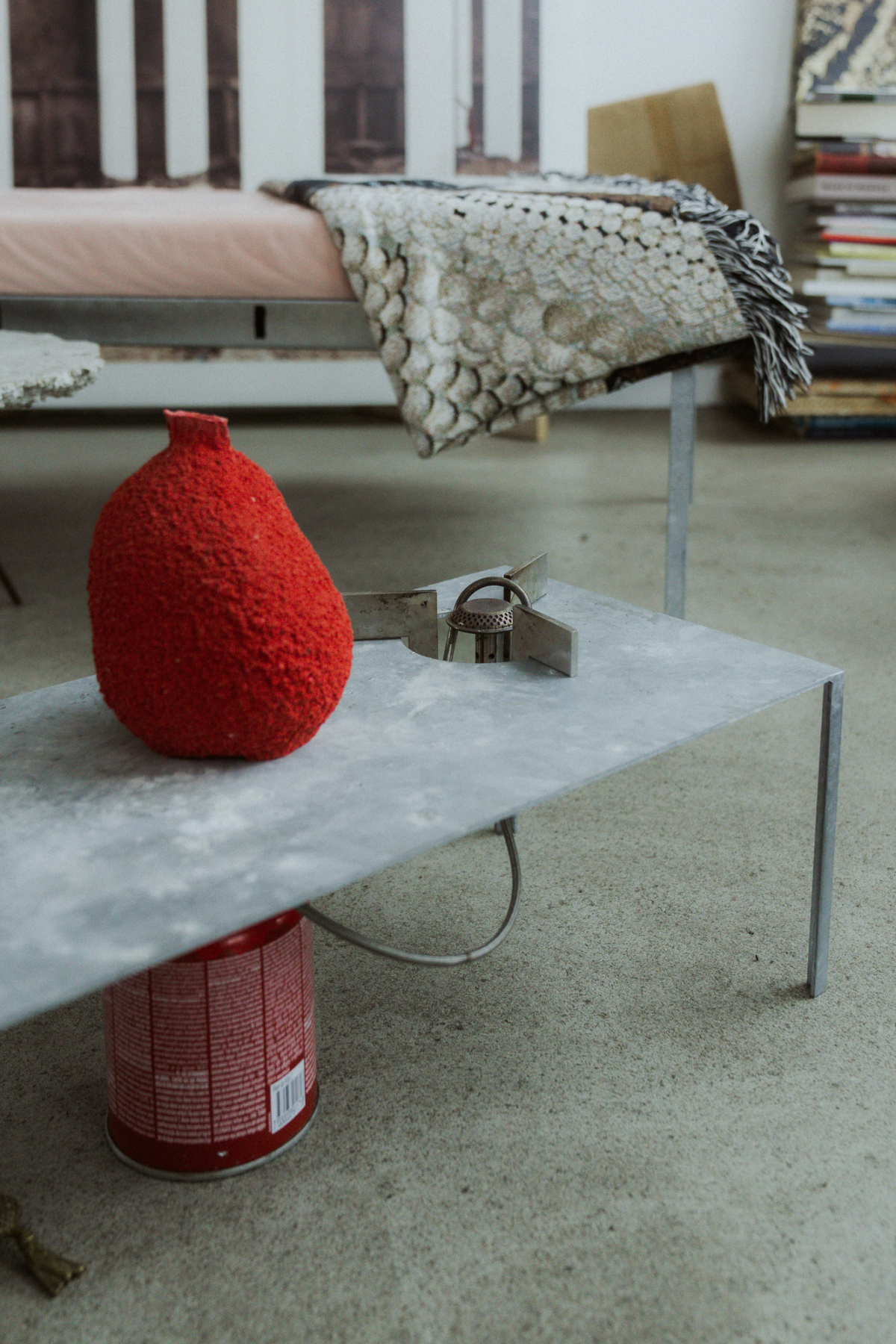
Sam ChermayeffEverything has to do with design and architecture (smiles). That’s such an obnoxious answer. Let me try again. My wife would be so ashamed – she has all kinds of things that are not designed, like a mug with her teenage face on it. Also my kids, they have so many trashy toys. I really don’t like the design of these, but I get why they love them so much. So basically I like crappy kids toys, as opposed to like Kapla or nicely designed toys. Those are the best.


-
FvF
Architecture is a visual and tactile discipline, but the atmosphere of the ‘making’ is often sonic. When you are sketching or modeling, do you require the high-energy hum of a collaborative office, or do you seek a specific, quiet sensory landscape to find the ‘rhythm’ of a new building? How does this change at home?
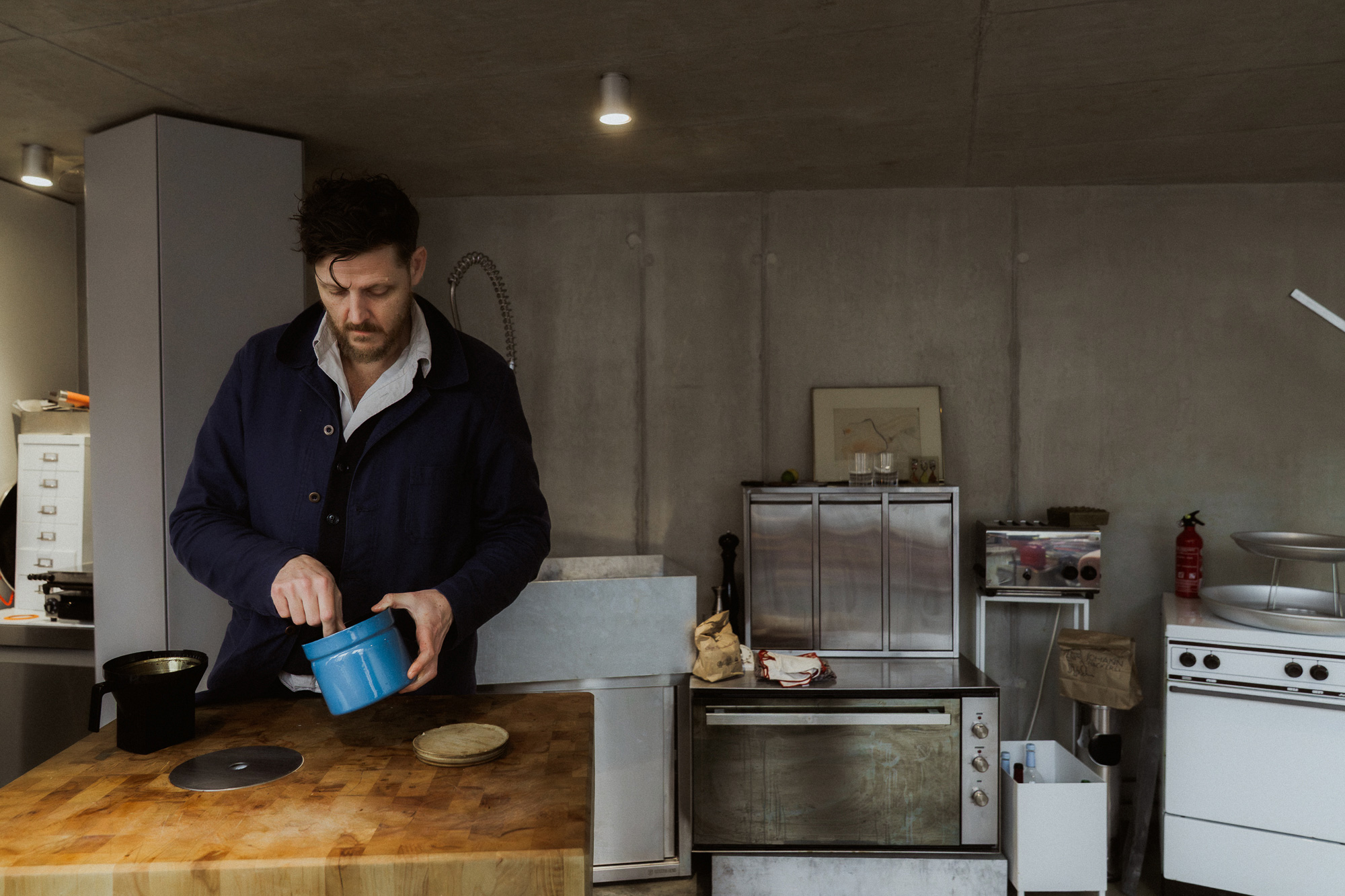
Sam ChermayeffAt the studio, we’re all talking all the time, and I tend to move the most. Other people have headphones on. I’m the disturbance, the traffic. I have a fantasy that I drew by myself in the quiet with music on, but no. It’s always me walking around and exchanging. A lot of commotion.
At home, I listen to music all the time. My children are obsessed with David Bowie, which I don’t completely understand. It’s the two-colored eyes. “Changes” is my current top playlist. Somehow Spotify made me very lazy, it’s always on Shuffle. I’m rather ashamed of that. Also the kids love silly dance music – my daughter loooves “Dynamite” to Tao Cruz. I think I’ve heard this song ten thousand times. I wish that music was more important to me. Tried to get into contemporary African music, Afro-beats. I don’t know what I like any more.


-
FvF
What is your preferred lighting situation?
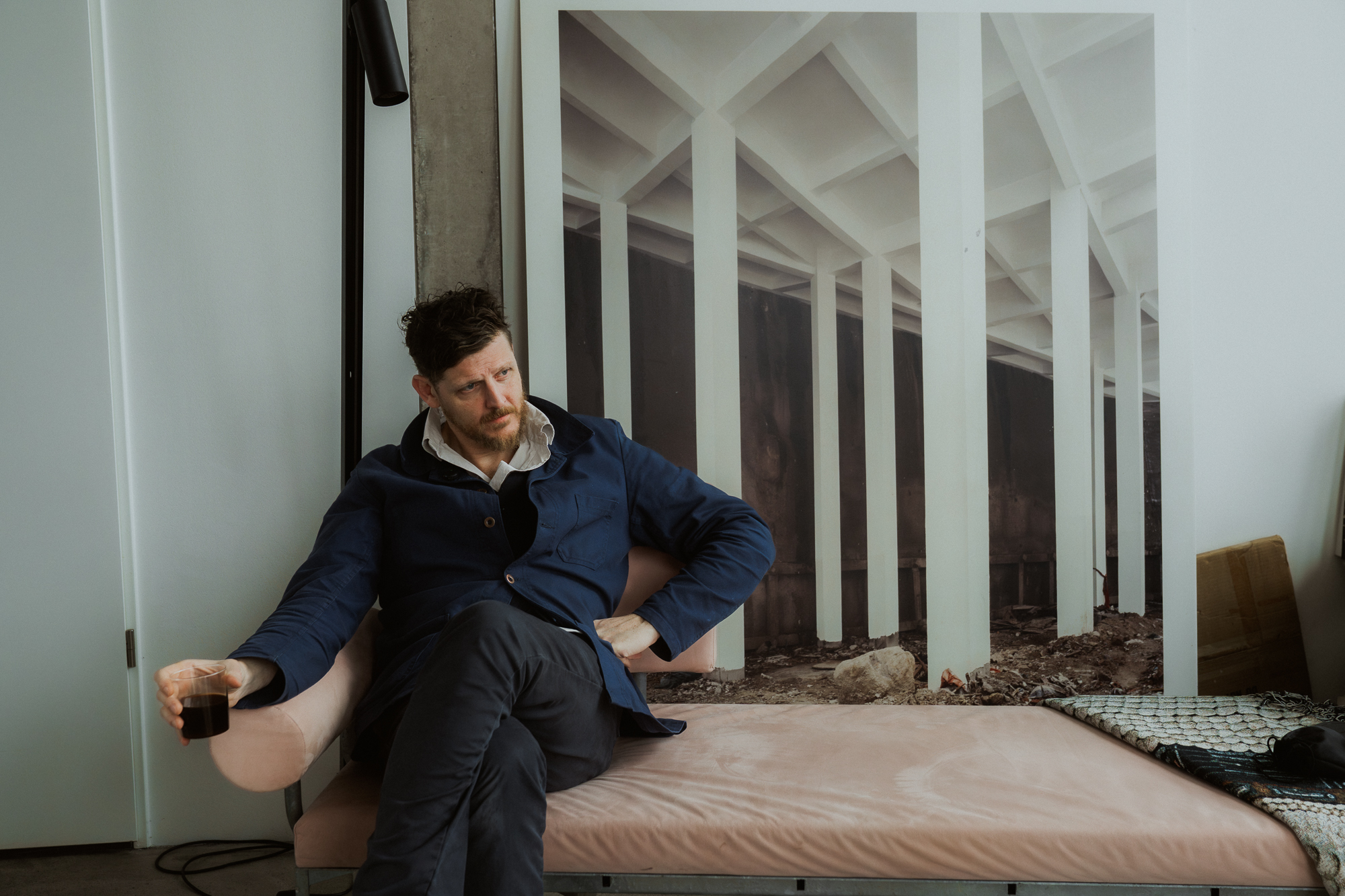
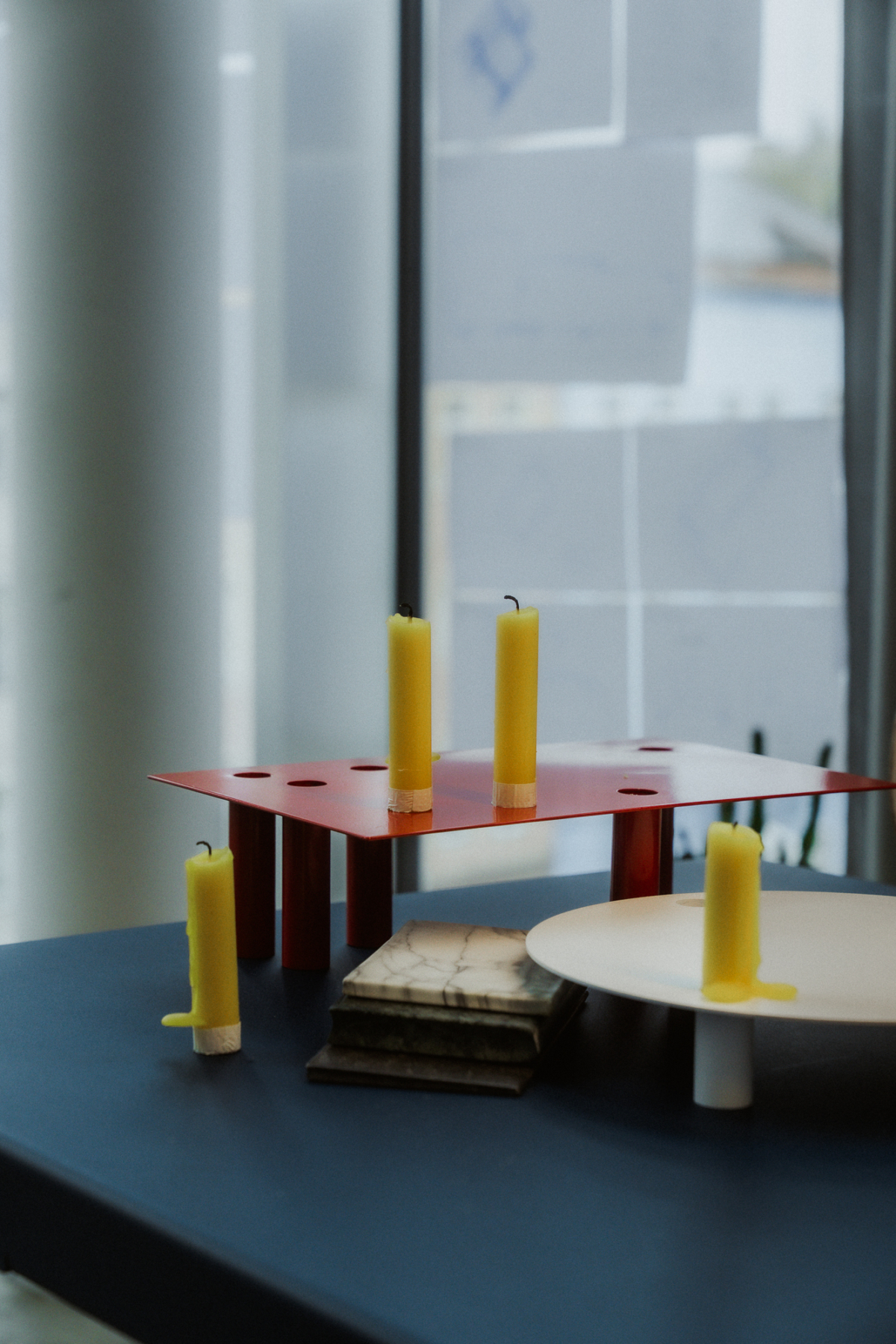
Sam ChermayeffI have a million prototypes lying around everywhere. I don’t want big and even lighting, even if my apartment has it. I like contrast. I dim all the time, and experiment. Even warm lighting I don’t like so much.

-
FvF
And what about your favourite olfactory experience?
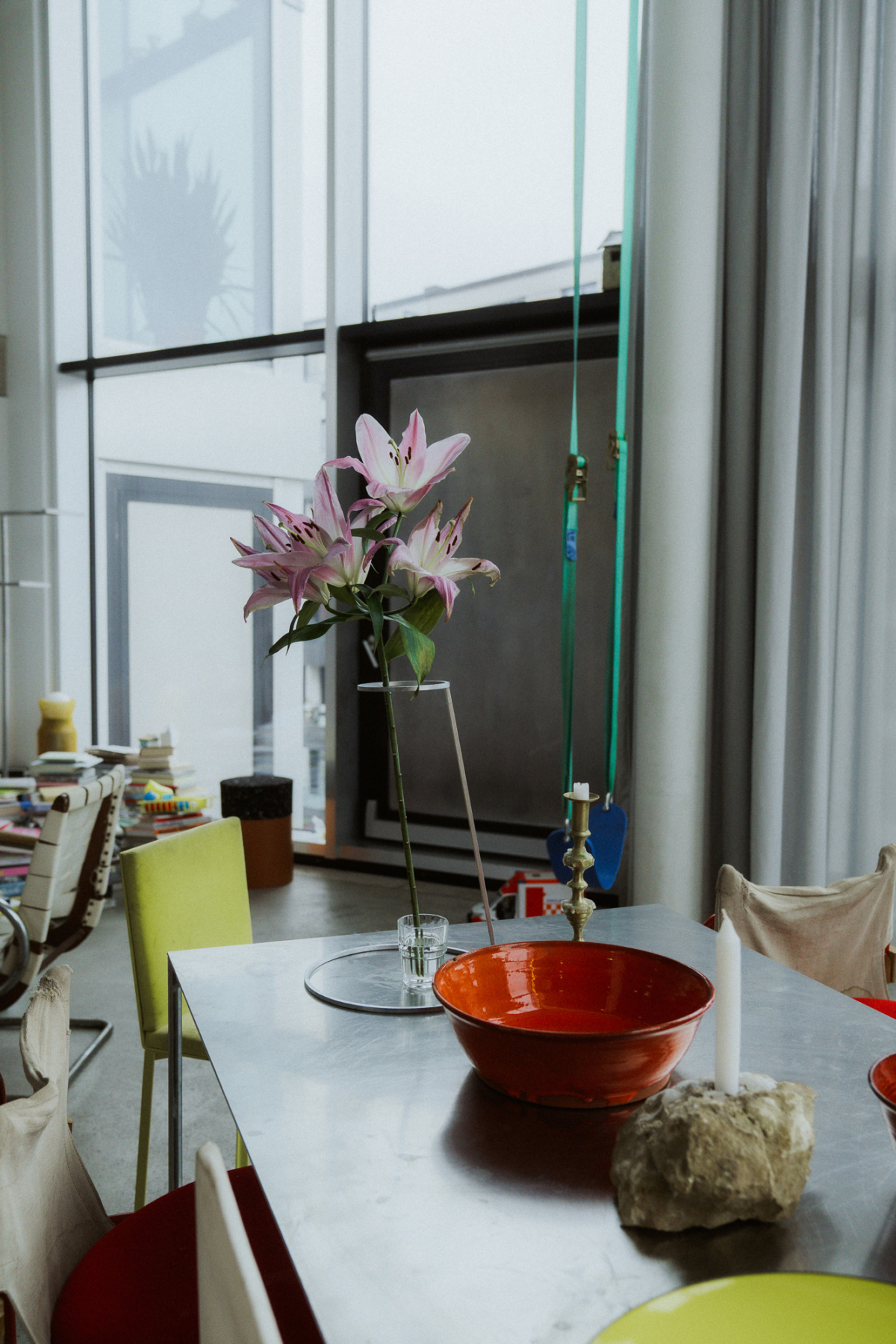
Sam ChermayeffUntil a month ago, I smoked two packs of cigarettes a day, so that was the smell. I really like lilys, like lots of flowers.


-
FvF
As someone who designs ‘Social’ furniture, do you feel a professional pressure to be the perfect host?
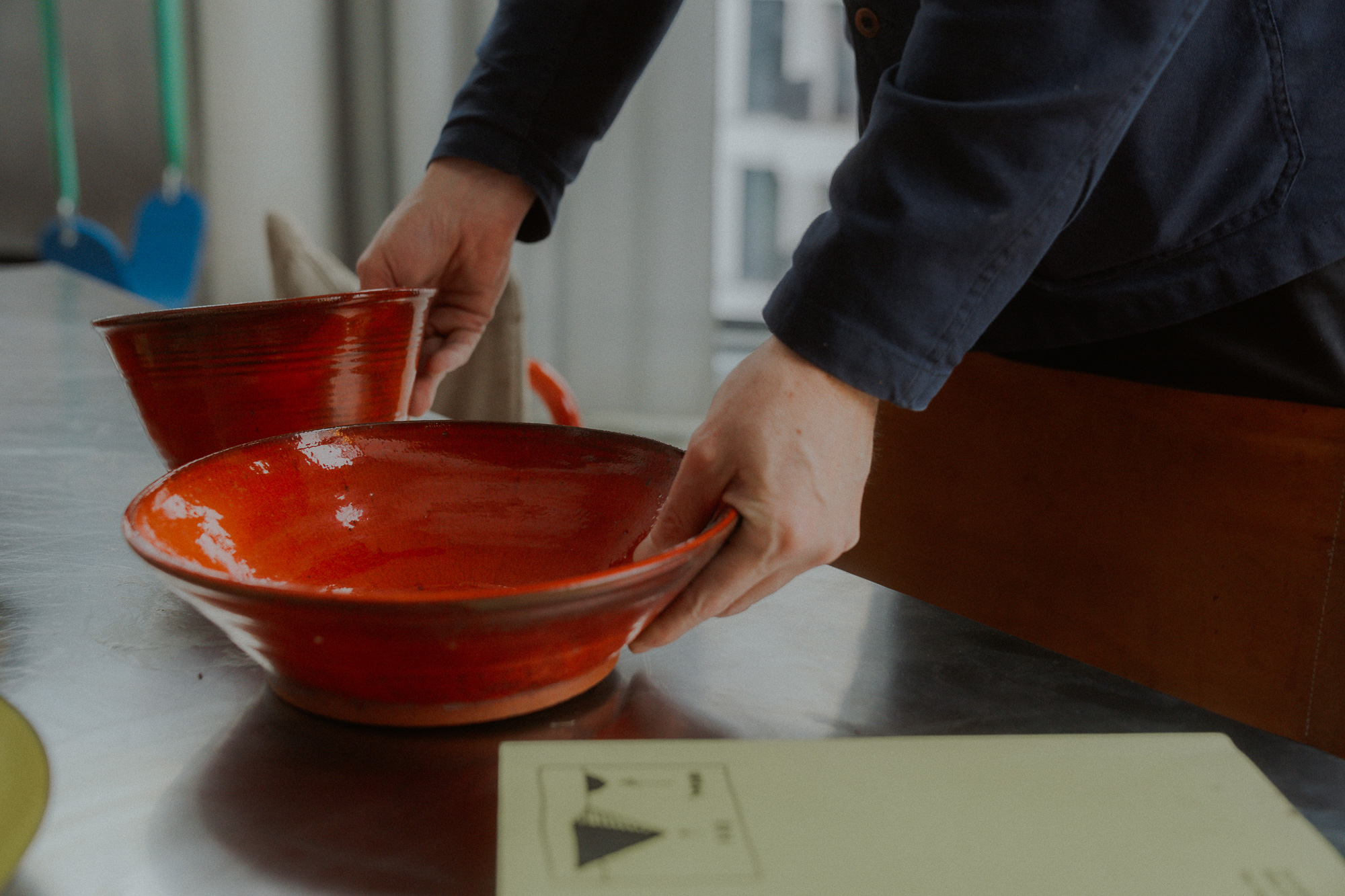
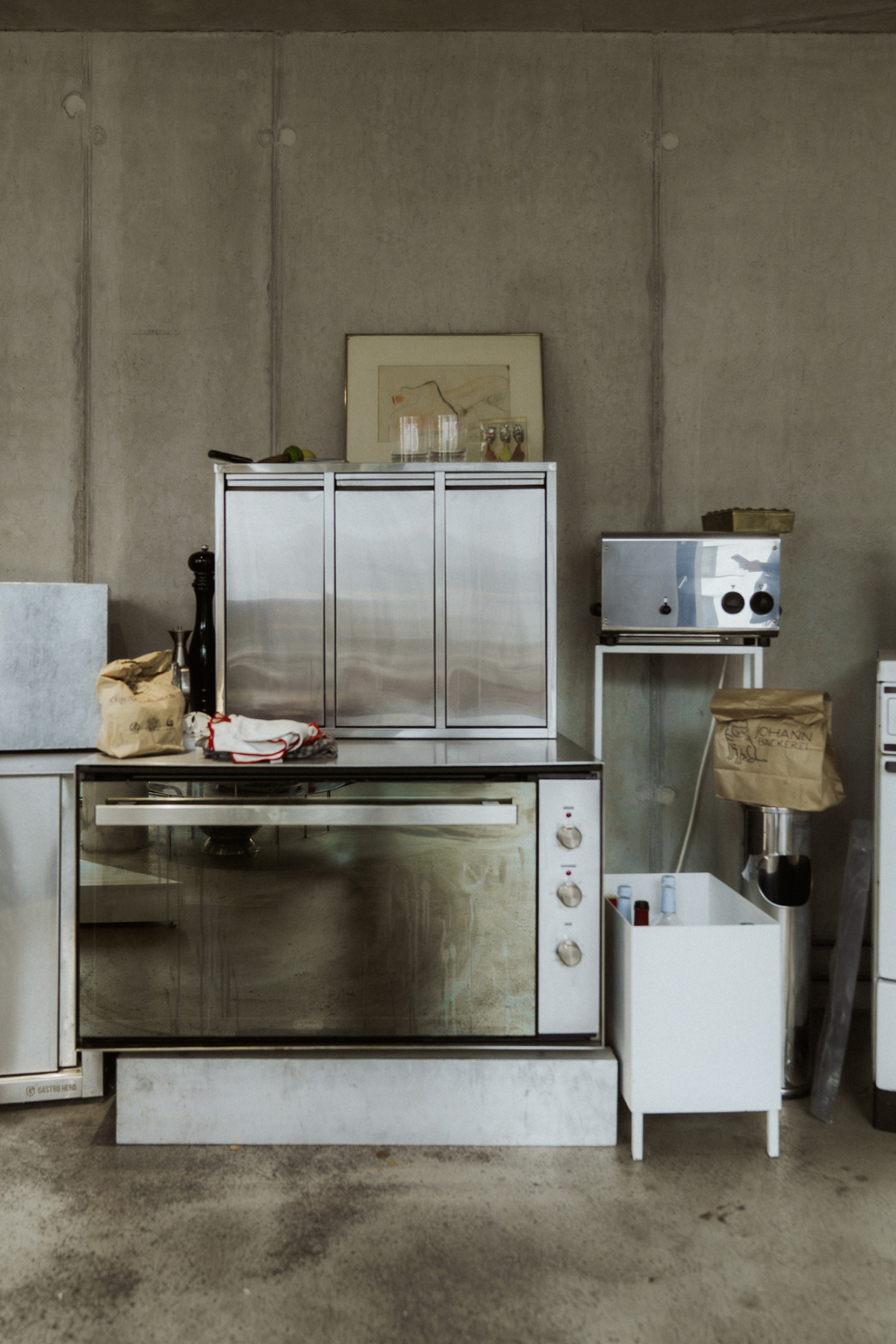
Sam ChermayeffI do host a lot. My apartment is not that big, but it’s nice, and people want to come here. I don’t feel too much pressure about hosting at all. The key to hosting is letting other people get involved. The imperfection is then a shared problem. I like cooking a lot, you could even say that I’m ambitious about it. But I’m not a great cook. That’s the nicest way to host – to make an effort, but enjoy the process.

-
FvF
Architecture photography usually strips a room of its ‘life’ (the mail, the dirty coffee cup, the stray shoe). Yet, your Instagram and your office philosophy seem to embrace the ‘stuff’ of life. How do you design a space that looks better when it’s messy?
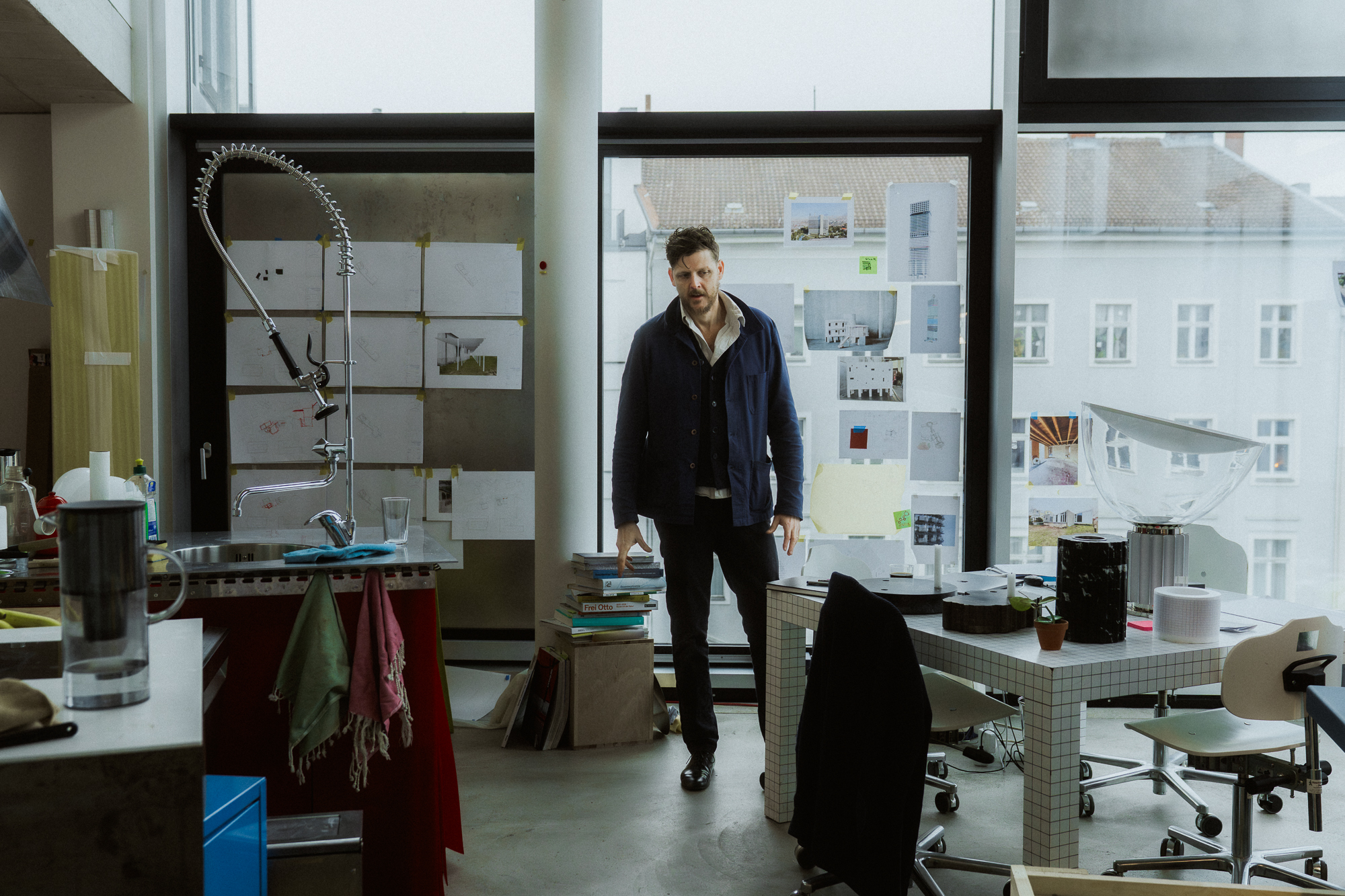
Sam ChermayeffI am messy, and I think most people are messy. The home story has won against the architecture story. There is no more clean architecture photos of nice architecture that I like. Sometimes in 2G. And that coincides with my own work, and my current lack of haircut. I want my places to feel lived in, and to be understandable. Modernism is really over. We all want to be slightly different. Slightly different is curated. Hence the victory of home story over architecture story. I have mixed feelings about it. Everything now is so personal. I don’t know what I want to do now. I accumulate a lot, more than I would like.


-
FvF
As someone who values the ‘human’ — and often the ‘awkward’ — in design, how do you view the rise of AI in spatial planning? Do you see it as a tool to handle the mundane technicalities, or do you fear it might smooth over the very ‘glitches’ and social idiosyncrasies that make your work unique?
Sam ChermayeffWith extreme trepidation. But you can’t just say no. I wanna keep it in a box, and keep the parameters clear, and not just use it for everything. It’s going to change a lot, and it’s not ridiculous. It’s artificial, but it’s intelligent. You can populate your own design with it super well. You can show use, and clutter, which was rather time-consuming before. And that’s fine. In my case, with my staff, and my students, it often happens that something looks attractive, but then, when you look closer, it’s not.


-
FvF
You’ve designed ‘Free Kitchens’ that force people to face one another. Has a specific discovery in your furniture or spatial design—perhaps seeing how people actually used a piece of your ‘Community’ furniture—ever changed a personal belief you held about human nature or how we should live together?
Sam ChermayeffI was convinced a long time ago that people could have a little less privacy, and a little less control over their own living situation. All the work, specifically in the kitchens, suggested that it’s true. There’s small degrees of people interrupting your life, in the feedback-life loop. If it’s not consistent, you can deal with the interruptions. So it’s only bad, if you want out of your way not having it in the first place. You should’t make castles for that reason. You often just get used to including other people in your life, and you just live with it.
The way we use our phones, and are more and more isolated with them, is becoming more and more problematic. You need reality to interrupt, you need a little of friction to survive. I don’t think I saw it coming. I just had this idea, and back then I didn’t know it would become such a big deal. I always thought it would be the communal table, but it’s more the smaller interruptions in a way.


-
FvF
In a world increasingly obsessed with ‘efficiency’ and ‘resale value’ in real estate, does the act of designing a home that prioritizes joy, play, or unconventional communal living feel like a form of quiet resistance against the commodification of space?
Sam ChermayeffNo. I don’t think about it that way. I accept that commodification of real estate. I just suggest that people should also live. Please also enjoy yourself, at least a little bit.
Architects are whores, we will do what you asked, on some level, if we can make it somehow beautiful in our eyes. Famously, architects have always loved working for dictators.


-
FvF
If you were stripped of all building codes for one project — no fire safety, no privacy laws, no structural ‘norms’ — what is the one ‘illegal’ spatial arrangement you are dying to experiment with?
Sam ChermayeffIt’s a banal, mundane thing. More architecture should just be outside, should not be insulated at all. I understand that environmental rule are the way they are. But I am interested in the grey area, where on a day like today, in the middle of March, I could have lived small in winter, and now expand. We should have more winter gardens. We should conceptually live more in winter gardens.


-
FvF
Architecture is often about permanence and strength. But where do you allow vulnerability in your process?
Sam ChermayeffI would like to be the modern man who has a clear answer to that. It’s not that there are no places where I can be vulnerable. I would like for everything that I do to have a certain degree of casual quality to it, as opposed to permanent and strong. But then I also want to be respected for my deep and long thought process of creating “casual”. The vulnerability lies in the interface of that – between the intense thought process and the casualness. It’s where I can get in trouble, where I can get angry.

-
FvF
You often work in pairs or groups (formerly June 14, now Sam Chermayeff Office). Architecture is notoriously an ego-driven field. What is the most beautiful thing that has ever emerged from a disagreement with a collaborator—a moment where the friction of two ideas created a third, better ‘wrong’ idea?”
Sam ChermayeffIn our studio, that happens all the time, constantly. It’s a daily occurrence for us. We get into a “fuck you fuck you” mode, but then, a few days later, if you surround yourself with people you trust, there’s often something beautiful coming out. The fights can be very loud, as yes, architecture is a very ego-driven field. But in the end we all want it to be beautiful.


-
FvF
If you could have dinner with any creative figure — perhaps a radical architect from the 60s like Cedric Price or an artist like Donald Judd — under the condition that you cannot talk about buildings or furniture, who would it be, and what would you discuss instead?
Sam ChermayeffThat’s fun. I want to talk to Franz-Erhard Walter. He has multiple ex wives who continue to work with him. I don’t totally understand that. Walter, in Fulda, comes to his openings, trying on his own things, happy about his body, other people’s bodies. I would ask him about how he’s doing relationships. What was your first marriage like? What was your divorce like? How he deals with people. He’s still alive, so this conversation would probably happen.


-
FvF
You’ve mastered the art of making the unconventional functional. What still genuinely ‘scares’ you – in a purely professional way?
Sam ChermayeffVery personally: Getting jealous. It takes forever to become a successful architect. What if my projects don’t happen? What if everything gets canned? I want to do bigger things. I don’t think my projects will break, that’s not what I’m scared of. It’s more about not producing enough. When you’re a young architect, you want to inspire others a lot, and I still have that ambition. It’s not like pop music where you have a hit and 10 years later music sounds different. Architecture is in a flow, it could be 40 years until someone notices or cares. I’m afraid of being irrelevant, or relevant to only very rich people, which is a special kind of irrelevance.