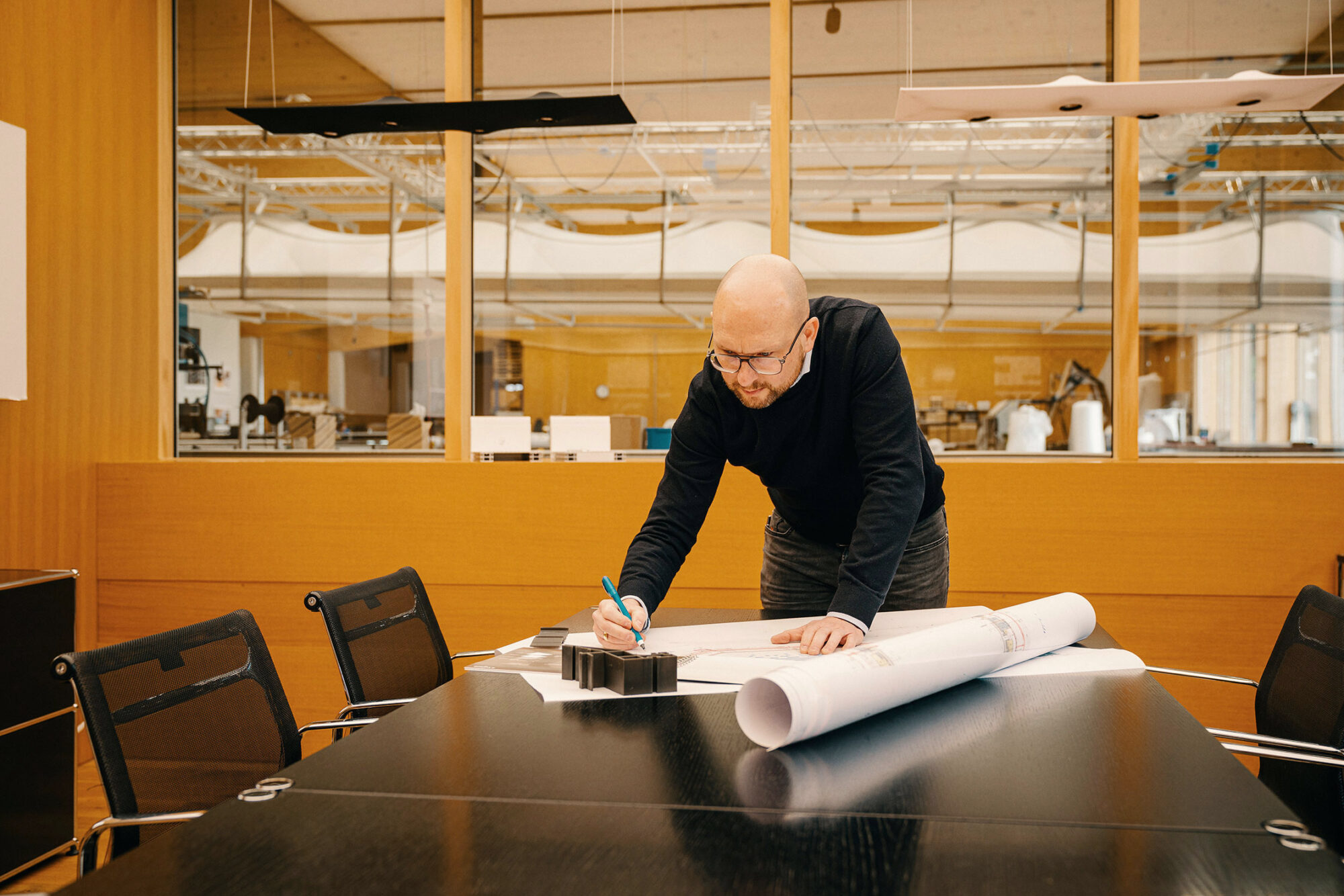
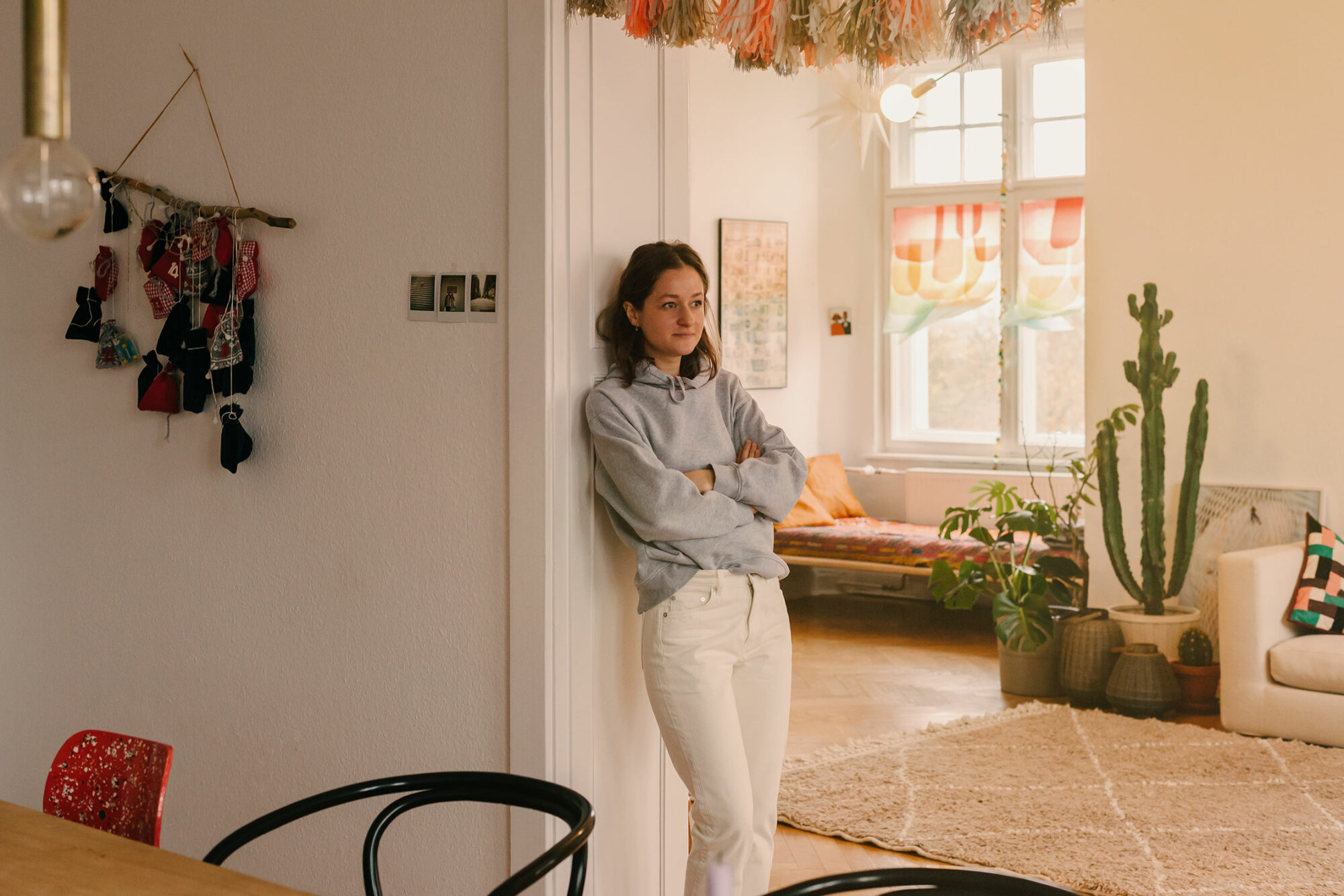
An interview with a product designer often runs the risk of getting tangled in the technicalities of ergonomics and manufacturing. Yet, speaking with Berlin-based designer, studio lead, and professor Mark Braun reveals a practice guided far more by intuition, human rhythm, and what he calls “feeling design with my belly.” Ahead of debuting his new venture – the circular, modular furniture system Foyos – at Copenhagen’s 3daysofdesign, Mark sits down with us to dismantle the pristine illusion of the design industry. From the meditative decompression of building a treehouse with his daughter to the deliberate embrace of imperfection and “calm” aesthetics, Mark shares a remarkably grounded perspective on his craft. In our conversation, we explore the duality of a hyper-attuned analytical gaze, the honest compromises of Foyos, and why, in an increasingly digital and shiny world, the true power of design lies in its ability to act as a lifelong friend.
-
FvF
Mark, you’ve just finalised a complex production line, launched a new collection, or completed a demanding architectural commission. The intense coordination and intellectual focus shift; the energy begins to fade. What is the very first, truly mundane, simple thing you crave in that post-creative space?
MarkI am a proper craftsman, a maker – I do my yoga, fixing a window, planting a tree. I really like to get into this flow in making. And of course I am originally a carpenter: Designing and making are some of the things I love the most in life. Sadly, there’s not much space for “making” in my life these days. My decompression time is over the weekend, which is when I love to take the time and build again. Last weekend I started building a treehouse with my daughter, also repurposing old materials. A moment to bond, but also to wind down – a great combination.

-
FvF
As a product designer, your primary instruments are a hyper-attuned spatial gaze and an understanding of tactile ergonomics. How does this reality intersect with the ordinary spaces you inhabit? When you enter a café, a train, or a friend’s home, can you ever truly turn off the analytical gaze that evaluates how things are made?
MarkIt’s always there, but I’m a tolerant person. I observe, but I don’t have the urge to change the environment of others. I’m a treasure hunter: If I see details, I take pictures, then bear them in mind for future projects.
As a designer, I sometimes see my furniture, my products in overly perfect environments, but I prefer the beauty of imperfection. It is an inspiration – how different environments can be. A language without words. You reflect by emotion, and by intellect. Of course I can switch off the intellect, but the feelings – they’re hard to switch off. So I still feel design with my belly.


-
FvF
The life of a studio lead, professor, and entrepreneur involves a relentless cycle of critique, public presentation, and strategic decision-making. How do you actively cultivate and maintain grounded, meaningful connections amidst these demands?
MarkThere is a difference between quantity and quality. You can be very efficient if you have good quality moments. This morning my wife, daughter and I went swimming together. Keeping active, and doing this together, is a good thing. Yes, there’s not a lot of time. But there’s this old saying: When you’re a racing horse, you have to run. And that’s my character. Some people don’t like it, but luckily, my wife and I, we’re the same type. It’s all about timing, developing and trusting your intuition to handle your life and your relationships.


-
FvF
Between teaching at Hochschule der Bildenden Künste, Saar, running your own design studio, and working on Foyos, you deal with a lot of institutional and corporate structures. How do you maintain efficiency in your day-to-day work, and how do you prevent your studio’s core identity from getting lost in the logistics of scaling?
MarkI hate meetings when people just talk a lot. I can’t really avoid them, but I try to make use of the time and work in parallel, multitask. I prefer efficiency – and with my own studio, we try hard to work as efficiently as possible. We also like a good break though – often take an hour for our lunch break. When you take breaks, the brain can focus a lot more when it comes back from them.
The balance is important, also to empower people, for them to be allowed to take over. I always describe my company as a tree, and it needs water. Sometimes you feel you’re responsible just for one apple, and you forget the entire tree. The company identity is important, and should not fall apart.

-
FvF
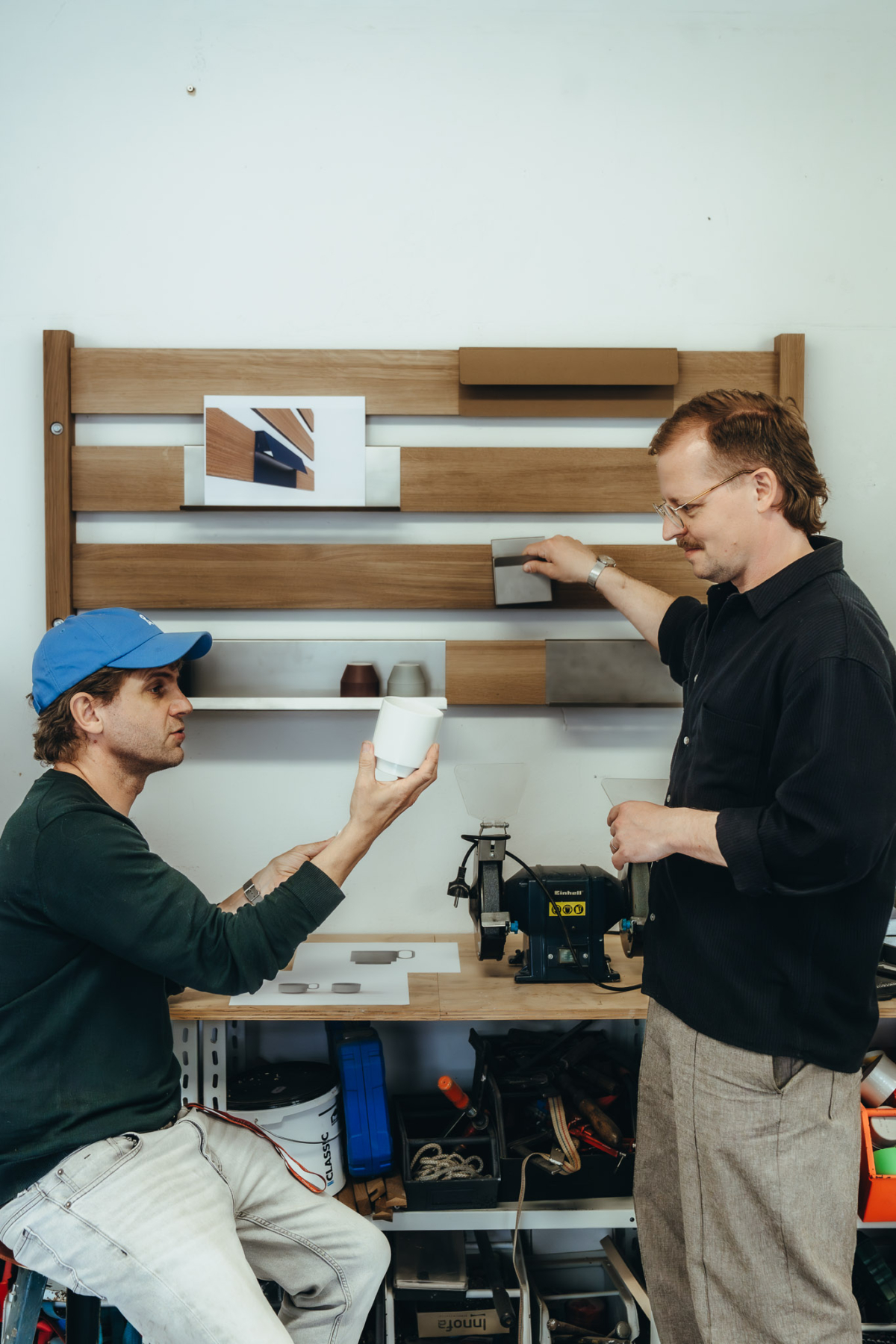
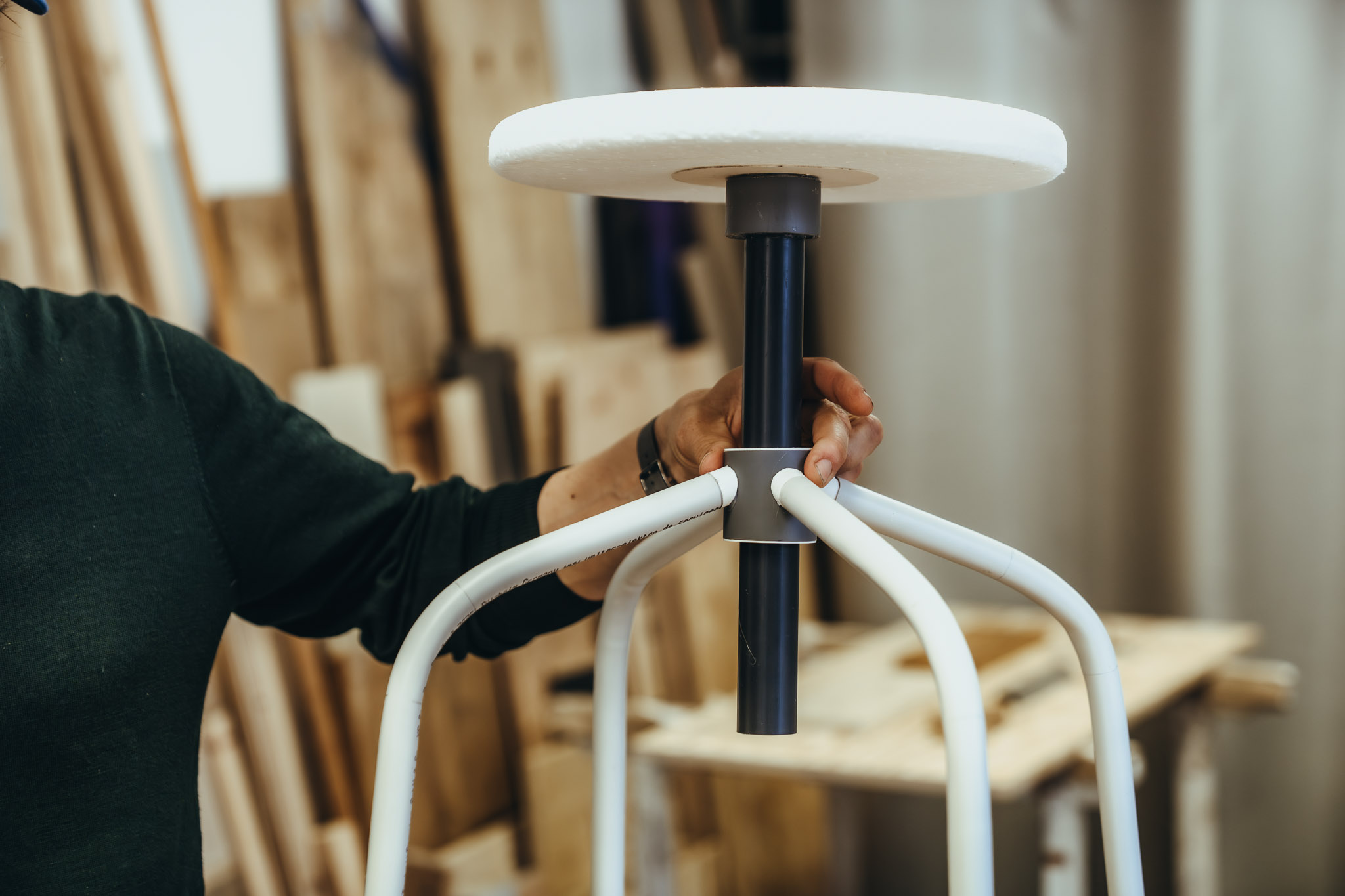
Your latest adventure, Foyos, explicitly borrows its structural logic from raw workshop archetypes – spaces of manual labor, dust, and pure utility – and translates them into high-end, solid, modular systems. The tagline is “Workshop Furniture. Retold.” There is an inherent romanticism in bringing the ‘workshop’ into the pristine, tech-driven living or working space. Are you genuinely changing how people work, or are you selling an aestheticised illusion of craftsmanship to people who spend their entire lives behind a glowing screen?
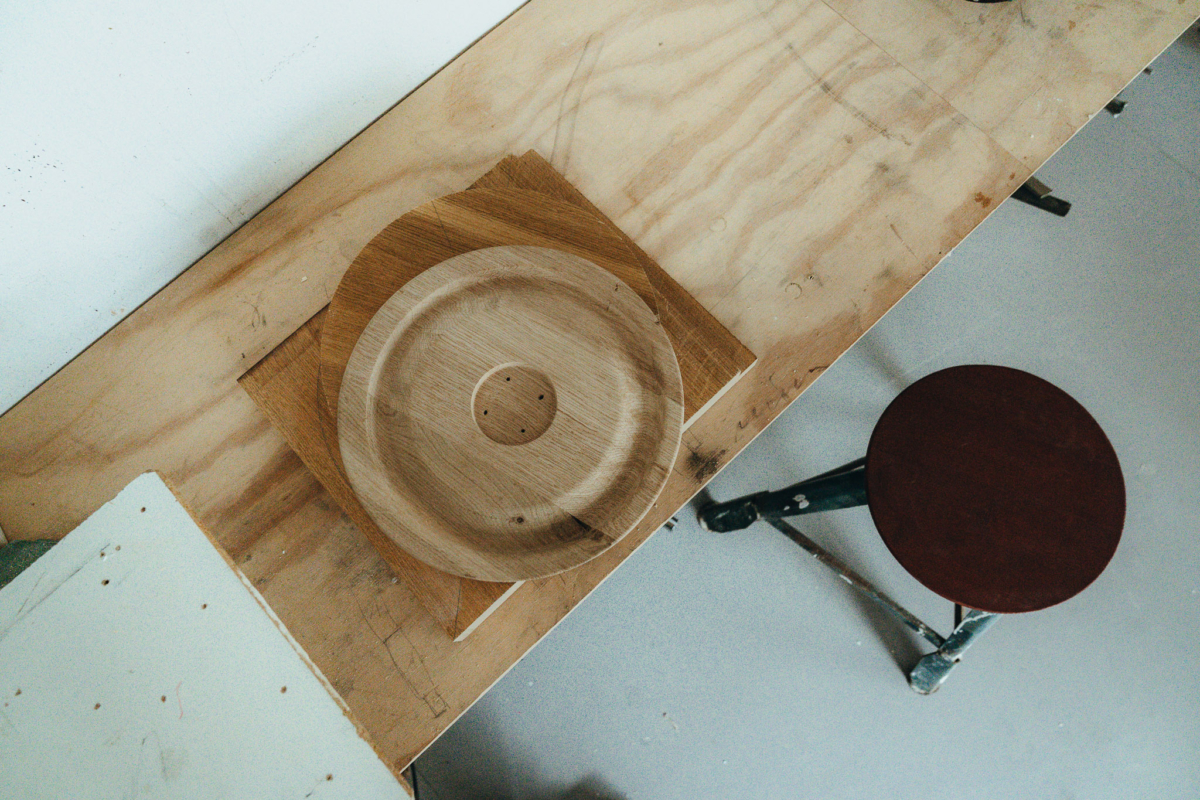
MarkThat’s exactly the point. There’s a big group who are always sitting behind a screen, and they might not be so skilled with craft, with their hands. It’s less a super functional, clean workshop – the focus is on the emotional part, that life is much more than the digital world.
When it’s about observing society, the impact of the screens, it’s the deep impact of slowing down, of actually making something, with your hands, for yourself, not selling it. So the feeling is deeper, the connection is strong.
There are a lot of people with very expensive kitchens that never cook. If I were a kitchen designer, I would find that rather frustrating. But luckily with Foyos, people will most probably only become clients if they actually want to use it.
So to sum it up – yes, of course we change people. And with Foyos, we invite you to make the first mark on the table, to properly alter and change the table. It’s an invitation to become a maker, for everyone really.

-
FvF
Your career is dedicated to defining the utility, aesthetic, and purpose of objects. Yet, sometimes the most important items we own defy industrial logic. What is one object in your primary living or studio space that is absolutely essential to your well-being but has absolutely nothing to do with design excellence or function?
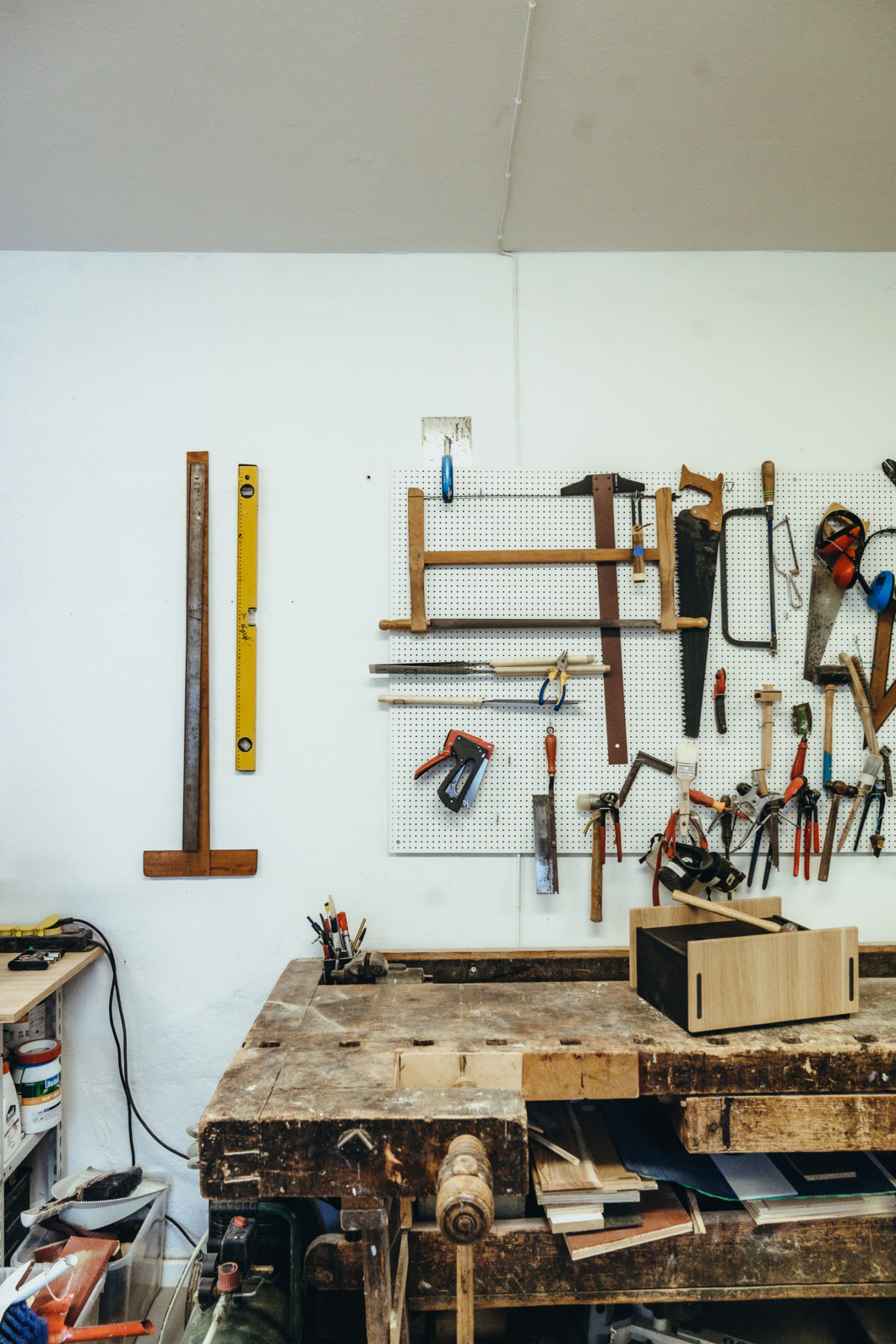
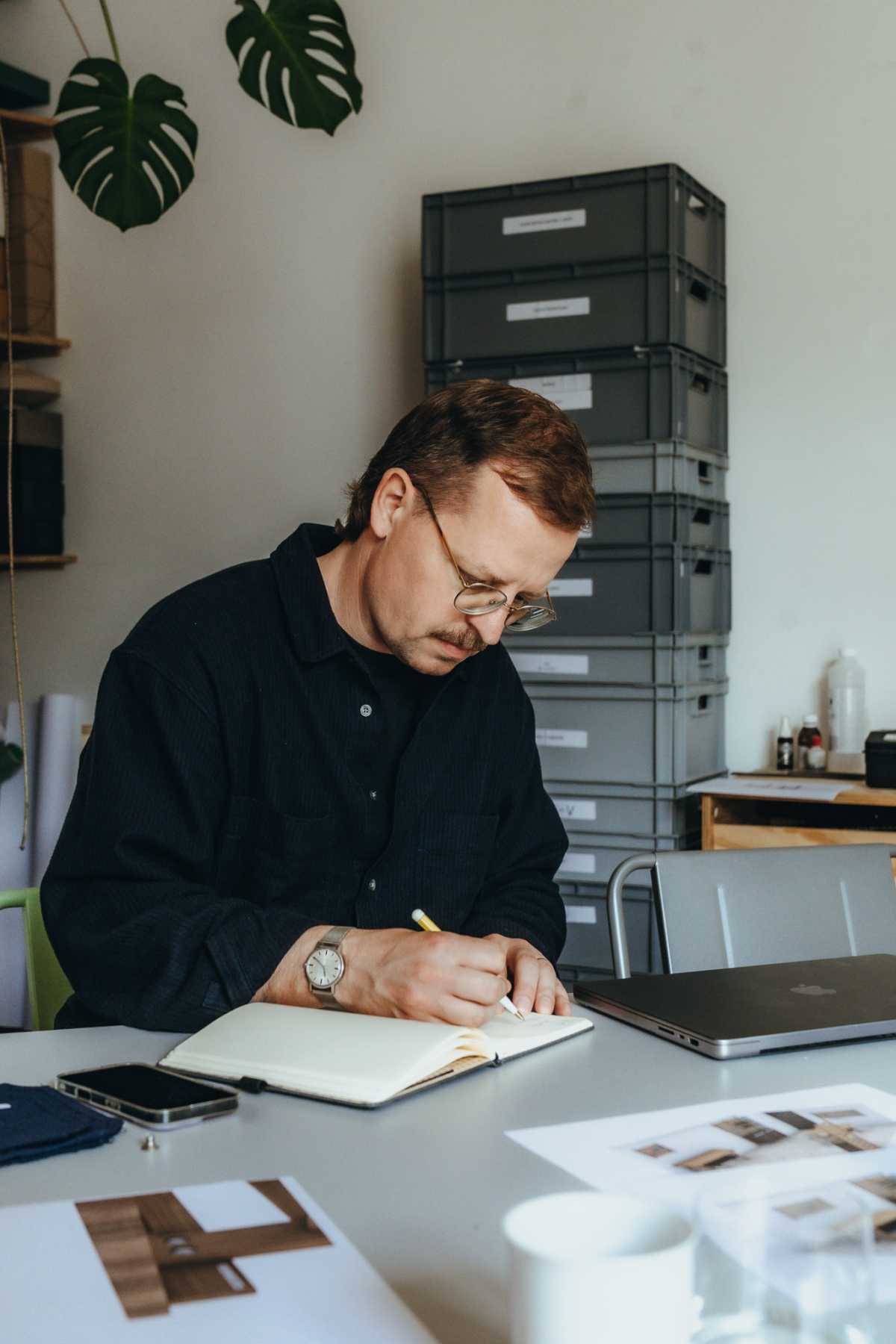
MarkI love the super normal. It’s beautiful for me. So I always love a standard, hexagonal pencil. That’s enough for me to sketch – I don’t need a super fancy pen. I enjoy good quality, but it doesn’t have to be expensive.
When people come to us, they think everything was carefully selected. But we really work like a tree that’s growing, slowly but surely. There are always these three aspects – function, aesthetics, and identity. Sometimes they’re not equally balanced: If my toothbrush is not working well, I’m stressed – we all know that feeling, or when a pen is not working, it’s so frustrating. Then you feel the importance of well-engineered products, the functionality aspect. A lot of things don’t have to be primarily beautiful.
I have coffee cups from a friend – he made them for KPM Labs, and they are beautiful, rather delicate though. Objects and human beings always have an interaction, and it affects our behaviour. The Foyos cups we designed for the launch are significantly thicker than my dear KPM cups, made from more durable ceramics – they are great to-go cups from kitchen to workshop. The KPM cup was designed for a different moment in your day.
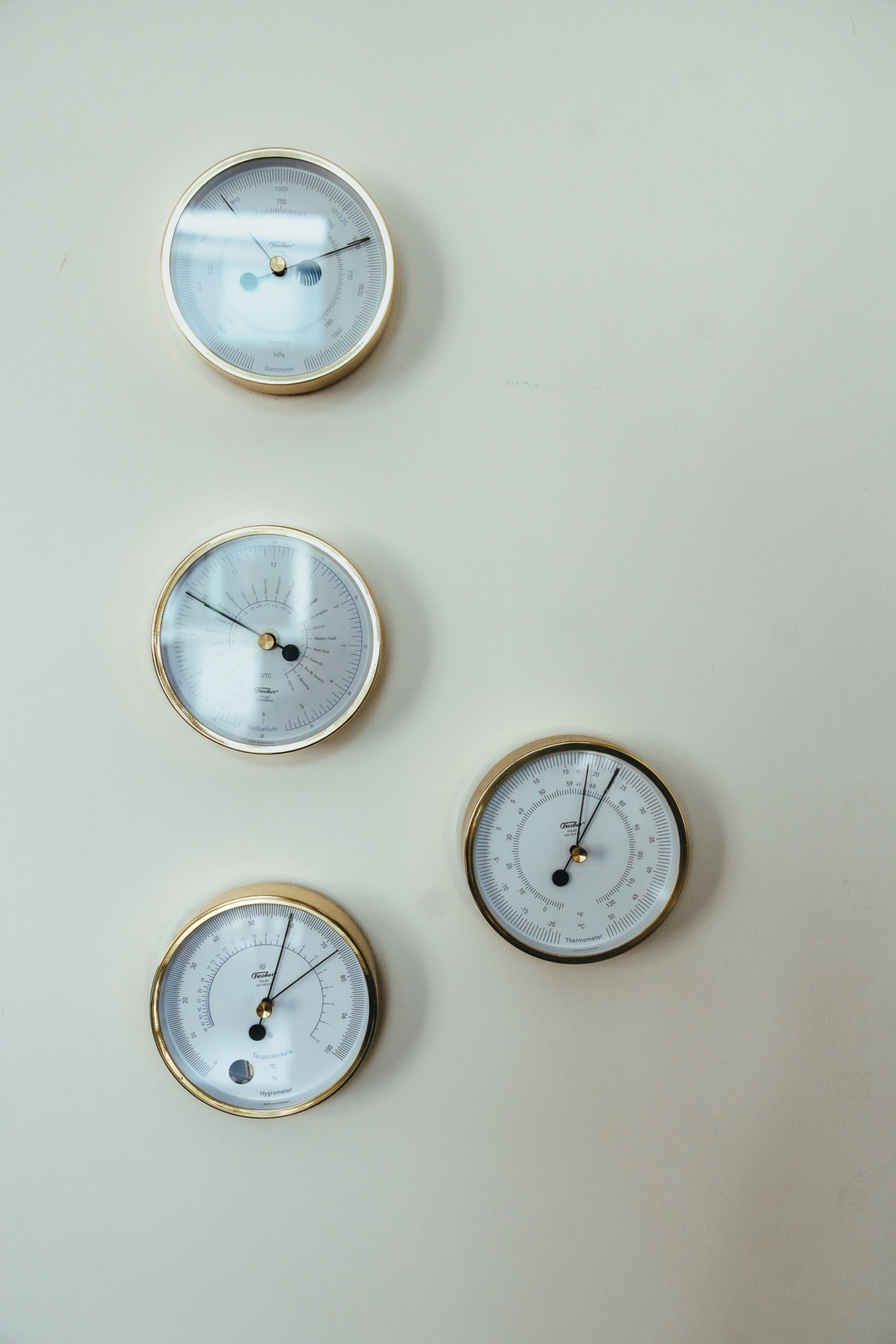
When it comes to Feng Shui, it’s all about the entire environment. And that’s also Foyos – it’s an entire system. All parts can fit together individually, and the beauty comes out in the individual combinations.
-
FvF
Industrial design often requires a balance between intense, solitary sketching and the collaborative noise of prototyping and manufacturing. When you are in your zone of conceptual ideation, what is the ‘soundscape’ of your preferred environment?
MarkMy last few weeks were really packed to the brim with work. Normally, at the studio, we listen to music a lot. But when it becomes really stressful, we all prefer silence. My intellectual progress is better when there’s silence. But my flow is better when there’s music. We have two streaming services we use: NTS and GDS. GDS – a Swiss service – is a little slower, like the country it originates in. NTS is a bit more electronic. Eva from my studio also has a banger list with hits – that’s for Fridays.

-
FvF
What about your preferred lighting situation, when you’re working?
MarkThe creative environment for my studio has warm lighting. Cold light might be more activating, but to feel good, warm light is something I definitely prefer. It’s not a clinical situation here. In winter, that can be tricky, as you always need enough light. It’s always about just enough light. There is a big shift about feeling more comfortable in a working environment, and for me, the lighting is part of this.

-
FvF
What about favourite smells?
MarkSmell is very interesting. As a carpenter I like the smell of wood, even if sometimes it can cause cancer – like beech. Even things that are dangerous can smell great – I used to smoke, and I still sometimes like the smell of it.
I am not a huge fan of perfume. It might enhance your mindset, your identity, though: You choose a smell to accentuate parts of your personality. My parents-in-law are super elegant people, and they always use perfume. With their smell they take over – when my kids come back from spending time with them, they always smell like them, even though they’re my kids. (smiles)


-
FvF
You’ve recently stated in interviews a radical willingness to confront the complexities of our time – even noting that today, you would design a tank if it meant engaging with the raw reality of political and structural power. How has your perspective on the ‘power of design’ evolved from creating beautiful consumer archetypes to tackling systemic, industrial challenges?
MarkDesign is always social interaction, or economical, environmental, even political interaction, and as makers and designers, we can be a part of this. When you have a chance to make important decisions in your profession, I’d recommend taking the chance, and be aware of it. In theory, we have a lot of power, but in practice, the power might not sink in that much. I’m always aware of the last 5% that are not working – it is something that keeps me going. This interview that I gave where I mentioned the tanks – the journalist knew it was a strong headline. But the story was that tanks are not inclusive, they’re really just made for men, not for women – they might even be dangerous for women. So my point was that we should design more inclusive projects. You should be aware that there is change in society, and always think about how we can incorporate that in your work.

-
FvF
With Foyos, you are moving away from classic consumerism toward a subscription-based, fully circular system. In a world saturated with ‘sustainable’ marketing noise, how does the actual engineering of a circular object feel like a systemic intervention?
MarkYes, the danger is always there that it’s just greenwashing. And users don’t really have the right mindset to properly be aware of their responsibility to repair, to take good care of things. They often leave the responsibility of sustainability with us makers. So if you design something that is less trendy, more archetype looking, then our challenge is inviting users to take more care, and our idea is to reach this with the details of the Foyos furniture. We don’t want proprietary systems that are too closed for a user to be invited to interfere. Here, at Foyos, the user is invited to scratch, to alter the pieces.
When it comes to marketing, often things just pretend to be innovative. But sometimes it’s just innovation for marketing’s sake – they might not be the right materials for the purpose. With Foyos, we try to choose the right materials for the right purpose. If you have a good relationship with your product, then you take better care of it.
Maybe it’s better not to call it sustainability, but rather talk about a product being a good friend – and friendships should always be built to last, at least have the intention.
At the beginning of my career, I always avoided living with my own products – being the hardest critic. But it also taught me to live with the imperfections, and quietly make adjustments even after the launch.


-
FvF
Between guiding the next generation of designers at the art academy and pitching circular systems to corporate stakeholders, you are required to project immense authority and conviction. Where do you allow yourself to be vulnerable or uncertain within your process?
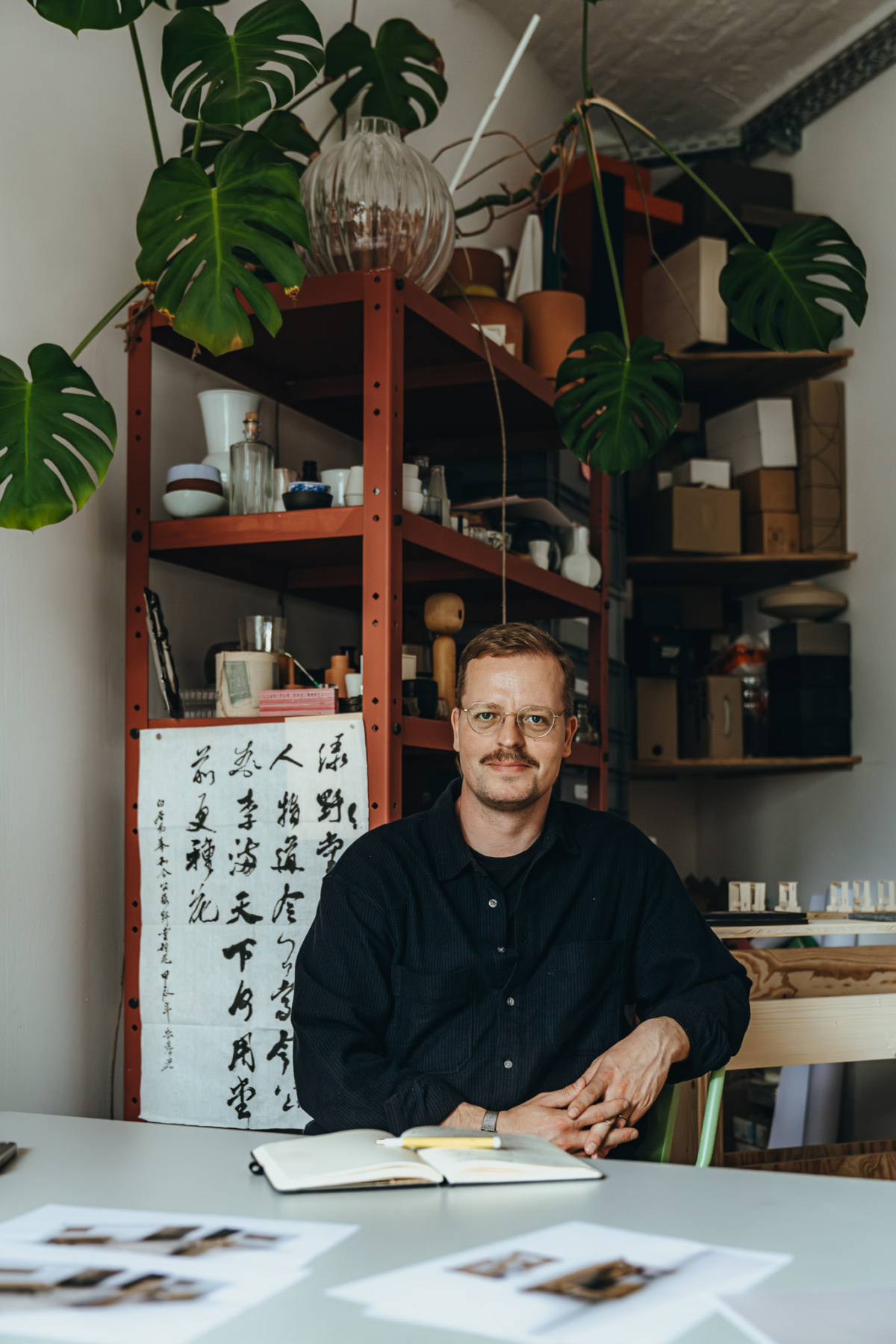
MarkI am always super open to mistakes. Some of my students are sometimes disappointed, as I am not a very dominant teacher. My technique is about observing, then putting the finger where it hurts, but often it doesn’t even hurt a little. I strongly believe that we’re all always better when we work together. It’s important to allow your environment to criticise you. Now that I’m 50, it becomes more complicated that younger people feel they can be on eye level. My goal is to always challenge this, to find teachers everywhere.
Design is a discipline where you have a core – it’s important that you know you have the skillset to design, but it’s a “Schnittstellendisziplin”, an interface discipline. We are professional dilettantes. But the professional aspect is important. To be honest, I am a person who is sometimes very imperfect, as I do so many things at the same time. So I need a critical environment to make everything perfect in the end.
-
FvF
Mark, if you could have an uninterrupted conversation over dinner with any creative figure, living or dead, from your discipline—but the one rule was you could not discuss their actual work or output—who would you choose, and what would you want to discuss with them?
MarkI just saw a talk by the British design critic and author Alice Rawsthorn during Milan Design Week – it was at the fifth edition of Prada Frames, the annual symposium curated by design and research studio Formafantasma – and they talked about design as an attitude: That’s a powerful tool. She wrote a book about that, too. I’d love to elaborate further on that with her, but also about the planet, cohabitation, things like that. It’s crazy – that rule about not discussing work though – as our work, design, is everywhere.
So yes, a four hour dinner with Alice would be great. She is such a strong, visionary mind – I appreciate her intellectuality a lot. In all her work, Alice advocates for the role of design as a social, political, and ecological instrument – super inspiring.
-
FvF
Designing an object for a client is a clean, creative transaction. Co-creating a furniture brand with Paul Gummert means entering the messy realities of supply chains, capital investment, and corporate scaling. Where has the entrepreneur in you had to brutally overrule the design purist? Is there a specific detail, joint, or material in the Foyos collection where commercial reality forced a compromise that still secretly bothers your creative ego?
MarkPaul is a great adaptor, a great listener, and a great leader. Good people surround themselves with other good people, it seems.
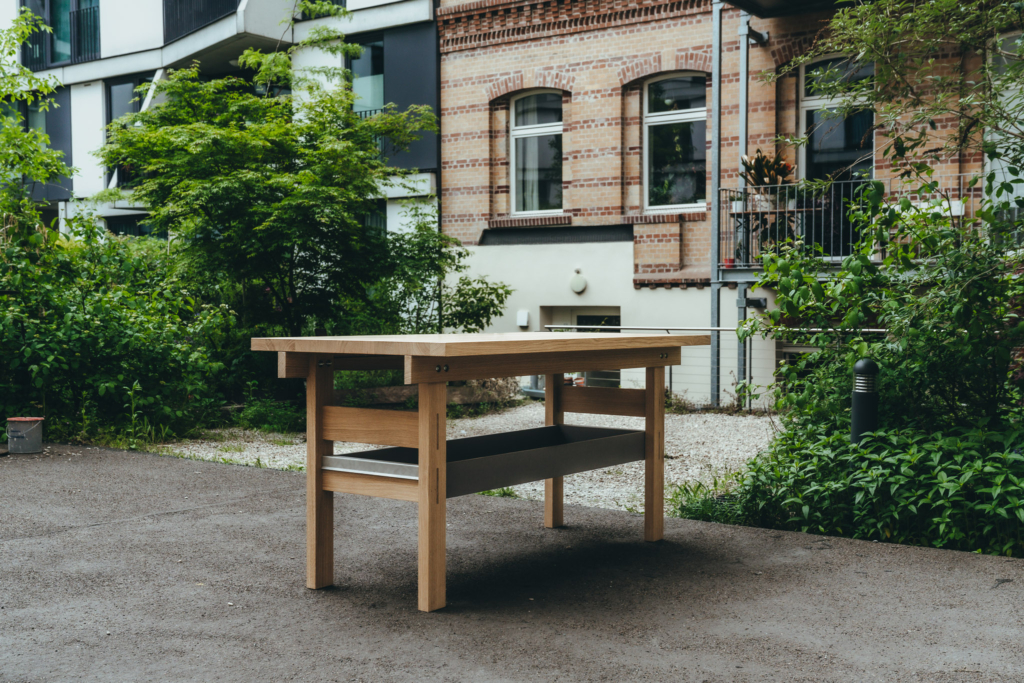
So yes – we got some criticism from the carpenters we work with, that we make an excellent wood layer and put a metal layer on top that most people may never take off. They said we’re rather wasteful here. A lot of money goes into surface finishes, and for Foyos, we went for a rougher finish – in comparison to kitchen finishes, for example. It’s a good compromise with the price point – but it’s also better for the visual identity of the product. Sometimes, you’re lucky, and you can save money, and win with the aesthetics.
We also designed a coffee pot for Foyos, and I really wanted to use a specific handle, but it was so expensive that we didn’t use it in the end. We’re super happy with the final product – sometimes details are dying, and people will never know what they miss out on. But hey: Maybe, maybe, I will cast my own handle, just for myself though.
Each single piece of the Foyos universe might look a little simple, at first, but when the pieces come together, they are phenomenal. Sometimes you have to start with simplicity, with something that might seem boring, for the overarching thing to shine. And that feels brave, as our world is so shiny. And maybe the right word here should rather be “calm”, not boring. But maybe simple is the new interesting.