
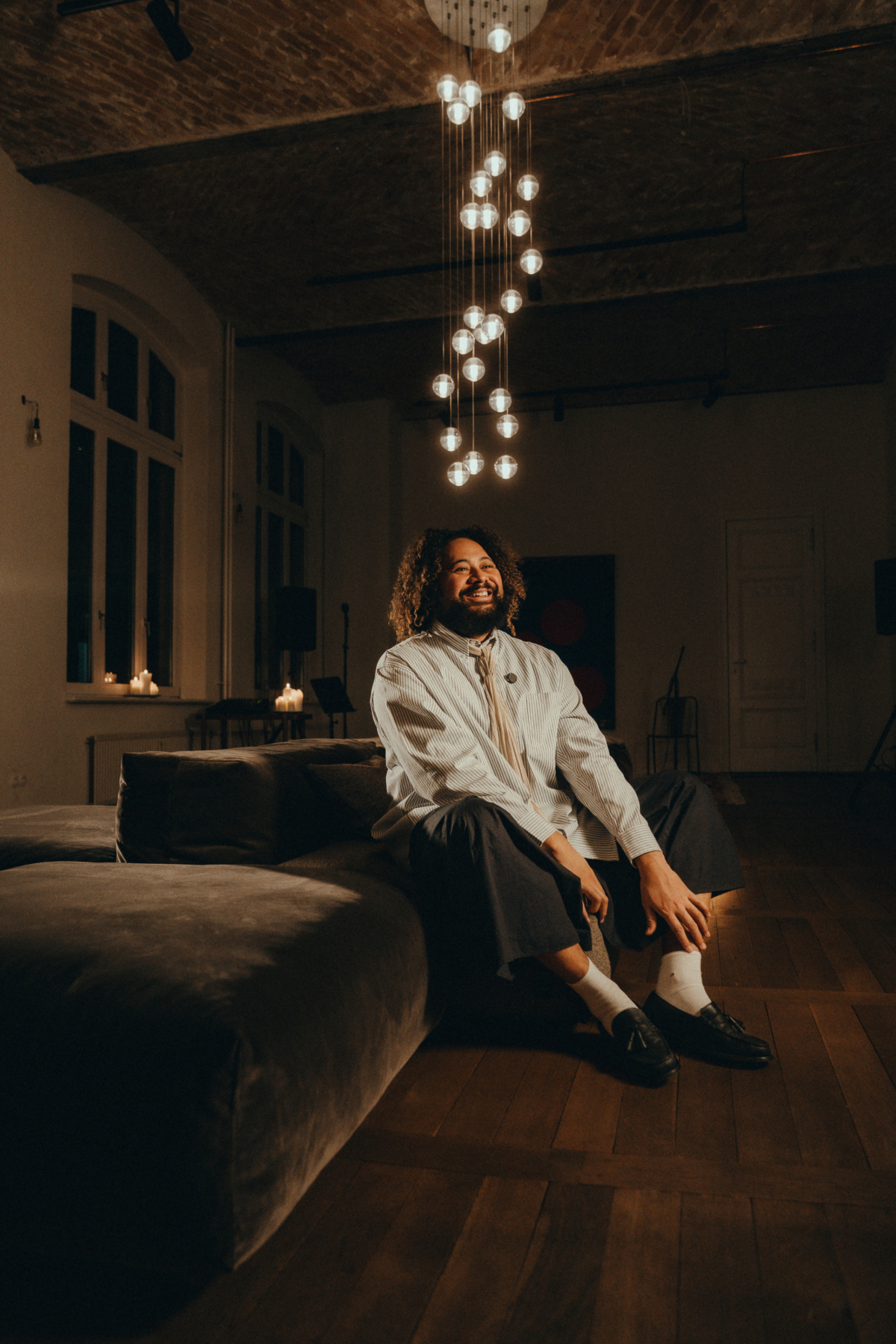
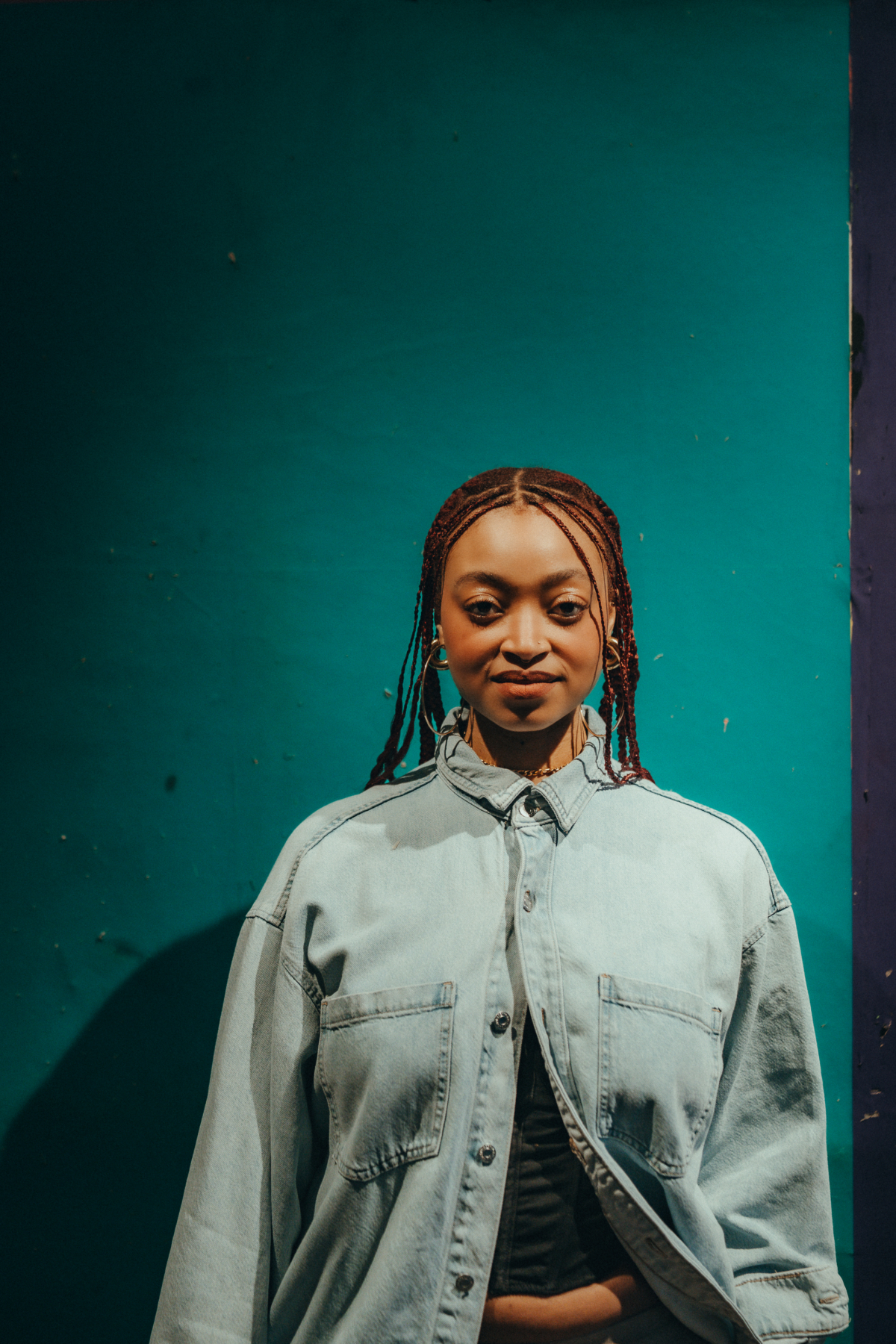
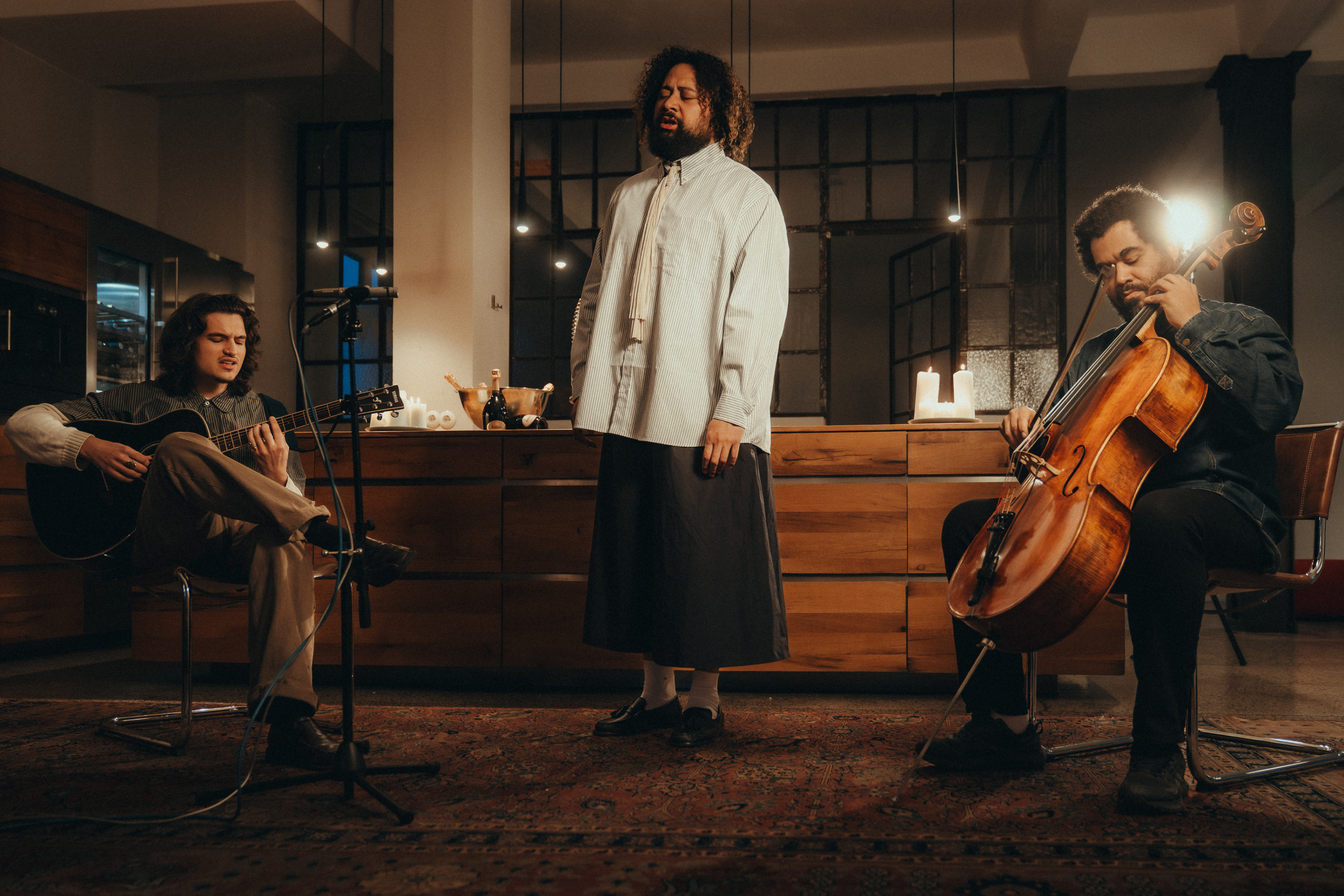
UNFOLDED, our new live music format inviting guests into a personal dialogue between artist and audience, is out now. Our launch in Berlin was epic, and we’re forever grateful for the love and the energy that filled the room. Surrounding the launch, we sat down with UNFOLDED curator Noah Slee and his very first feature artist Tan Brown.
-
FvF
When was the first time you realized you wanted to become a musician?
Noah SleeThat’s a really good question. I had an entry point, which was nothing formal, but just singing with the family. Then there was this moment at school where I was singled out by my teacher when singing to myself in the school hallway. This teacher gave me a role at the school play at around 8 or 9 years old, even though the other kids were a lot older. That was a pretty impactul experience.
Oh, and watching Jackson 5 on TV and thinking “that looks fun, I wanna do that, too”. Jackson 5 was pivotal for so many people – the energy, the skill blew my mind. They were so in sync.
Tan BrownHonestly I didn’t realise it myself, someone realised it for me: I was about 7 years old – there was a woman in my church, her name was sister Sandra, and she told my mother that I could sing and asked me to do a church solo. I was terrified, as I was a rather introverted child, but the church was so encouraging.
I can’t tell you how much I tried to stop doing music. Music chose me. It’s such a beautiful gift to share with others.
When I was in 5th grade I was asked what I wanted to do when I grew up and I said: “A singer, an artist or a lawyer”. I did have an art degree in digital design. I also did a lawyer inquiry at my mother’s work, where I interviewed the entire floor, but then I came back and said “these people are tired”. So music was the only choice left.

-
FvF
Your voices – as your primary creative instrument – are fundamental to your music. How does this reality intersect with everyday tasks? Are you ever mindful or hesitant when engaging in activities that might impact your vocal cords, or maybe your hearing (e.g., loud environments)? Is there a strange duality in knowing your primary creative vessel can both achieve profound musical expression and perform mundane daily functions?
Tan BrownFor sure. In NYC, when you go to high school, you can choose any specialty. I went to a pre-conservatory school founded by Tony Bennet, which was meant to prepare you to go to Berkeley or Julliard. We got a lot of experience performing in Carnegie Hall and other great venues.
I developed little knots on your vocal chords at that time, so I was put on a vocal rest for a year. I was also told not to cry, as that would also impact the vocal chords. Imagine that as a 16 year old. That was a big lesson for me. I always remind other singers now to be mindful with their voice. Our voice is like a natural tuning fork. It’s really incredible – if I have a bad day I can sing my way out of it.
Also: I shut my mouth up before sleeping with a mouth-tape. I realised at some point that my mouth was not closing at night, so I’ve been mouth-taping since about a year ago. It has really improved my breathing. They sell mouth-tape at stores. And I hydrate as much as possible, super impactful.
Noah SleeYes. But luckily I’m surrounded by people who all do similar things, so we’re all mindful together. I remember seeing a friend watching volleyball, and everyone was screaming like crazy, and I was trying to use body language instead.
It takes a lot of time for my voice to wake up. If i have the ability to change a booking to later during the day, I always will. I need time for proper local warm-ups. It’s definitely on my to-do list to go back and get more lessons, also from different fields, like the classical world. Imagine being a Broadway singer, screaming every evening of the week. I have huge admiration. Singers can become quite complacent, but there’s so much more growing to do.


-
FvF
Creative work in music can often involve periods of intense focus, isolation, or travel. How do you actively cultivate and maintain meaningful connections and friendships amidst these demanding creative rhythms?
Tan BrownI’ve been lucky that I’ve always met the right people, even when I came to Berlin for the first time. I always trust that I’m going to meet who I have to meet. A lot of my friends have chosen me. I’m such an observer – first absorbing the environment. But I’ve always attracted beautiful souls that can really see me and see my role. They give me a lot of grace when I don’t text back straight away.
I am a very spiritually-led person, so if people chose me as a close connection they will see quickly that my priorities are not the same. I am very clear on my purpose on the planet. I try to meet you in your space, but if the space requires me to force myself to do something that’s far away from my creativity then that’s not for me. I am very committed to being clear, I have very clear boundaries. I did nearly 10 years of therapy before starting to do serious music.
Noah SleeThat’s a hard one. I feel this year hasn’t been the best in terms of maintaining relationships and keeping in touch. I’ve made an active decision to be a bit more balanced in the last month or so. I’m really grateful for my core friends – it’s not a lot of people– and I lean on them a lot. It’s beautiful that they hold me in that way, and create a space where I can be vulnerable. I also want to be a bit more nuanced in there. I had a harsh conversation with myself recently to get me back on track.
I am so far away from home. A lot of my best friends don’t live in Berlin. We find each other a few times a year. We find creative ways to connect – a games night through video, for example. I need to play my part a bit more in the group chat, and elsewhere.


-
FvF
Noah, what does “Community” mean to you?
Noah SleeThis is going back to my roots, as we Indigenous people in the Pacific have an ethics guideline, it’s part of who we are. It’s a concept called “Tauhi Va” – a guiding principle. We see it as the space in between, between you & me. It’s not empty, it’s like an organism. It’s not empty.
“Tauhi Va” mean to protect that space, and that requires effort, being active, nurture and protect that space.
The older I get, the more it means to be. The communities I am part of are breathing things that require love, care, and nurture. It’s bigger than you, and it puts the responsibility on everyone playing a part. You get out of it what you decide to put in. It has this non-hierarchy to it, but you respect the roles.
I now try to teach this to a certain extent, too, to honour those traditions. It has allowed me to be the person that I am today.


-
FvF
How do you capture or retain the fleeting, often nascent, ideas that you intuitively know will later inform your music?
Tan BrownI truly feel that songs already exist, you just have to listen. In every show I do an improvised song with snippets, input, words from the audiences. I’m grateful for that gift.
I write a lot of music together with other people. At some point me and one of my collaborators spent 6 hours on just one word. Songwriting is such a spiritual act, it’s like giving birth to a child, bringing it into our reality. It’s so powerful.
I was such a quiet kid, but I always wrote a lot. I was a better reader & writer before I was a good speaker. When I perform I often ask myself: “What would this sound like if this person did this?”
I am constantly absorbing, and I still work as an art director, so I have to reference a lot. I am a very curious person. I am an information monster. I have tons of boards on Are.na (digital mood boarding), I love TikTok and really curated my feed. I’m subscribed to a lot of substacks. I listen to a lot of music, a lot of new artists all the time.
And if something that happens around me is really good, I voice-note it.

-
FvF
Was there ever a time in your life when you didn’t want to be a musician any longer?
Noah SleeTo be honest, the thing that sometimes irks me is the constant hustle. You can fall out of love with music, as it’s so intertwined with the hustle culture. I had moments where things just fell through back to back, and then being at the mercy of other people’s decisions all the time is so frustrating.
But I am still enjoying it so much. And I definitely don’t want to fall out of love with music
Tan BrownFor me, ironically, it was the first time I played SXSW. It was a life-changing experience – I had my own gig, but also backing for the Chain Smokers for the MTV Woodie Awards. I had never been at a music event at that scale. It really triggered my social anxieties, awful for my sense. And simultaneously I met so many beautiful people. So I asked myself – if that’s what’s required, I can’t do this.


-
FvF
How did Berlin influence your music, and your music-making in general?
Tan BrownBerlin has influenced my music-making a lot. I started producing music myself in 2020, and Berlin was the second part of my self-production journey, encouraging me that I can do this. Berlin’s club-culture is a big influence – Going out to dance is like a replacement for church here. You follow the DJ if you wanna have a good time. Berlin loves an uzz-uzz, EDM vibe, so that’s definitely a House-influence for my music. And the moodiness of Berlin, that’s also a part of my music now. Berlin has helped me to ground myself in “things can be serious, but they’re a lot of fun, too”.
Noah SleeSame here. Berlin has definitely opened my eyes and mind to many different genres. There are so many experiences that you can indulge in, from the arts side, the techno side. It’s great to be inspired by these genres and also own the heritage that I do, and then combine these. It has allowed me to explore things that I grew up with, expand creatively. I’ve become a bit more into atmospheric sounds. We don’t have a lot of studios, and also not a lot of gear, so now exploring that side, modular synths and stuff, is pretty good.
The choir is something I grew up with. I grew up in many different choirs – cultural choirs with Pacific, indigenous music. Church choir. Youth choir. It was just part of my life. So I got a lot of training just by being in these spaces. “A Song for you” kicked off around 2022. I released an album called “It takes a village”. I knew so many singers in Berlin who didn’t have a lot of experience with harmony, and that stuck with me. I started talking with Dhanesh, and we wanted to collaborate. So one night we went to a theatre show that inspired us, and we got going from there. We started really small, inviting people to dance studios and just sing together. We had no idea how far it would go. It was post Covid – after this isolation people just wanted to come together an sing. It quickly expanded.
Later I was able to activate a bit more creative skill and direction, tapping into things there were already inside of me. Having a natural knack for harmony, guiding people through creating sound together, develop our very own creative language.
With “A Song for You” we reimagine what it means to be a choir, including bringing poetry, cinematic storytelling, being specific about styling. It’s so much fun to have this blank canvas.
-
FvF
When you are not actively engaged in your primary creative work, what is your preferred ‘soundscape’?
Noah SleeI like to have music on, but not all the time. It’s on quite frequently. Could be anything, from classical to ambient, kind of mood-specific. Moments of silence is something that I treasure, something that I do in my practice. We have silent arrivals a lot in rehearsals. You sometimes don’t realise how much focus is lacking though the constant noise. It really allows people to focus. In high pressure moments before a show, I also like to do this.
Tan BrownBelieve it or not: Spotify just gave me my “Wrapped” for the year and my Listening Age was 86. I love classical music – that kind of came with my background. I listen to a lot of soundtrack music – Hans Zimmer is one of my favourites. But I also listen to a lot of Motown, Dinah Washington, Jazz. I always need either music or white noise. I developed Tinnitus a few years ago, so I always have noise around in order not to hear it.


-
FvF
If you could have a conversation with any creative figure but the one rule was you could not talk about their specific artistic output, who would you choose and what would you talk about?
Tan BrownMan, this is a big question. But I guess I would want to meet Octavia Butler.
Octavia Butler’s books that she wrote in 1993 start in 2024, and she really predicted the reality that we’re in now. It’s pretty incredible. In an interview in 1995 – I just imagine if the issues that we have today were never addressed, what would happen. I would love to talk to her about the process of working on these books, or how she understood her human experience, how she was journaling. One of the most fascinating human beings.
Maybe also Michael Jackson. He’s the closest we have to like a musical deity – everybody in the world knows him. Talk about how he feels about being in his body. What made him put on the glove. The things that he did that were so out of the norm. What made him believe in himself the way that he did. It’s so sad how it all ended.
Noah SleeYou know what? Prince. I feel like he would let you know. Everything would not make sense. It would be jargon, very random. But I think it would weirdly make sense. Talking with him about anything would be interesting. Maybe we’d talk about food, maybe film. His hobbies. What does he do to let off steam? I think he’ll be interesting at a party, too. What’s his dream party scenario and stuff.

-
FvF
Beyond explicit statements or public discourse, does the very act of creating your music feel like an act of resistance, affirmation, or an essential contribution in itself?
Noah SleeI think so. Living your authentic truth is an act of resistance. Sometimes it depends on where I’m at, the storytelling that I feel like. Through music or film – I recently made a film on Pacific hair stories. There’s so much beauty in the traditions that come with hair. So in a way having these stories out there is resistance, is not allowing our histories to fade away, to be erased. It can take time, but I think it’s a drive for me. It’s such a privilege, showcasing who I am in all these nuances – and it’s definitely an act of resistance.

-
FvF
Where do you allow yourself to be vulnerable within your creative process or life?
Tan BrownI think I am always vulnerable. If I want to be the artist I chose to be I have to be vulnerable. I am naturally just open – being a scorpio. I am always in that headspace. I definitely know how to turn it off though, which is a life saver. But I’m not scared of emotions.
My dad is black-america, my mum is from Jamaica. Both cultures are very expressive, very emotional. There’s no fake politeness.
Noah SleeThis is going back to loved ones. We all want to feel seen. I am extremely grateful for the people in my life, to the point where they can just read me. To hold space, check in.
Also, I like to be in nature sometimes, even on my own. This also helps me to recalibrate and check in with myself. In nature, that’s easier. I give myself grace to be present, sometimes weep, be in my thoughts.
I truly feel like I’m alive when I’m on stage. Everything makes sense up there. And also in the studio. You’re putting everything out there on the line. My body is a little different on stage, too.
Talking on stage is something that I’m learning to do. I try to keep it light. Unfolded was different to me, something I truly loved, so let’s all practice this together now, next time.


