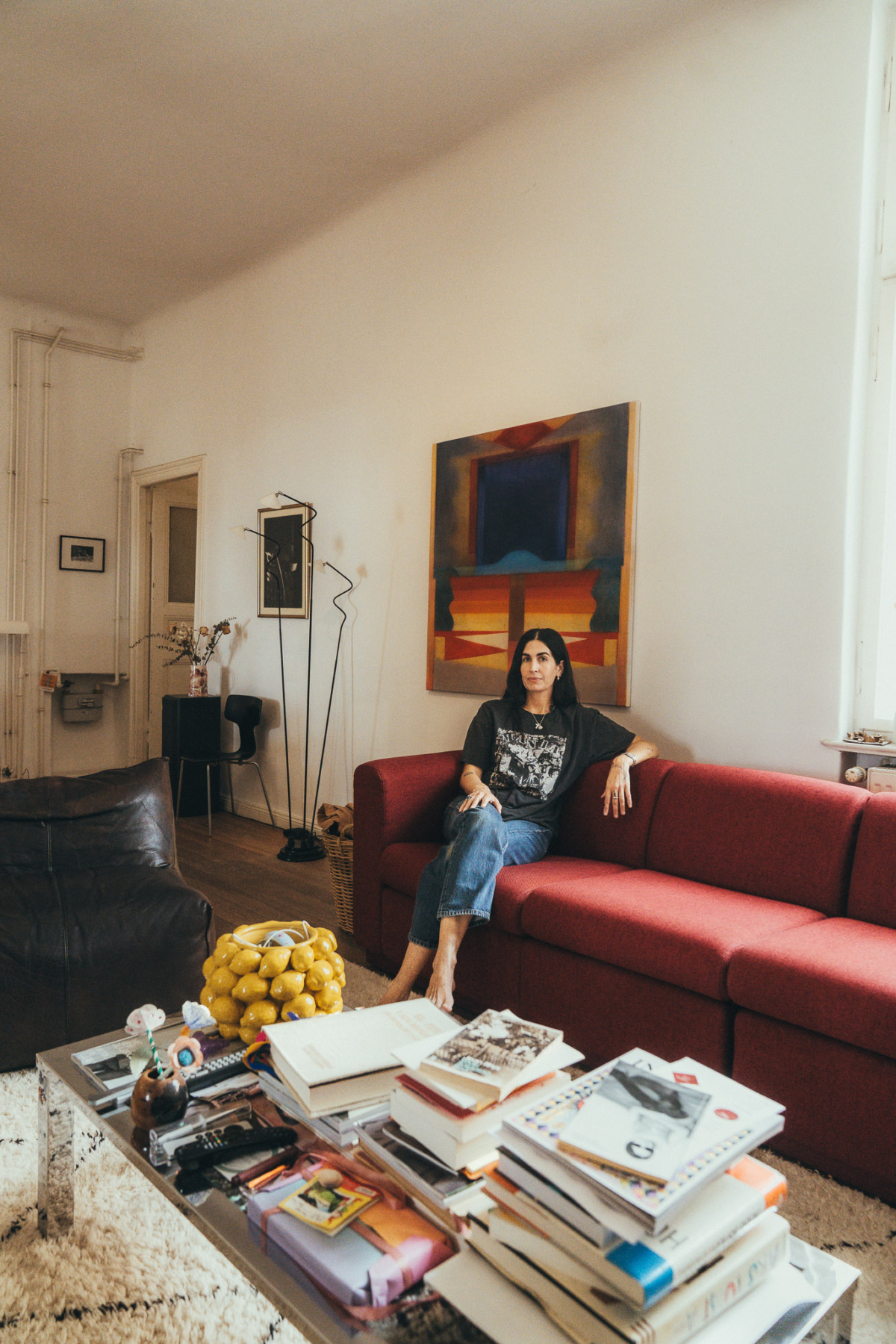
Often, the best way to find a city’s buzziest restaurant is to find out where its most revered local chefs go to eat. So then, where do they go in Berlin when they want to have a lazy Sunday brunch or a night out? They grab a table at Ari’s, the Peruvian-influenced diner in Kreuzberg, opened a year ago by restauranteur chef Arianna Plevisani. Despite her fine dining background—she worked at Chambre Séparée in Ghent and Chateau Royal in Berlin—when Plevisani was finally ready to launch her own culinary project, she decided that instead of chasing stars, she wanted to build a community hub where breakfast is served all day and where she could offer the kind of comfort food that she craved as a teenager growing up in Lima, Peru. And she has succeeded. From day one the tables have been packed, despite the fact that the place doesn’t have a sign and is hidden in a courtyard. And they come back again and again for signature dishes like the hugely popular Lima Kreuzburger, a seasoned burger served with shoestring fries and ají amarillo sauce on a soft bun to the cultish Cricket Split, a sundae with mint chip ice cream, banana, hot fudge, pumpkin seed brittle, a mountain of whip cream with a cherry on top. Turns out a whole lot of people crave the dishes that Arianna does.


-
FvF
You grew up in a family of restaurateurs, correct? So, despite not initially wanting to work in it, you were steeped in the culinary world your whole childhood.
AriannaThe other night my 6-year-old son Tino fell asleep in the booth at Ari’s and I almost cried (in a happy way) because that was my childhood: I fell asleep at my parents’ restaurants and had to be carried home all the time. My Dad moved to Lima from Rome in the 80s and was working in TV but always loved food. At one point a guy offered to sell him his restaurant and he took it over and ran an Italian place. It was the first Italian trattoria in Lima that served authentic Italian food using quality ingredients. It was the hot spot of the 80s. My mom, who had been a graphic designer, helped him with the front of house and eventually worked there nights because she didn’t want to be home alone. She started making desserts. They eventually at one point had about 19 restaurants and cafes, each of them with a different concept. At one point my mom started doing TV and became famous in Peru for her cooking show. A couple of years ago they got into a fight with their partner and sold everything. But my mom can’t stop being a front of house person. Last year they opened up a little place with pizza to go and pasta and more than 50 desserts. It’s really wild. I always loved food. I loved going to restaurants. I was a fat child! But I thought, I don’t want to have the life my parents have. I would say that I didn’t even consider going into the food business until my mid 20s but I keep cooking at home and reading cookbooks and only cared about planning dinner parties and being a nerd about food so I was starting to think, why don’t I consider it as my career?

-
FvF
You moved to New York at the age of 18 and then studied visual anthropology. How did you get to Berlin and when did you decide to shift to working in restaurants?
AriannaAfter studying visual anthropology at New York University’s kind of kooky Gallatin School of Individualized Study, I worked at the Smithsonian curating ethnographic films, and I really thought at that point that I would make documentaries about different cultures. By the way, despite the fact that I didn’t end up doing that, I would say that majoring in anthropology has been incredibly valuable in my life even though it might sound like a waste of time. Okay so while getting into film, I started to think that I wanted to go into art curation because I’ve always loved art so around 2012, I moved to Berlin because I wanted to become an art curator. So I did a semester abroad in Berlin. And then I moved here and worked for a while at this platform for artists who were looking for representation, but it was just not working out and I wasn’t really being paid anything. Then I got a job at SoundCloud doing customer service and answering support emails and then I spent four years there doing product management. And I was starting to understand that it wasn’t for me and in the meantime, I was always cooking at home and reading cookbooks and making bread. Around that time, through friends, I met the chef Victoria Elíasdóttir and I started assisting her in events. She trusted my palette even if I hadn’t worked in restaurants. She was the one who gave me my first kitchen job in Iceland, and she brought me into the studio kitchen of her brother, the artist Ólafur Elíasson, an ambitious cantine where they serve his employees lunch. That was when I left SoundCloud and I never looked back.

-
FvF
You didn’t go to official cooking school instead you learnt through experience. What were the crucial lessons that you picked up over the first years working in various kitchens?
AriannaVictoria really taught me everything. She is a creative genius, the best chef I know, and an impeccable host. When we come up with recipes together it’s like on point. Working with her, I learned that recipe development is my superpower. I can like literally think like okay, add ten grams of this and it works out, you know. Later, when I worked at a natural wine bar in Berlin and did a few stages like at a wood fire restaurant in Belgium, I learned how difficult it is to be female working in the culinary industry. I was often the only woman in the kitchen. That restaurant in Belgium was especially a sexist environment. I didn’t even tell anyone when I was working there that I was pregnant. I remember having like this fight with this guy on my team and he was like I don’t understand why you’re doing this. You’re going to end up being a housewife anyway. After COVID I worked for Victoria again in the restaurant of the just opened Château Royal. It was my first kitchen leadership position, and it was really like a school for me. For the first time I was working in a kitchen with like 20 other people and then learning how to teach other people things. I was running the pass and running service and doing orders and doing the bread program. It was a crazy job, but it helped me get fast and taught me about leadership in the kitchen.

-
FvF
When did you start thinking about opening up your own place?
AriannaAlmost from the start I knew that I couldn’t be an employee forever. It doesn’t work for me. I’m a good employee, but I knew that that wasn’t like my destiny. And I was always dreaming up concepts for places. Like already back in 2018 I was thinking about a natural wine bar with small plates like everybody else in the world and nicely done vegetable-forward dishes with sauces and garnishes and stuff like that. But at the end of the day, I started realizing the more I cooked in fine dining environments, the more I craved comfort food and simplicity at home, like pizza, burgers, the corn pie my mom used to make me when I was a child. And I realized as well that there was a gap in the market here in Berlin for restaurants that served comfort food or easy food that were nice to sit in. You either have to make a reservation at an upscale place and sit down and have a proper meal, or you go to go get a schnitzel somewhere.


-
FvF
Why a diner?
AriannaI think it has to do with having a nostalgia for a childhood that l didn’t have. What I mean by that is as someone who went to an American international school, I was really influenced by the other students who would travel to the States and bring back candies and treats or the American kids who were allowed to go to the commissary at the American embassy and buy snacks that were normally not possible to find in Lima. I had fantasies of American sundaes with chocolate sauce and chocolate chip cookies and that was all coupled with the fact that I grew up watching American films, right? So, I had a longing to spend my afternoons at a diner which of course did not exist in Lima. Although there was one place that was diner-coded. It was called Tip Top. It was kind of a 50s-style drive-in where they would attach these little trays from your window and I always loved the soft serve vanilla ice cream dipped in dark chocolate. Food has always been a sort of a source of comfort for me. Also, my dad’s sister married an American and she would always host Thanksgiving, which was like my favorite holiday because it was all about eating and like these rich, delicious foods.
Also, I think the diner is a perfect universal mold in which you can also insert an everyday cuisine. Because historically look at the Greeks. They started serving coffee in diners and that became a staple. And then you have obviously the Jewish-style delis-bagels and then you have the Ukrainian delis and the influence of those as well. Delis have always been a good receptacle for immigrant foods. It’s an accessible space. And it’s also affordable and open to all, you know, everyone feels comfortable in a diner. That’s the kind of place I wanted to create.


-
FvF
How would you describe the food concept?
AriannaA Peruvian interpretation of American food if that makes sense. But American food that existed in my imagination as a kid wanting American food from TV and from books. And when it came time to make it real, all of a sudden, I needed Peruvian seasoning. We make the seasoning salt for the burgers. We make the seasoning mixes, with spices, for the chopped cheese. The sauce for the Goddess Salad is spicy. Certain things I find universally comforting. Like ranch. I love ranch. Why isn’t ranch a huge deal here in Germany? I don’t understand. When people ask me about the food concept and ask, is it more the diner thing, or the Peruvian thing. But I don’t know which one came first.


-
FvF
How did you translate your concept into the design of the space?
AriannaFrom the beginning I knew I wanted the space to have this community feel and everyone who comes here can be part of it. I wanted there to be the feeling of Latin hospitality and have people think that it has been here for 20 or 30 years and that guests could have long conversations with salsa playing in the background. I wanted an open kitchen so that as manager and owner I could have an eye on everything. So I researched the hell out of it. In terms of the references, I had been collecting pictures on my phone. Obviously, New York diners were a big, big influence. I’d watch old Seinfeld episodes and the old diner movies. I rewatched Pulp Fiction and I went to LA. They have amazing diners there like the Apple Pan. I love postmodern and 80s interiors. In the end I designed the space and made most of the decisions—I even made the wall lamps myself—but the two most important collaborators that helped me was my friend Laura Schusinski who is an artist –she helped with color palette and defining the vision—and the carpenter Rainer Spehl.
I was really stubborn about two things: the red floor and the acoustic ceiling. I am so happy we have the acoustic ceiling. Everyone told me not to do the red floor, but I really loved the feel of the pigmented cement floors. They are inspired by Frank Lloyd Wright’s signature floors which he used for his affordable, mid-century homes. He usually finished them in a reddish-brown color known as Cherokee Red. I spent hours and hours on Kleinanzeigen sourcing the 80s Tokyo bar stools some of which I bought from a dentist’s office. For the tiles in the bathroom, I drove to Marzahn on a Sunday night to get tiles for free. Also I made a deliberate choice to not hang art. The only art in the space is a work from my son. And a Bad Bunny calendar. I wanted it to have this community vibe and make guests feel that everyone who comes here can be part of it. I am so happy how it turned out. It feels very deliberate but not overdesigned. It’s really from my heart.


-
FvF
On the menu it reads that Ari’s gives a discount to single mothers.
AriannaYeah, it’s funny, like why do seniors and students get discounts, but single moms don’t? I think it’s a very big subset of the population. I’m not a full single mom because I share my kid with my ex, but I know friends of mine who were like the baby daddy’s not around. And every time they leave the house, they have to pay somebody to take care of their kid. And childcare is really expensive. It’s like my kind of little wave to those moms.


-
FvF
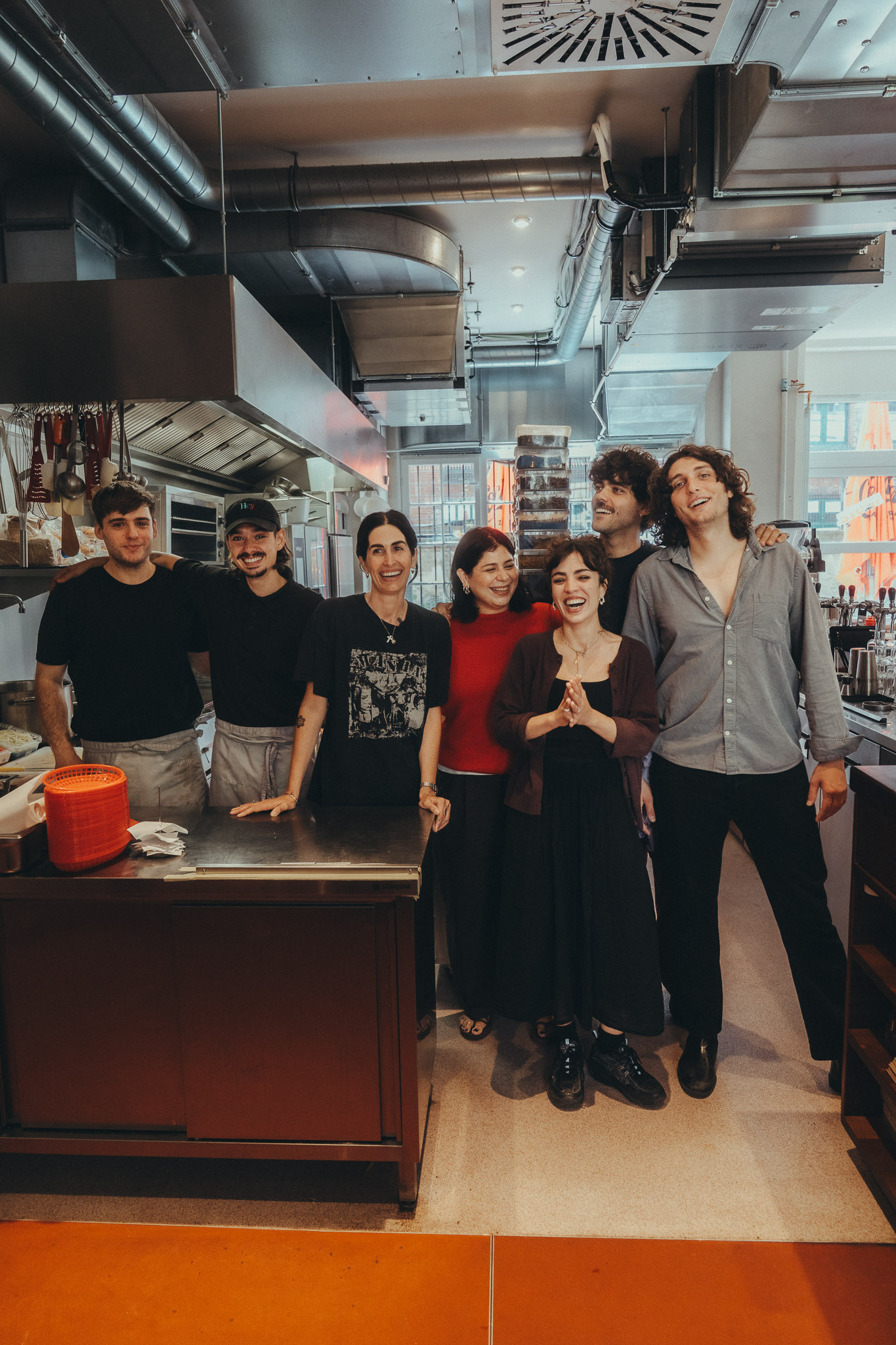
The vibe and people watching is always good here, not just because of the fun crowd but also because of the staff. What’s your trick?
AriannaPeople find me. I mean, I interview every single person who comes into Ari’s. It’s because it’s such an open kitchen. Yes, it’s so much about the vibe here and there has to be good energy and good team spirit because like guess what? Working high volume is really crazy. It takes a very specific kind of person to be able to work in an environment like that and keep the spirits up. And in the end, it’s ended up being a lot of Latin people. (Laughs)