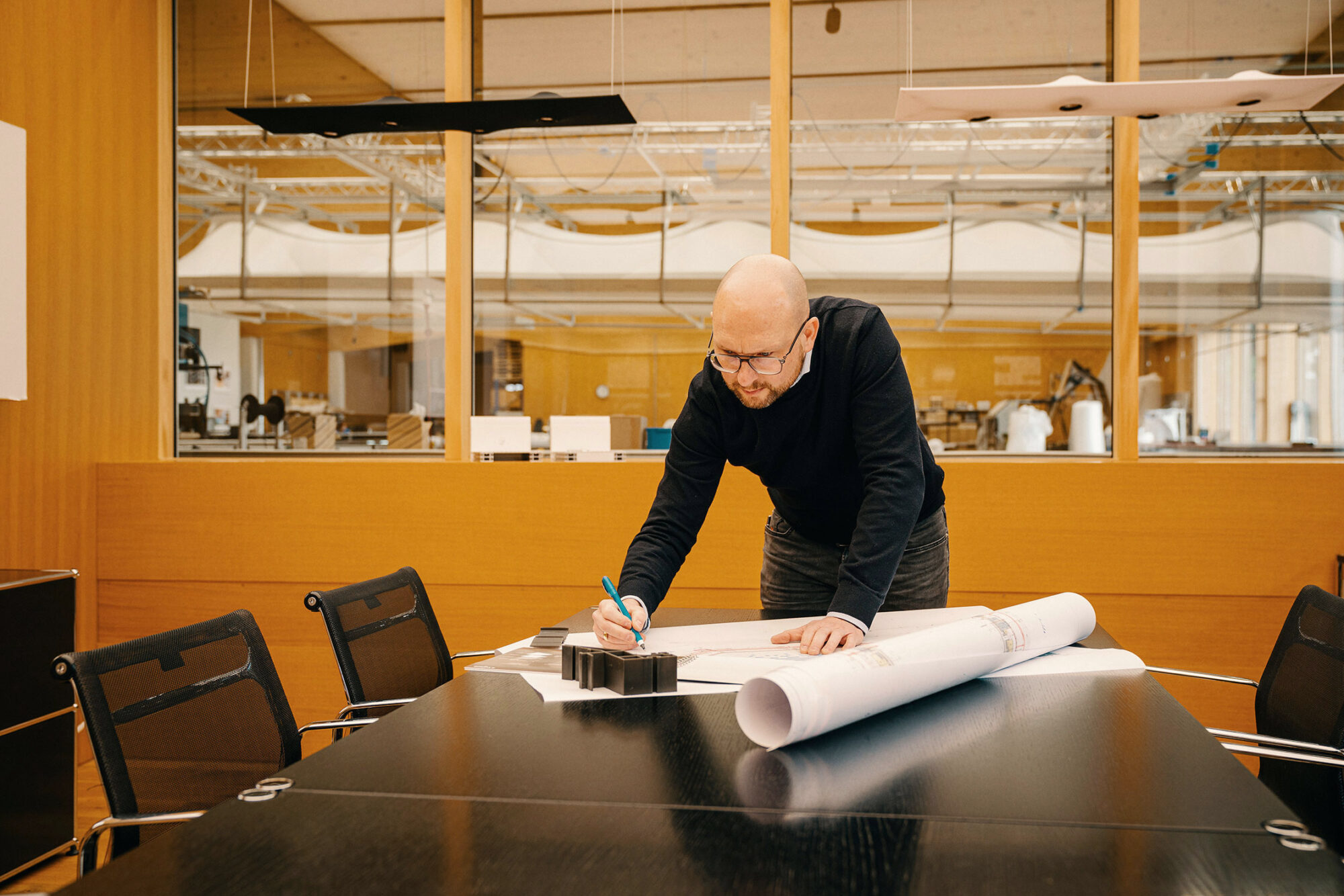
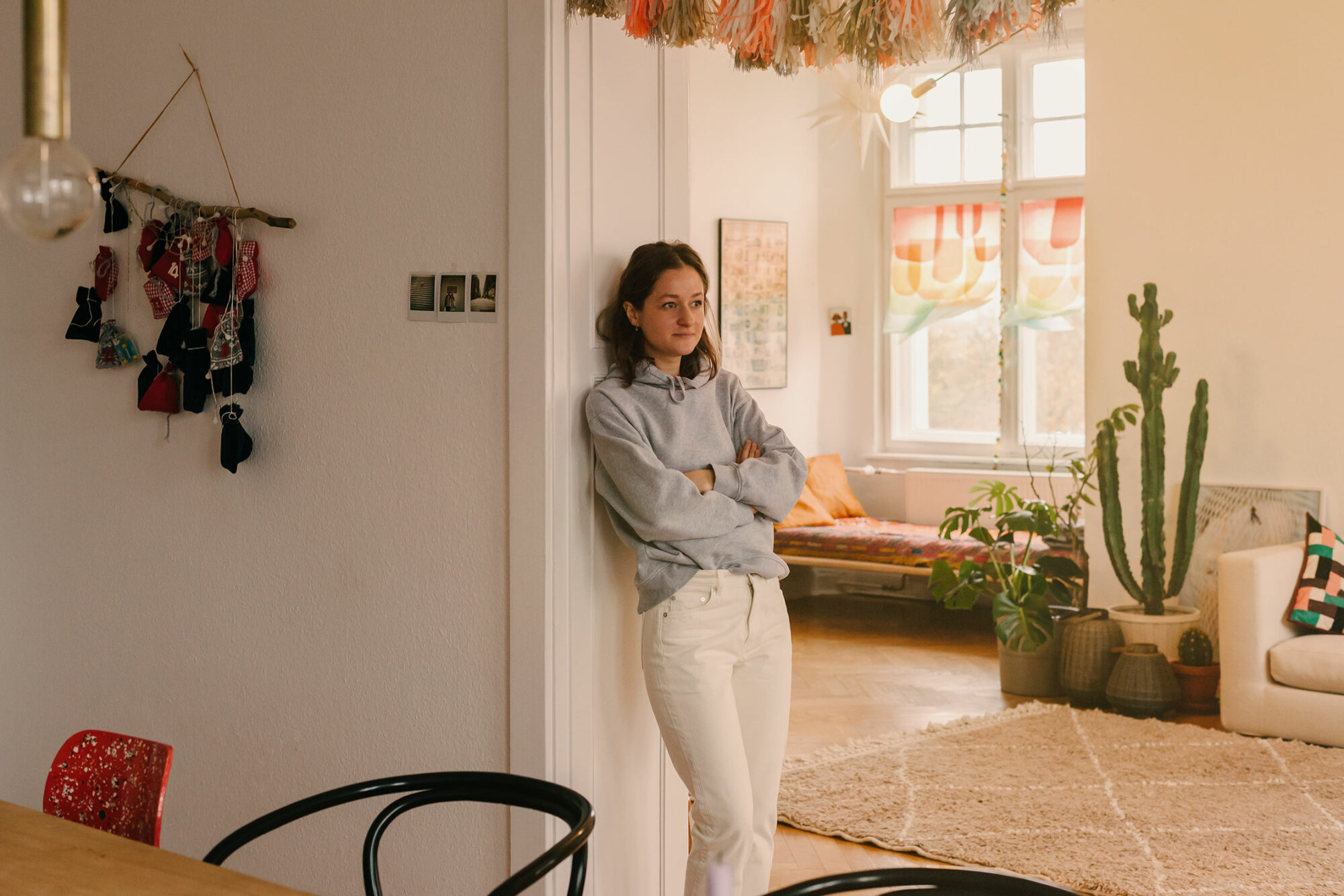
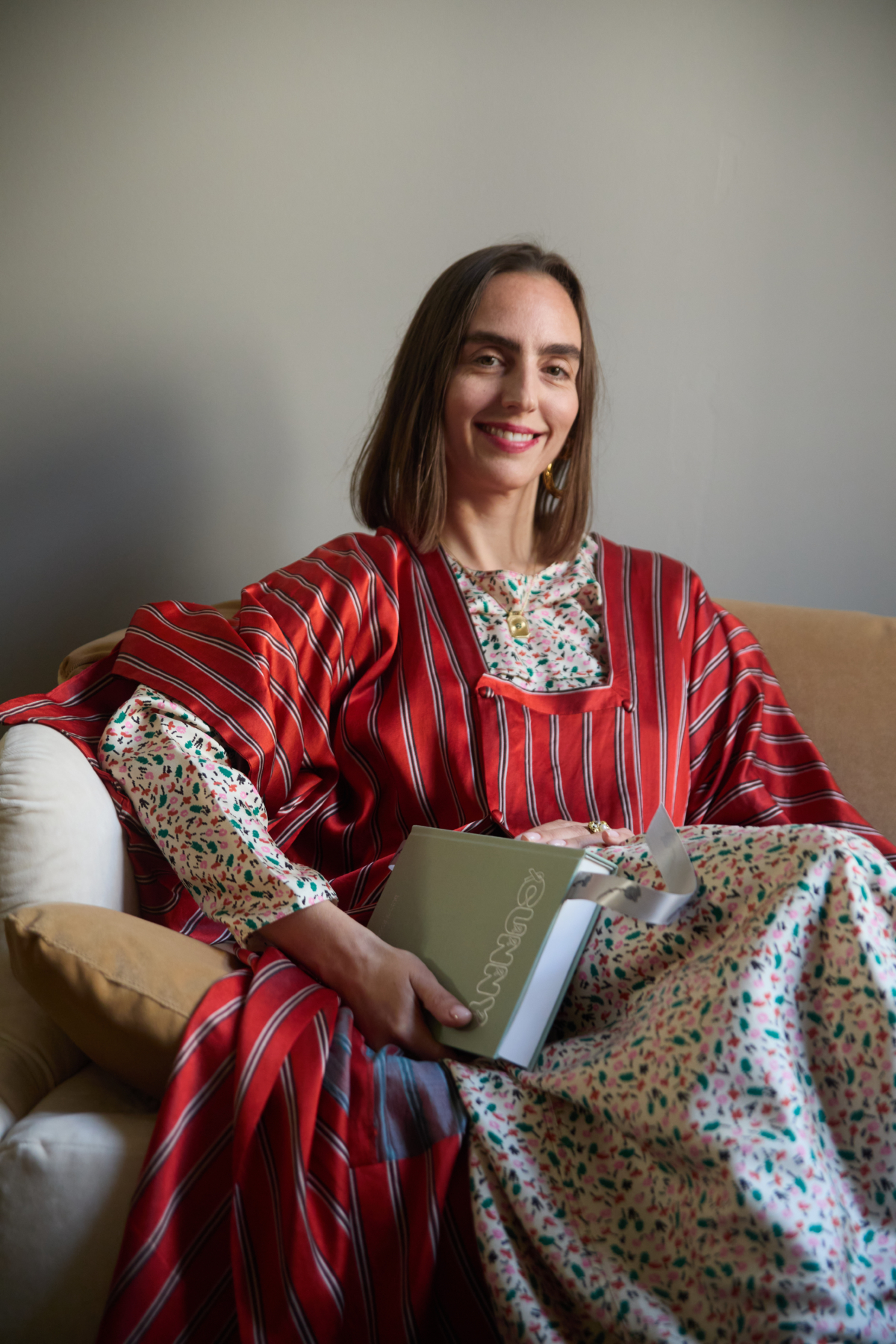
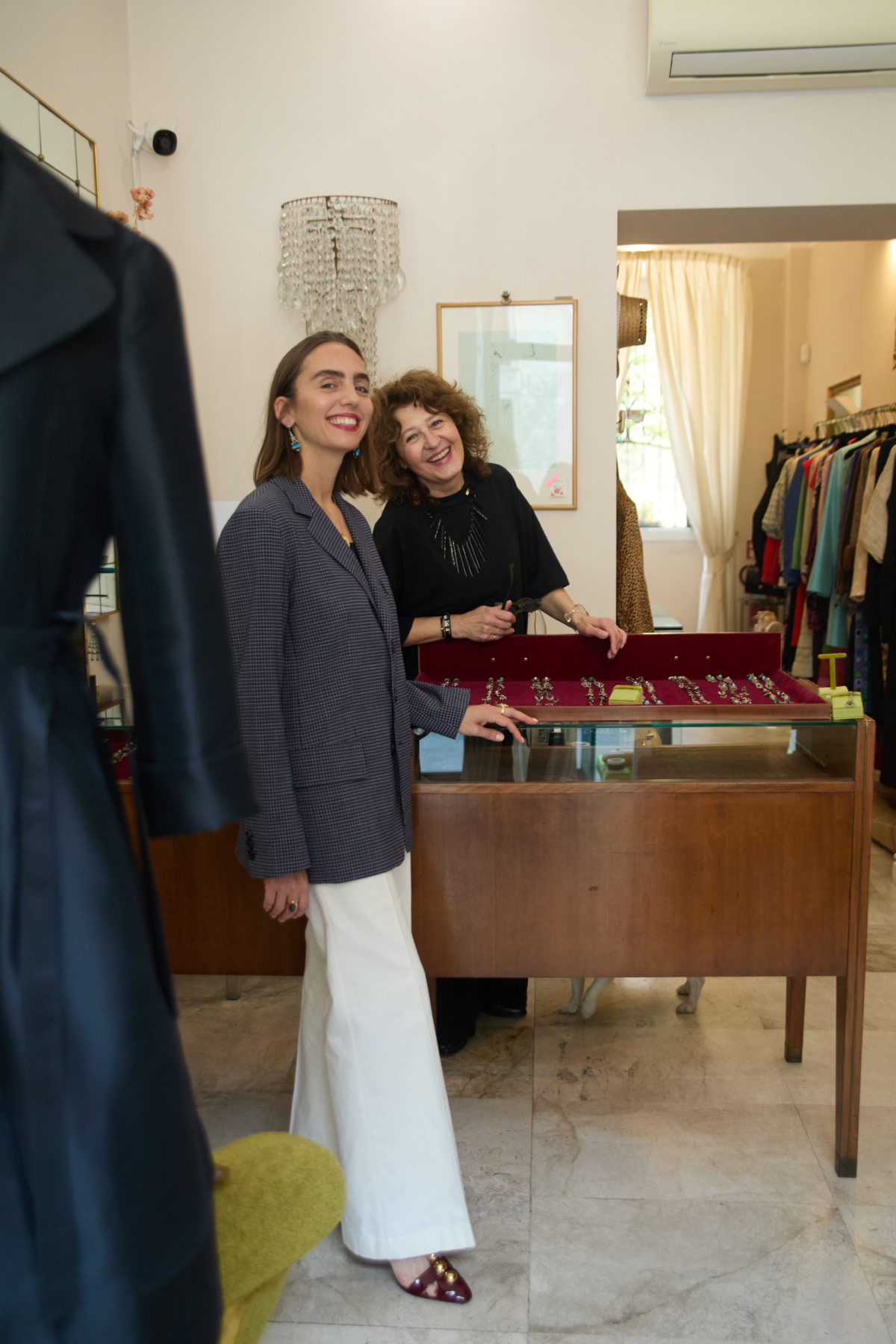
When the adrenaline of a major launch fades and the studio lights dim, Carolina Albertini doesn’t go looking for what comes next. Instead, the co-founder of the creative atelier and production house Vesper Milano retreats into the quiet luxury of the mundane — which, on certain summer afternoons, means an unapologetic box of gelato topped with mountains of whipped cream. For a creative director whose daily life is defined by hyper-awareness, layout, and visual harmony, finding balance means protecting her inner stillness from the noise of the city. We met with Carolina at her home and at her studio in Milan to talk about childhood rituals, the melancholia of a post-project hangover, the grounding power of early sensory memories, and why deep solitude is her ultimate creative catalyst. Carolina also walked us through the city, pointing out the corners that shape her days.


-
FvF
We often talk about the intellectual side of a creative reset, but what about the purely instinctual, comforting ones? What is your ultimate, unapologetic “guilty pleasure”?
CarolinaI love chocolate, and particularly white chocolate — which real chocolate experts would frown upon. And when I have it, I eat the entire thing. There is no way anything will be left. I don’t have a particularly favorite brand — but it has to be good quality. Some Italian brands are great, of course. I love Amedei, the one with pistacchio — that’s the best.
And in summer, sometimes, I love gelato, and then it has to be a big box, with the same amount of whipped cream. This is then my afternoon snack plus dinner, I can’t and won’t stop.


-
FvF
How do you practice “sensory decompression” in a city as culturally active as Milan?
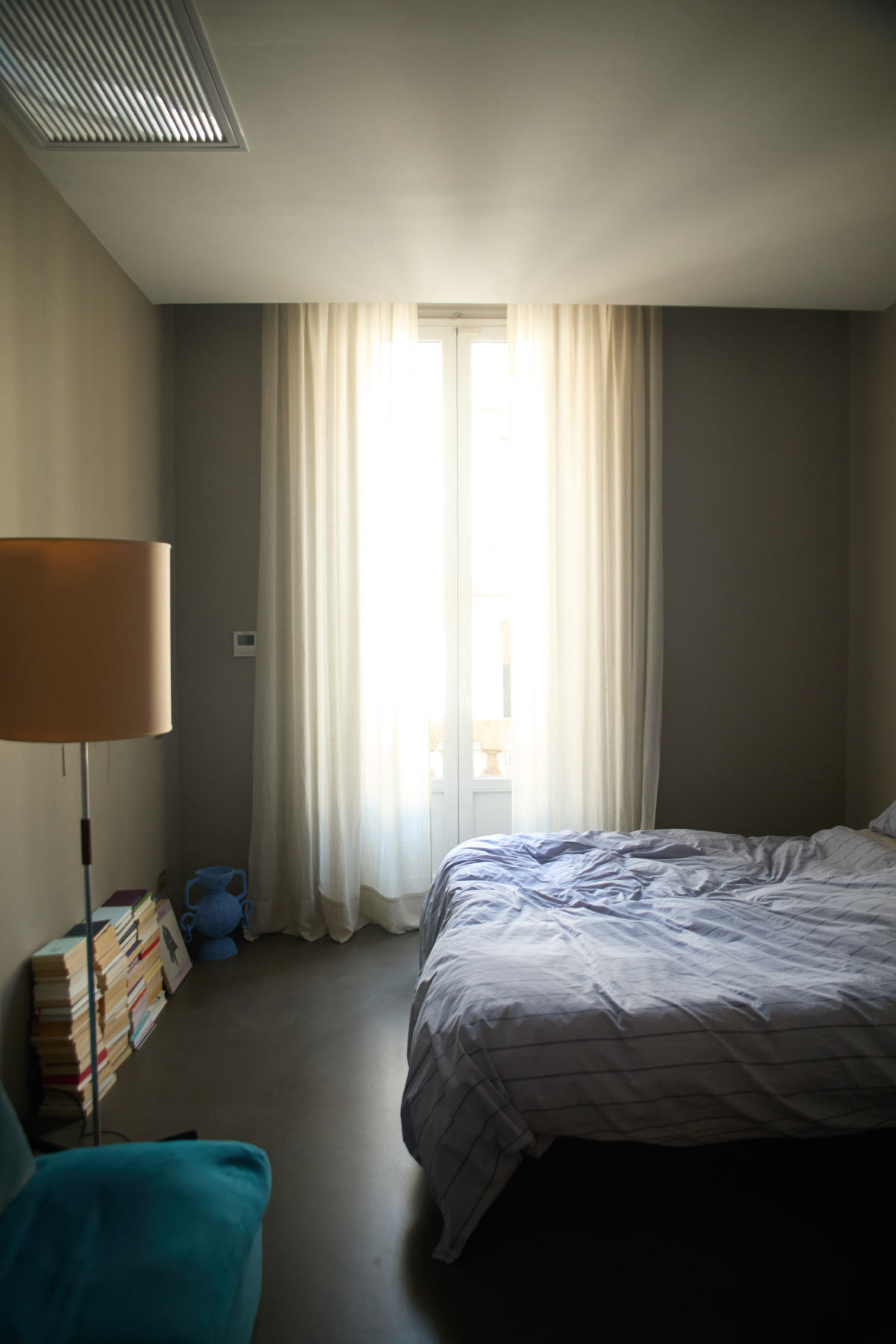
CarolinaI would just lie on my bed — there is just one little image in my bedroom, so sometimes I stare at it and simply enjoy the void. And I love going to quiet places, small galleries, during the week, where you can breathe; or a small park with very few people, inner courtyards — to relax my mind. In general, I’m happy to say that I don’t suffer from FOMO. I don’t like to overstimulate myself — I’m very selective with the exhibitions I visit, the events I go to. I prefer to select the one event I’m truly interested in, instead of doing five events during the same evening. Also not exposing myself too much to social media, not to consume too much. It can be so emptying, exhausting. Our mind is absolutely capable of being more still.


-
FvF
Your primary creative instruments are your eyes, your spatial intuition, and your ability to curate meaning through layout, color, and form. How does this hyper-awareness intersect with everyday tasks? Can you ever truly turn off the ‘art director lens’?
CarolinaOf course I care about how the world around me looks like, all the time, but I do not feel the need to permanently analyze everything around me. In my private life, I move through so many different spaces of different beauty and quality, but it doesn’t bother me at all. Of course I love noticing details that inspire me. But I’m not addicted to perfection. Inspiration often comes from banal details — our brains really archive everything: It’s a private dialogue you have with your brain. You catalog things that attract you, and also those that repel you. What creates harmony, or friction. The world outside teaches us so much. So the aim is to remain receptive, but also let your eyes rest, not to be overstimulated. Resting, but never asleep of course.

-
FvF
Leading a creative studio and driving brand narratives requires immense output, communication, and emotional labor. How do you actively cultivate and maintain meaningful personal connections and friendships amidst these demands?
CarolinaFor me, friendship is a very big topic. Our life and work is so intense, and is moving faster and faster every year. The pressure of being productive, and present, is rather overwhelming. So I have become very selective about friendship, who I’m giving time to. I have developed a strict radar about similar frequencies, and genuine openness for exchange — about positive relational energy. Exchange can be so regenerative. For me, meaningful relationships require spaces in which work is not the central subject. I don’t want to talk about work then, but to speak about true things: cinema, art, dreams, also about uncertainty, the less polished parts of life, the real things. If you surround yourself with people that drain your energy, that’s toxic.
-
FvF
What does “community” mean to you in this context?
CarolinaCommunity, also for my creative atelier and production house “Vesper Milano,” means a lot more than just a regular network. It’s all about being intertwined, resonating with others. That’s also why we created “Vesper Voyage,” to represent our own DNA through objects, capsule collections, collaborations, encounters — here, we’re giving other creatives a platform to showcase. Instead of just selling objects, we treat our collections as thematic “voyages” linked linked to ritual, time, and human behavior. For “Encounters,” we’re bringing together all sorts of creatives — poets, audiovisual artists, creators of olfactory experiences. The last one was with Berlin-based Lotto Studio and poet Maddalena Iodice, who created a poem specifically for Vesper Voyage, and electronic musician Mario Francese composed the music just for this. That was for Milan Design Week — we invited our entire community to enjoy and witness the performance.
“Voyage” is a space in which artists and makers can create and show their own voice whilst also reflecting ours. It is about a creative world that someone can enter, alter, and enrich. For our last capsule collection, we asked the director Luca Werner — who we of course knew shares similar aesthetics — to interpret the scene with complete freedom, where he could bring to life his very own vision. We didn’t give concrete directions—we only told him, “You can do whatever you want.”. It’s such a luxury that we can actually do this. It’s always about respect, and showcasing that we honor other people’s work and creative freedom.
It’s always important to me that we work with clients where we of course have to respect their CI and everything, but where we still can execute a lot of creative freedom. This is where the magic happens, and it is so much more satisfying.



-
FvF
Carolina, what is one object in your home that is absolutely essential to your well-being but has absolutely nothing to do with design?
CarolinaI know straight away: It’s my cold press juicer. It’s not super romantic, but it’s so essential to my well-being. The first thing I do in the morning is make vegetable juice. Red, green, whatever color. Waking up and doing something physical, repetitive. It’s an act of self-focus, before the outside world enters into my daily routine. A quiet moment, entirely mine. I bought it on Amazon, no major decision-making process before. It’s a simple Philips, a super easy one. Before I drink, I clean everything — it’s also part of the ritual. And it’s so rewarding. I might also get a smoothie maker soon, to replace a little meal in hot, summery Milan.

-
FvF
As someone deeply attuned to aesthetics, your environment is constantly feeding your output. When you are not actively working, what is your preferred soundscape?
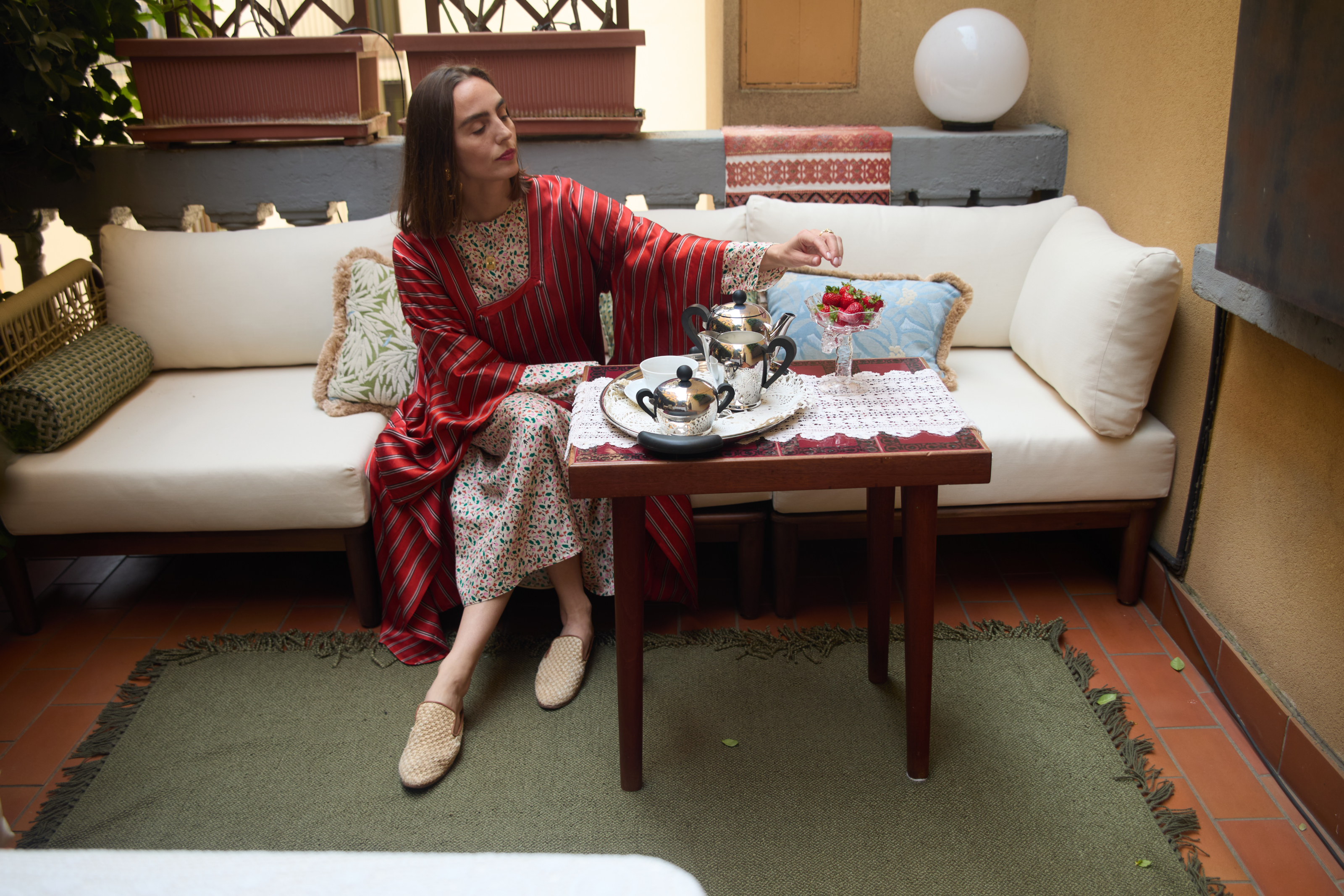
CarolinaWhat I really love in my apartment is my terrace towards the courtyard, which is super silent, but there are a lot of birds. When I wake up in the morning, I hear their birdsong. It’s such a private luxury: I’m right in the city center, and I still have that quiet experience. It reconnects me with my upbringing, too.
I need silence, a lot. I mean: a lot. I love music — it’s very important to me, but I don’t constantly need it around me. I choose specific moments for music — I am a big fan of contemporary jazz, ethnic jazz. But silence is often the more powerful composition.


-
FvF
And what kind of light ambience do you prefer in your home?
CarolinaI love dimmed, natural light. Warmth, candlelight in the evening. I prefer indirect light, table lighting. I love the intimacy, the coziness, and it helps me to relax, to feel at home.


-
FvF
What about your preferred olfactory experience?
CarolinaI am a very “olfactory” person. I’m drawn to fresh herbal notes, vetiver, the smell after the rain, the ocean breeze, salt, something airy, green scents. Something not too intrusive, rather subtle tones please.

-
FvF
If your home could speak, what is one hidden truth it would reveal about you that your clients, your followers, and your collaborators never get to see?
CarolinaFirst of all, my home would reveal how much solitude I actually really need. I always appear to be so extroverted. I’m very good at that, but it is exhausting for me. I’m less controlled than people might imagine. Sometimes I come home from a trip, and sometimes new business cards I collected would lie around for weeks and weeks. I’m not too neat. At home, I become extremely quiet. I never wear trackpants though. But at home, during the weekends, I often stay in my pajamas the entire day. Pure luxury — so liberating. Breakfast in bed for hours, doing nothing important, watching a tennis game. Moving slowly through the day, not explaining anything to anyone. I can spend hours just observing the light in the room.


-
FvF
The integration of AI into design workflows is rapidly shifting the paradigms of visual generation, mood-boarding, and conceptualization. What is your view on it?
CarolinaI don’t see AI as a threat at all. We should never be threatened by anything out there, particularly not technology. It is a highly efficient production instrument. I gave all my employees and collaborators access, so that everyone can use it — all levels. Whether it’s project management, or design, or whatever, everyone should be skilled up. If you think of creative vision, the emotional logic, that still has to come from us humans — you need the experiences, the emotions, the initial spark moment. But then it’s a great tool to create images, moodboards for clients, to visualize a particular execution that they can’t visualize themselves. It’s a brilliant time-saver, and a collaborator, but it will always need instructions.
It’s fascinating to see and observe it learning, and getting better — the more you use it. Being threatened by it is so counterproductive. In my field, you need to use it. But to own and direct it.
-
FvF
You understand the rules of layout, branding, and visual impact inside out. What, in a purely technical or artistic sense, still genuinely scares or challenges you?
CarolinaIt’s always this creative fear, that an idea isn’t enough: not intelligent enough, not innovative, not original, just recycled. There are the little voices inside your head, but the goal is to put them back into Pandora’s box and not let them come out. Trust your intuition. But then you know the feeling, the certainty you have, it’s hard to explain, but it feels good once you’ve overcome the fear. I try not to be influenced too much by what others do, and instead keep my channels and my intuition open, to have space to “receive.”
-
FvF
If you could sit down for a long dinner with any creative figure, living or dead, from any discipline, under the strict rule that you cannot discuss their actual work or career milestones, who would you choose?CarolinaOh dear, who should I choose? I think I’d love to have dinner with Cy Twombly. And I would love to wander around an antique market in Italy with him. I feel very connected to his work — these random scribbles, almost childlike, so organic. The combination of sensuality, intellect, radical individuality. And he was very private, not self-celebrating, which is something I can connect to instantly. I don’t want to just consume and pass through experiences: I want to penetrate them, give them a shape and form. All you experience is not isolated. It all becomes part of your internal archive, building connections. His drawings reflect that for me. I would not ask him about his work, but instead about his favorite objects in his house, what he would discard, which memories are important to him, what made him laugh, what living in Italy as an American felt like, all these kinds of things. It’s not the dinner with him that I crave — I’d really love this antique market stroll instead.