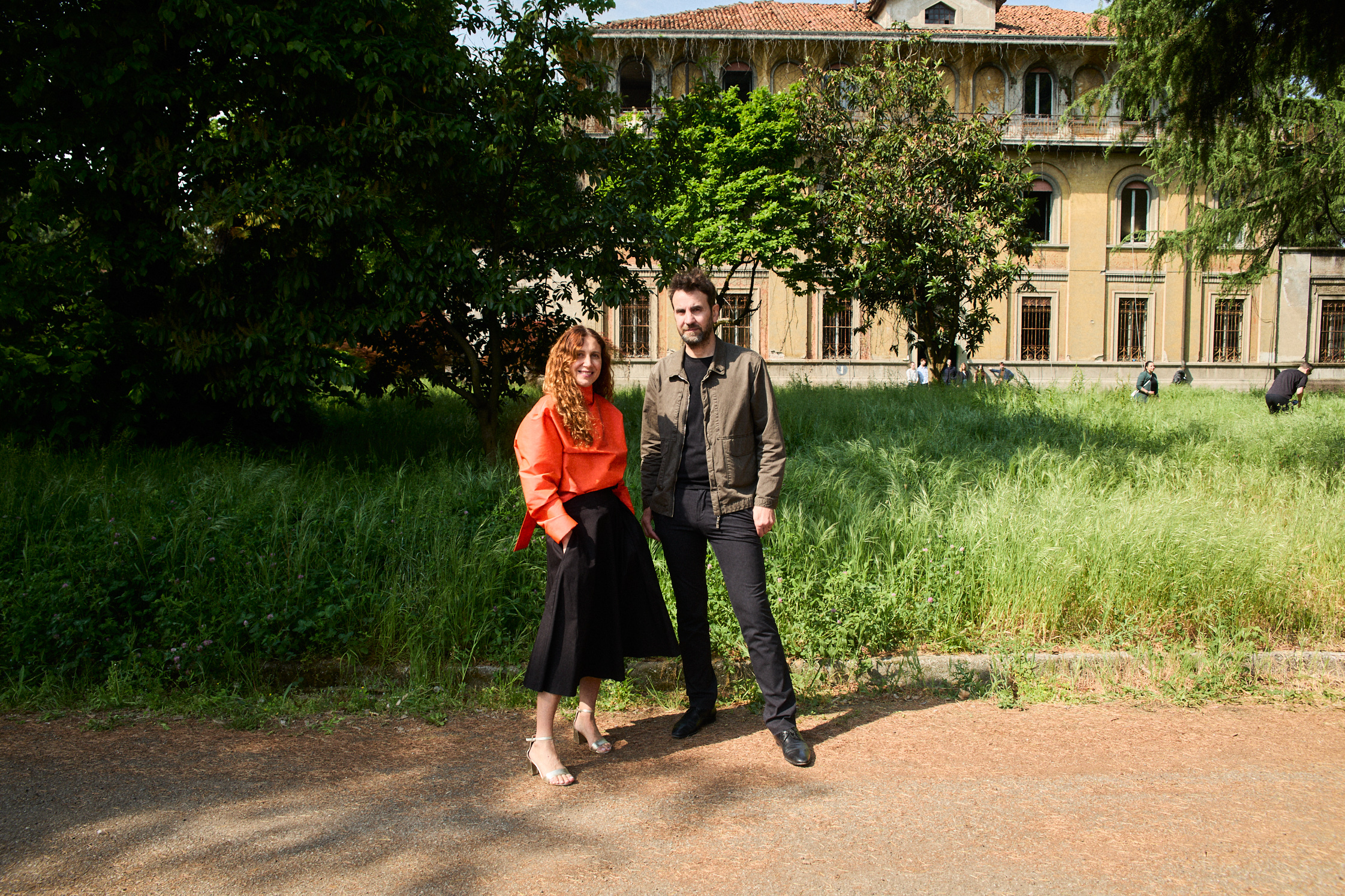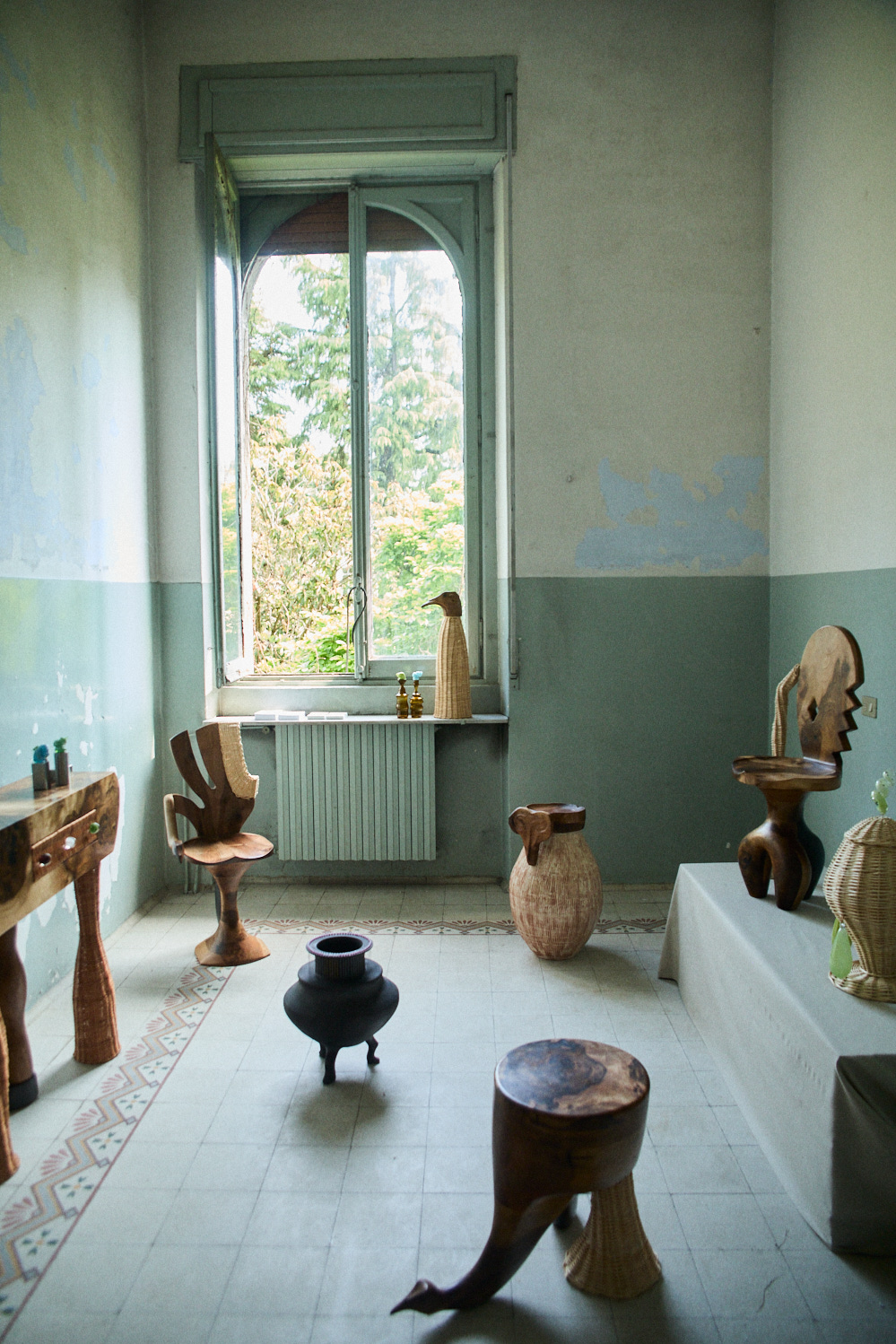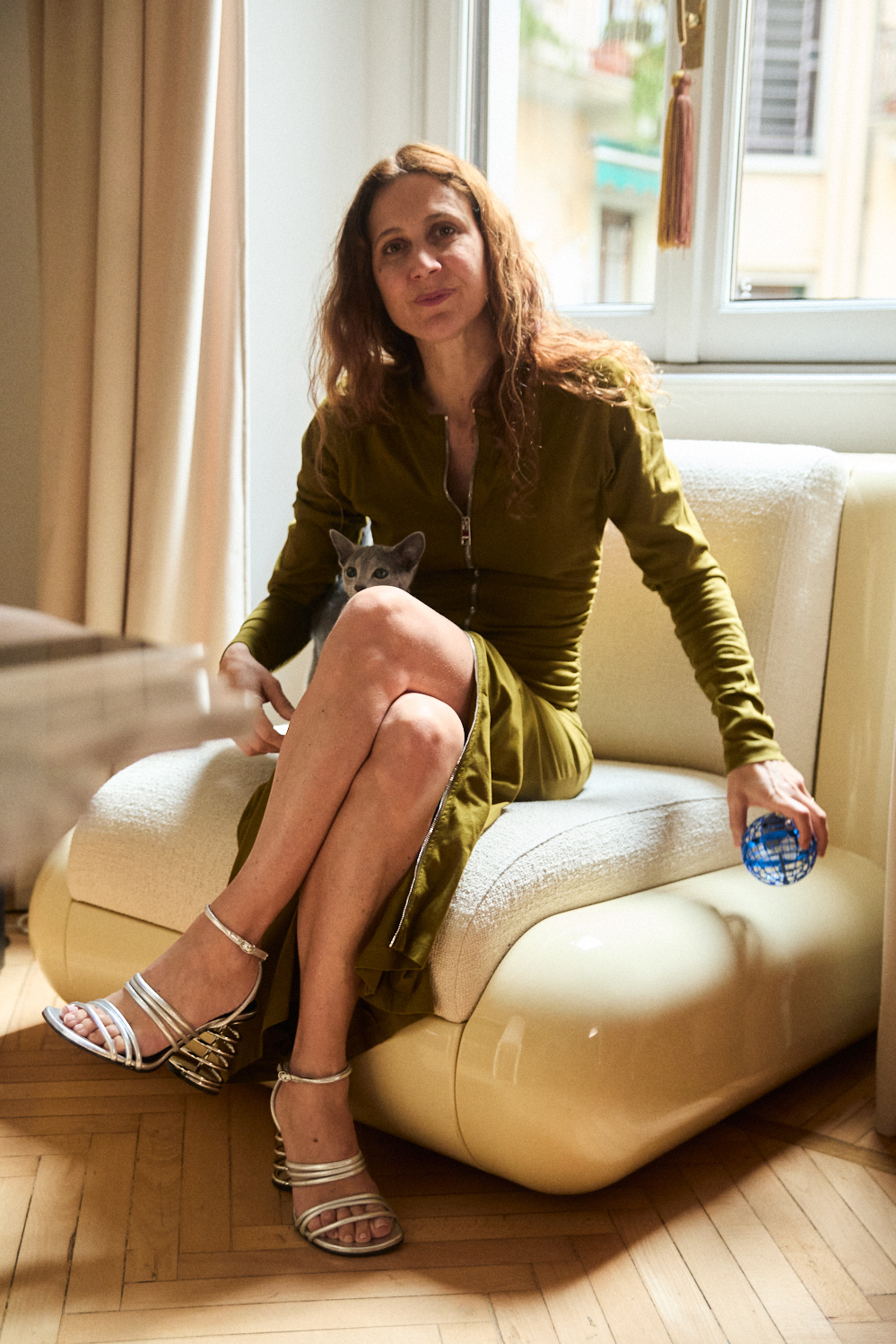
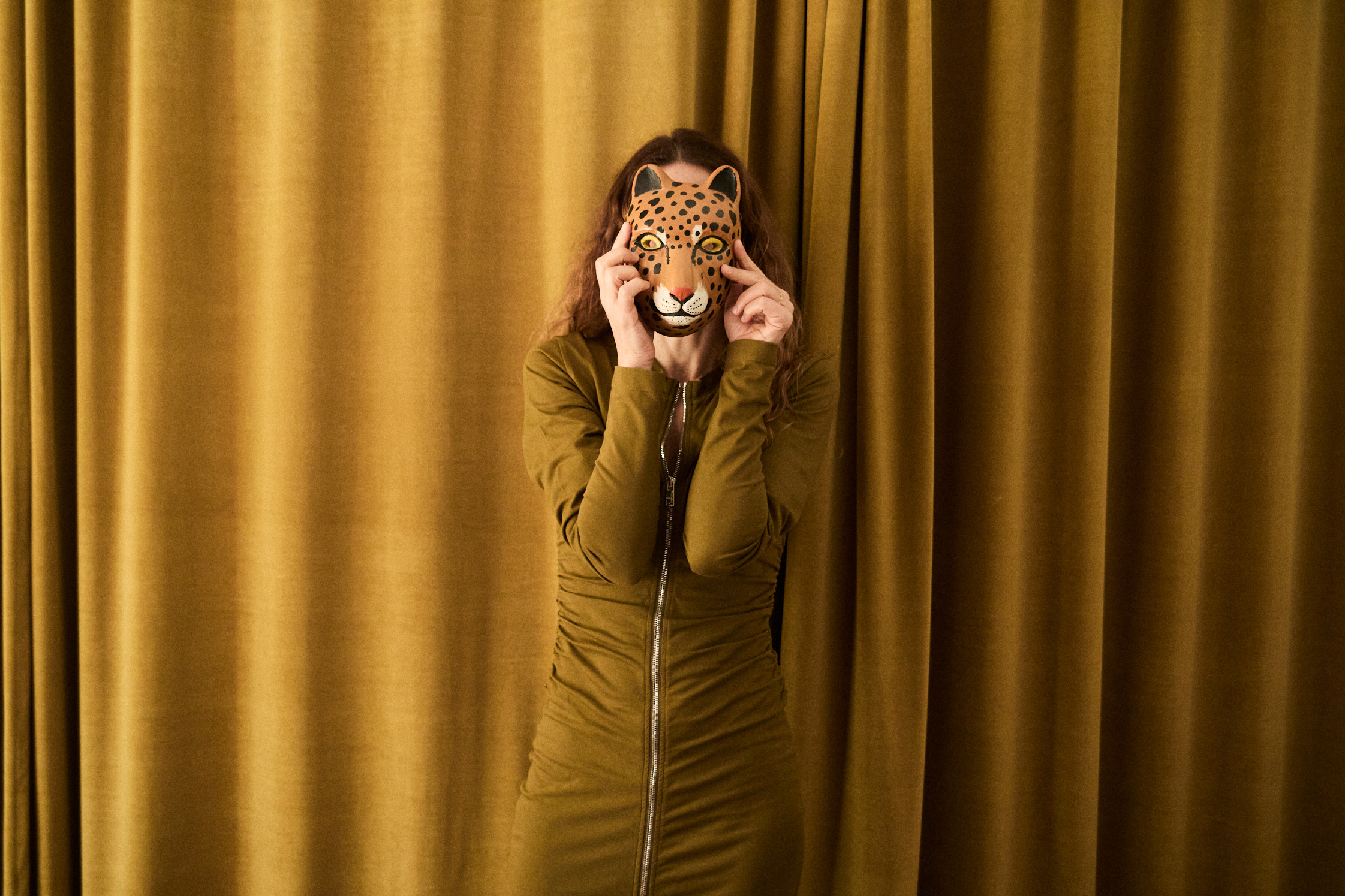
Ciuffi doesn’t just inhabit spaces; she reads them. The founder of the Milan-based creative agency Studio Vedèt and co-founder of the global design phenomenon Alcova with Joseph Grima has built a career on the “science of signs,” working with graphics and branding or transforming everything from abandoned hospitals to industrial complexes into temporary worlds of high-design choreography. But for Valentina, the transition from the high-octane adrenaline of Salone del Mobile to the quietude of private life isn’t a simple “off” switch — it’s a calculated de-escalation. Whether she’s navigating the “spatial university” of her youth as a semiotic student, scouting for “true places” in the Algerian desert, or losing herself in a 200-lap marathon across her home corridor to find her keys, Valentina’s approach remains rooted in a profound intellectual curiosity. In this conversation, we explore the friction between her hyper-attuned visual radar and the messy, unscripted realities of parenthood, the necessity of working on one’s own temporal terms, and why she believes a curator’s duty is to challenge the safety of personal taste.


-
FvF
You’ve just closed a massive, high-energy design iteration — months of scouting, intense spatial choreography, and public launching are suddenly over. The crowds leave, the temporary spaces empty out. What is the very first, truly mundane, simple thing you crave in that post-creative vacuum?
ValentinaIt might sound terrible, but I’m not a very relaxed person. There is a big peak of work during the Salone del Mobile, but then, a week after the Salone, I learned that I have to keep the adrenaline going, and do a full week of intense work at Studio Vedèt. It took me years to understand that I need to be back, do routine stuff, but still work. My first instinct would be a change of scenario. I’m a traveller. So for many years, I would always go travelling straight away. But now, I de-escalate first. I go slightly slower, but not 100% slow. So this year, after 12 days of winding down, I escaped — I often do this just with my husband, without my daughter. Lately, I’ve been struggling a lot with finding new places though. I’ve travelled since I was 17. I went everywhere, Africa, America, Asia, and all over Europe, a lot before globalisation properly took over. Now, I suffer a bit when I look at places that used to be so authentic — going back to Marrakesh now kills me. I’m not a nostalgic person — the world needs to move. But travelling doesn’t have the same quality any longer. So last year I went to Algeria, twice even. This year, I went to a micro-place that I didn’t even want to name, neither here nor on social media, so it stays peaceful. This makes me think of Herman Melville’s Moby-Dick quote “It is not down on any map; true places never are”.

-
FvF
Your work relies heavily on a hyper-attuned visual and spatial sense—scouting talent, editing aesthetics, understanding how an object commands a room. How does this sharp creative radar influence your everyday life? Can you ever switch it off?
ValentinaI really can’t easily switch it off. Sometimes I manage to do it at home, I also try to do it with my daughter. Aesthetics is always a focus, I really care and I try to surround myself with objects I really like even in my everyday life, usually designed by people I know.
I do very little research for collectibles through the internet — I need to see the pieces in real life, and to meet the people behind them. I didn’t have much money when I was studying. I was a good student, but the final thesis took me 18 months — I did my thesis on buildings that were falling apart, then being transformed into temporary art spaces. So that was already an Alcova situation. I spent a year and a half travelling on very little money, finding abandoned spaces that were going to be transformed. My family went crazy. But I think seeing with your eyes and experiencing with your body — be it a space, or a work of art — is totally different.
I tell all my clients to take beautiful pictures, and have an incredible online vitrine. But for me it doesn’t really replace the encounter.


-
FvF
You studied semiotics in a school directed by Umberto Eco, focusing on the semiotics of architecture, and spent a decade as a journalist before pivoting to physical design and curation. When you look at an object or an exhibition layout today, do you still fundamentally ‘read’ it like a text?
ValentinaI studied semiotics in a very special university setting in Bologna that Umberto Eco managed to keep open for about 7 years. Back then, he was teaching at DAMS (Discipline delle arti, della musica e dello spettacolo), and then he managed to start this course, with very few people, only about 100–150, which was super super small. I really wanted to do literature, but my mum insisted that I should do the test for this sort of science of communication course. I really didn’t want to do it, and I came back from three months in Cuba, did the test without studying, but then it was pure luck. In the end, I went, and Eco at that point was lecturing us himself, then also left teaching to other amazing professors like Paolo Fabbri, Lucia Corrain, Mario Lupano.
Semiotics starts from texts — the approach is that everything is a text. The mirror in front of you is legible as a text. It encourages you to understand the history of art through association, in a more paradigmatic way, discover patterns, showing you even improbable associations. You go to a painting and say “the sky is always at the top and that is associated with serendipity”, for example. It’s very intuitive. My brain works exactly like that. Semiotics is very complex, and the analytical approach it gives you is, too — that’s exactly how I work.After being a journalist for many years, I looked back at what I was able to do, and semiotics gives you a tool — Eco wouldn’t like this, as semiotics shouldn’t produce but mainly read texts — but it gives you the ability to analyse what’s there, and it makes you a better creator. So everything I analyse for my clients can profit from my original way of looking at things through semiotics.


-
FvF
You operate at an incredibly intense professional velocity — running Studio Vedèt, orchestrating Alcova with Joseph Grima across cities like Milan and Miami, and navigating constant travel — while also being a parent. High-level curation requires deep, uninterrupted focus, while family life requires radical presence. How do these two distinct modes of attention reshape one another? Has parenthood changed the way you work?
ValentinaMy daughter most definitely taught me to follow my own path even more than before, not to follow the standard time of work. Even when I was a journalist, and I was going to an office every day, like for Abitare, it was in a mega building, with a badge and everything, but I would never go there before lunch. I took that liberty. Nights for me have always been more productive. I can be much more efficient if I can work on my terms. I always start slowly in the morning — I might wake up early to have a little time just for myself. My husband works with the US — he always starts work around lunchtime Italian time. I usually work until 8:30pm/9pm almost every night. We have a nanny to look after Lina in the afternoons. In the morning I do meetings in town, do calls, but I still never go to the office before midday. My daughter really helped me understand the way I function much much better.


-
FvF
You spend your life thinking about space, objects, and furniture that tell a story. But within your own private living space, is there one object that is absolutely essential to your well-being but has zero design pedigree or artistic merit?
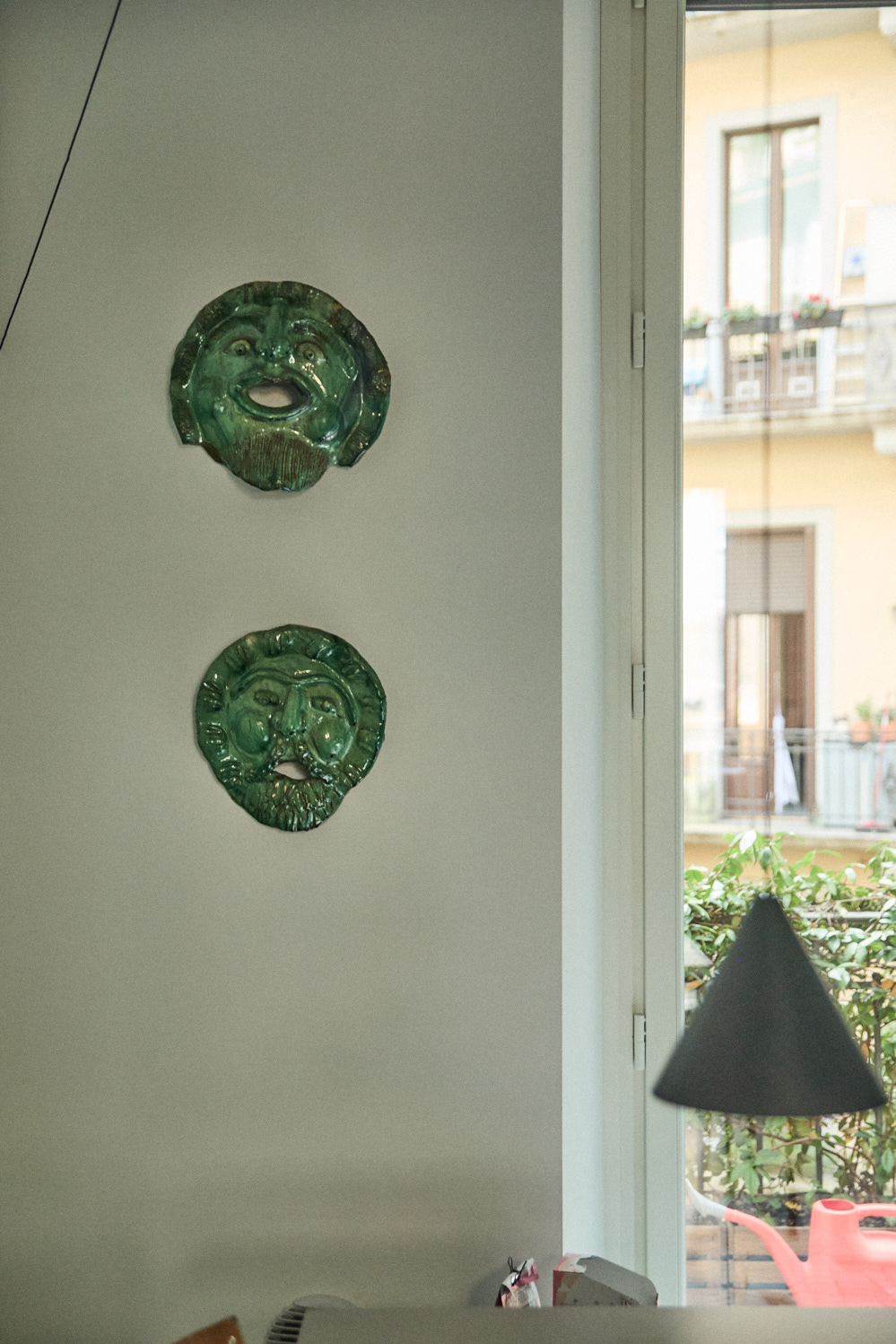
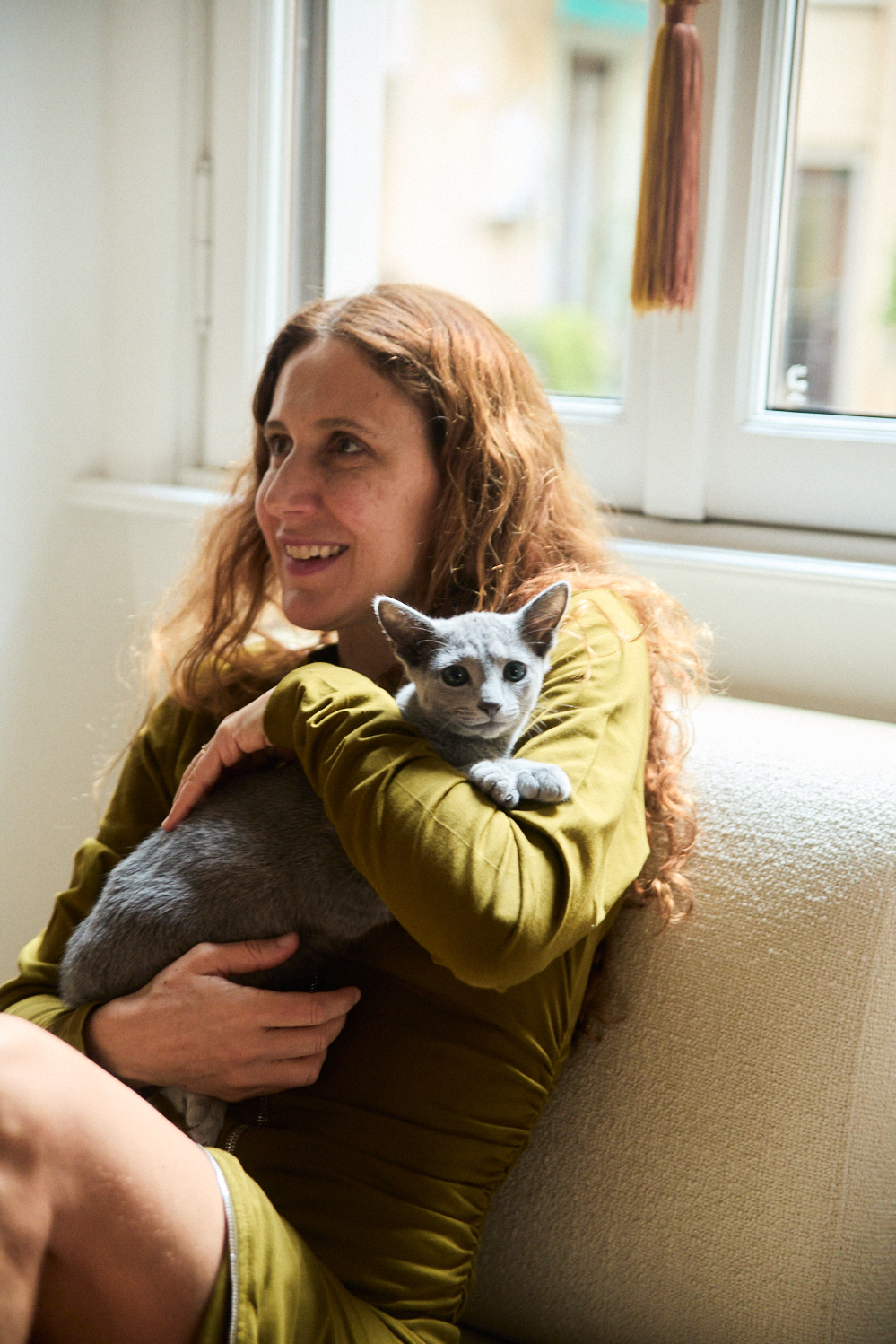
ValentinaAlmost everything at home is made by friends. They are all designers. I am the only Italian drinking soluble coffee, so the electric kettle is crucial, but it’s a George Sowden piece. Hmmm. It seems everything has a design value at my home. I walk through the house with wooden sandals that everyone hates me for. They have a very basic artisanal design, and I buy a new pair every year. Oh, maybe my cat, it really isn’t designed.

-
FvF
What is your preferred soundscape, at work, and at home?
ValentinaI am very curious about many artistic fields — like movies, design, art — and discover them myself. But with music, I am happy to be totally dependent on others. I had flatmates with great musical taste in the past, and now it’s my husband. He is great at selecting the right music, and I have no say. I am embarrassing — I can confuse Bob Dylan with the Rolling Stones. So I listen to fantastic music, but I am very passive.
In the studio, my team have an agreement that every day someone else is choosing the music. Just when I work, and write, on my own — when I need to properly focus, I love silence.


-
FvF
If you could have an undisturbed conversation over dinner with any creative figure, living or dead, from any discipline — but the strict rule was you could not talk about their professional output or achievements — who would you choose, and what would you talk about instead?
ValentinaI would probably go for Paolo Conte: He is an incredible singer. I consider him, and Fabrizio de André, and De Gregori, writers, more than just singers. I would love to speak to Paolo about relationships, and sex, and attraction — when I was a teenager and started listening to his music, his music had a very strong effect on me, as I was identifying with a lot of his female characters.
I finally found the man of my life — before I met a lot of the wrong kind. A lot of them are friends now. So I was lucky in some sort of way that it took me so long to find the best. Paolo was married for a long time, but I guess he has a lot of experience in sentimental relationships, had a lot of romantic encounters, so I guess we’d have a lot to talk about.


-
FvF
You have successfully navigated massive logistical, spatial, and conceptual challenges throughout your career. What, in a purely creative or strategic sense, still genuinely challenges or scares you?
ValentinaI’m always scared about the organisation, the logistics. Pieces might not arrive, and that can destroy a show.
Also, I must say I am getting old, and I was always full of doubt when I was younger and I’m much less now. I started being a curator relatively late in life, as I was a journalist before — which I think is also a form of curation. Luckily my previous bosses were also of this opinion, that you need to curate a good article.
I’ve always had a lot of good instinct, but when I started curating I often doubted whether people liked what I was doing. Luckily I don’t have that any longer.
For the show I did at Nilufar someone said “these things are so ugly” — that she was shaking looking at the ugliness. But I wasn’t affected by that at all. The pieces at Nilufar were so visionary. Design should never be a matter of personal taste. This is exactly what a curator should do: to evolve and change the aesthetics.


-
FvF
If your home could speak, what would it say about you?
ValentinaIt would definitely say that thank god I have a husband. I am so messy. I inherited that from my mother — she IS exactly like that. I leave piles, I forget things. I have this long corridor in my home — and I walk it maybe 200 times a day, as I always forget things on the other side. It often takes me 15 minutes to leave the house to collect everything I need, and I still forget things. (laughs)
I was crying so much when I was younger and lost things, but now I think “there’s another piece of me somewhere in the world”, and I like the idea.
So, well, if my furniture could talk, it would definitely make fun “of my funny corridor dance”.