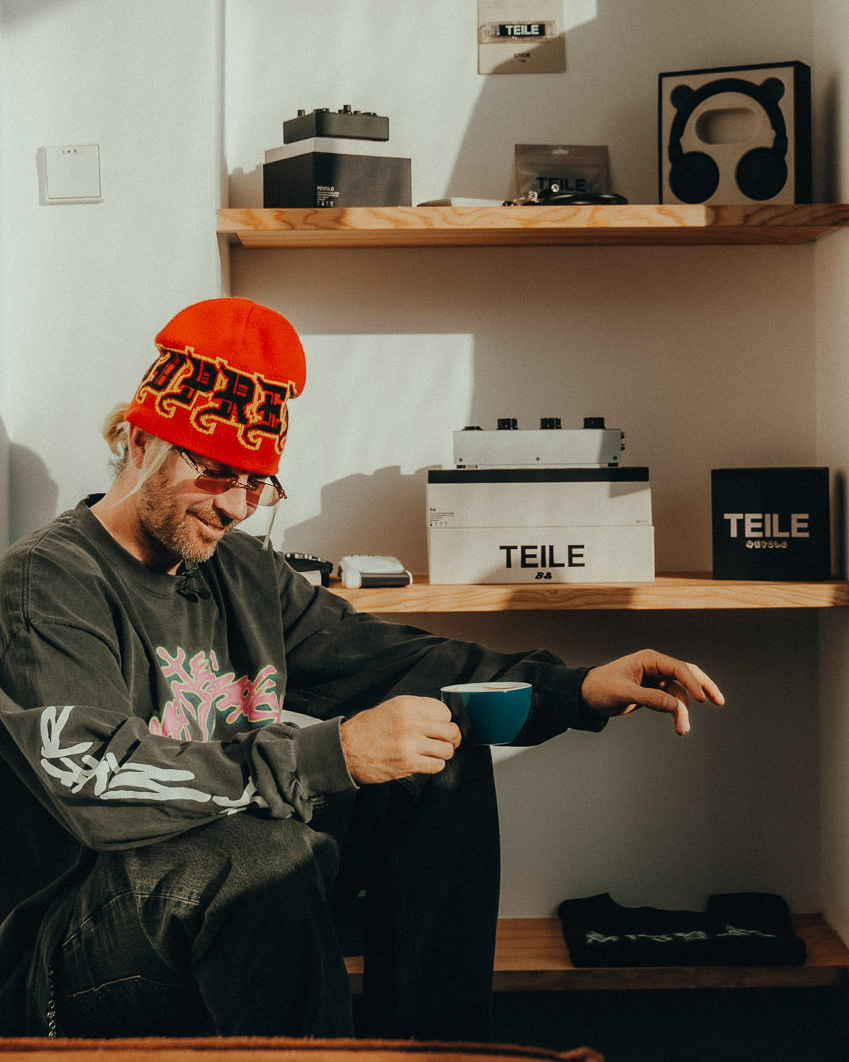
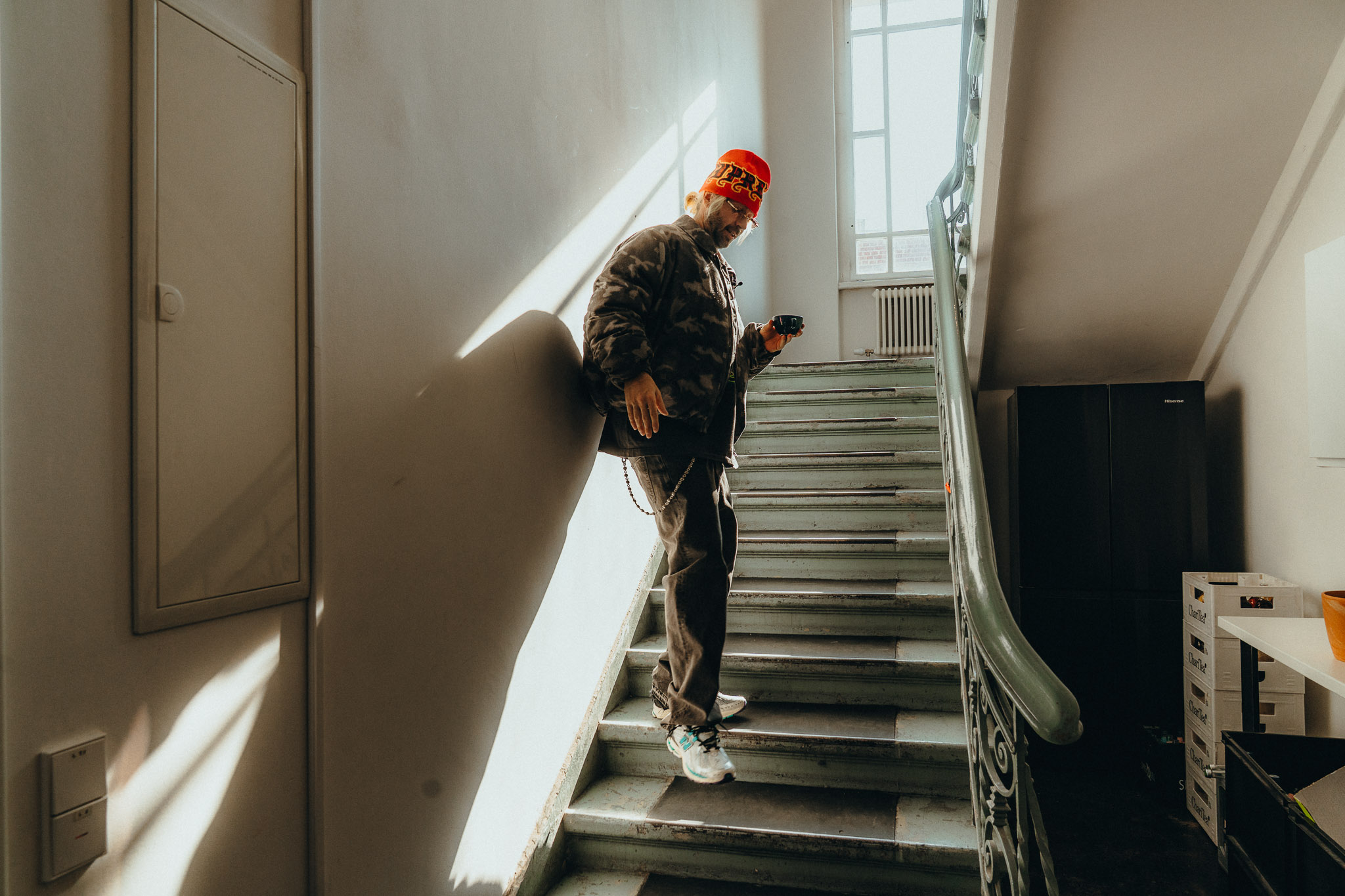
His humble style has become something of a trademark. With his long blond hair under his cap, his glasses, and his free-spirited vibe behind the decks, Rampa is one of the most respected and successful DJs and producers in electronic dance music. In 2009 he co-founded Keinemusik alongside &ME, Adam Port and Reznik — a DIY collective and label built on friendship and a shared musical vision, which by now plays major events from Tulum to Mumbai to New York City. His sound draws from house, Disco, techno and actually all kinds of electronic music but is mostly known for the Keinemusik wave sound, constantly evolving yet always rooted in a distinctly afrocentric, progressive sensibility.
Over the years, Rampa has released music on some of the most influential labels, pushed the DJ show productions to a new level. Beyond music, Rampa is the founder of TEILE, a company he launched in 2016 dedicated to designing and building analogue effects units for DJs and producers. In 2022 a whole new speaker segment started and was built in their own factory in south Germany. What started as a passion project tinkering with hardware has grown into a respected boutique operation. TEILE reflects the same independent, hands-on spirit that has defined Rampa’s entire career. And made him a sought-after collaboration partner for various fashion, lifestyle, and interior brands.
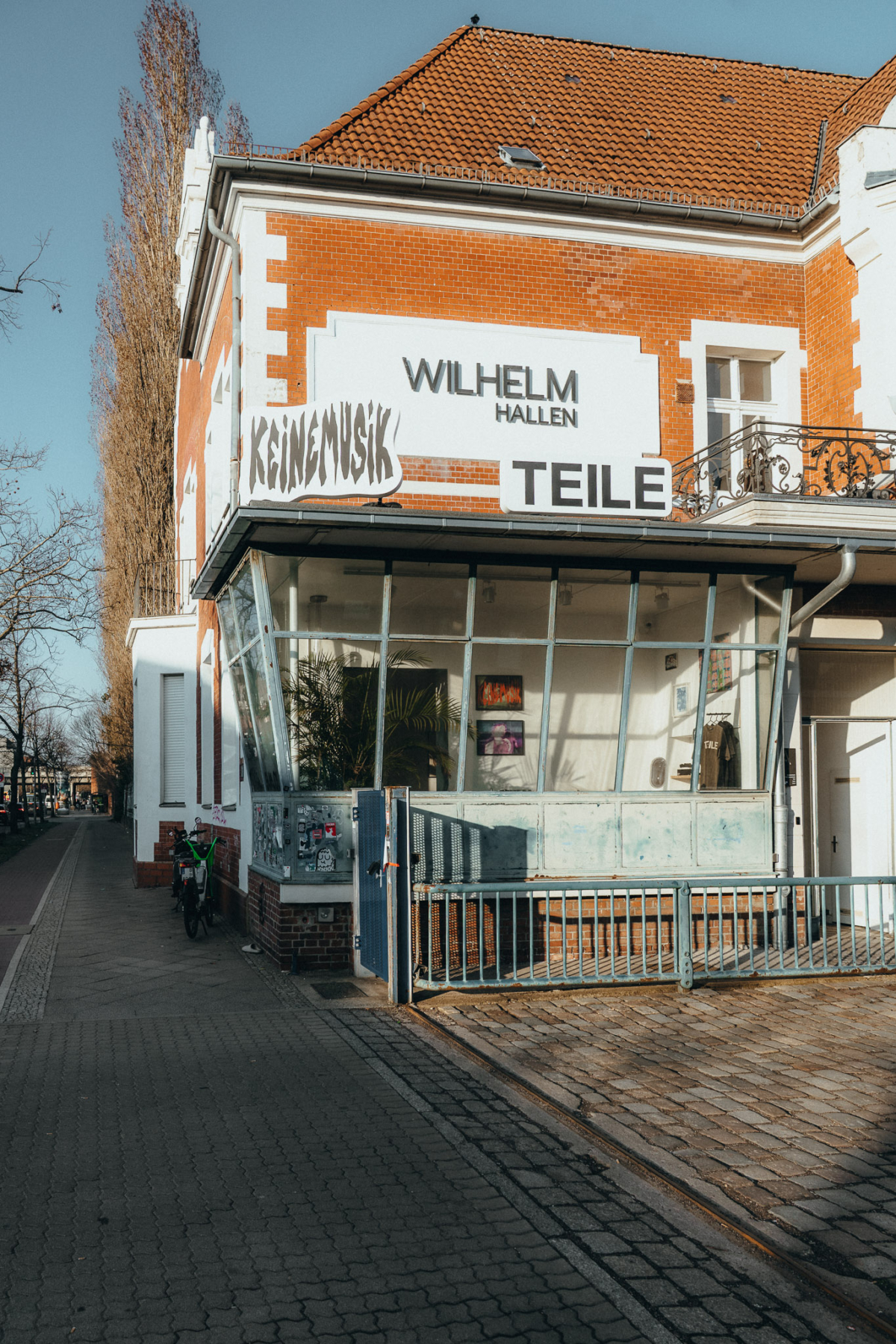
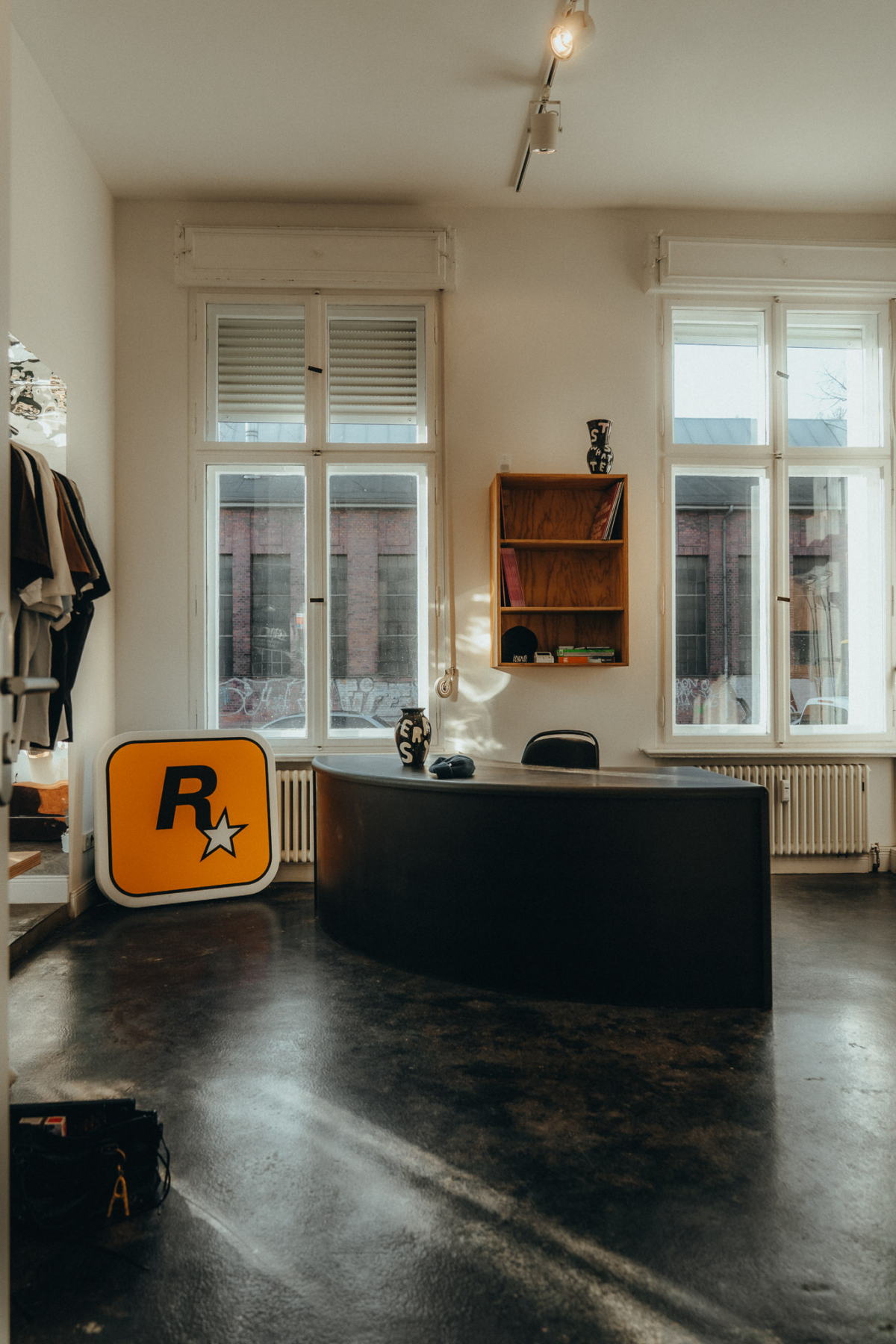
We met him in his studio in Berlin.
-
FvF
How much time do you actually spend here in the studio?
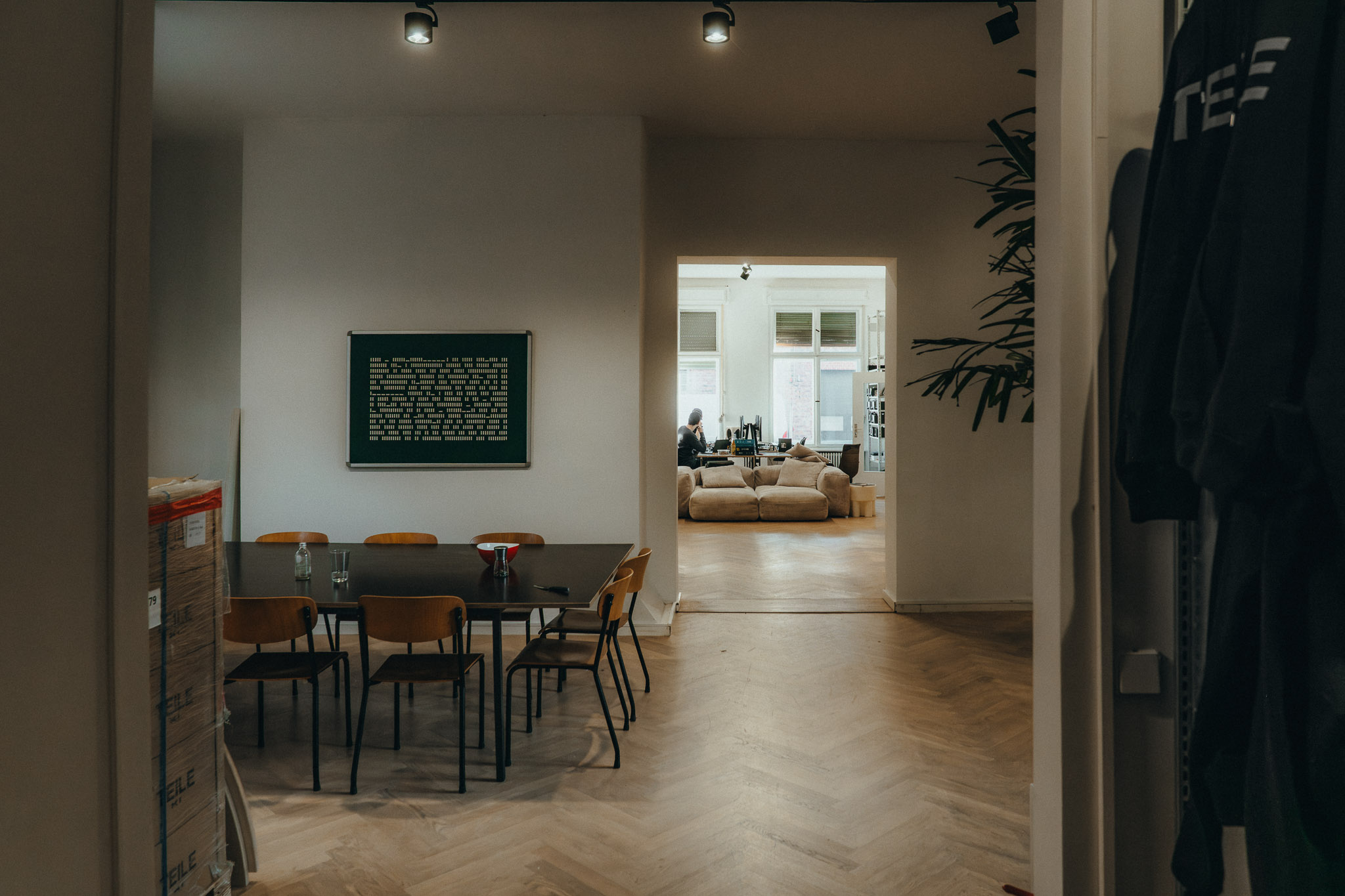
RampaNot that much, unfortunately. Since we are touring so many days a year. But it was always kind of our dream to build a place like this. The funny thing is, we finished this studio about five years ago—pretty much exactly at the moment when I left Berlin. So it was a bit ironic: we finally had the dream space, and then I wasn’t really here anymore. I think this is studio number five or six—we got kicked out of quite a few places before. Back in the days we had a really beautiful spot at Stadtbad Wedding. Some people might know it. I think now it’s been turned into apartments or something like that. Now I’m here maybe two or three weeks per year. For a couple of years now, I’ve been saying that I want to reduce touring and focus more on studio work — more engineering, more routine, going to bed earlier, waking up earlier — but it’s not so easy to change that.
For a couple of years now I’ve been saying that I want to reduce touring and focus more on studio work—more engineering, more routine, going to bed earlier, waking up earlier—but it’s not so easy to change that.


-
FvF
How many days per year are you on tour?
RampaI don’t know exactly, but probably most of the time. Because we also like to stay a little longer, and explore the places. More than 200 days for sure. 200 to 250.
-
FvF
What is the one thing that you are always bringing with you?
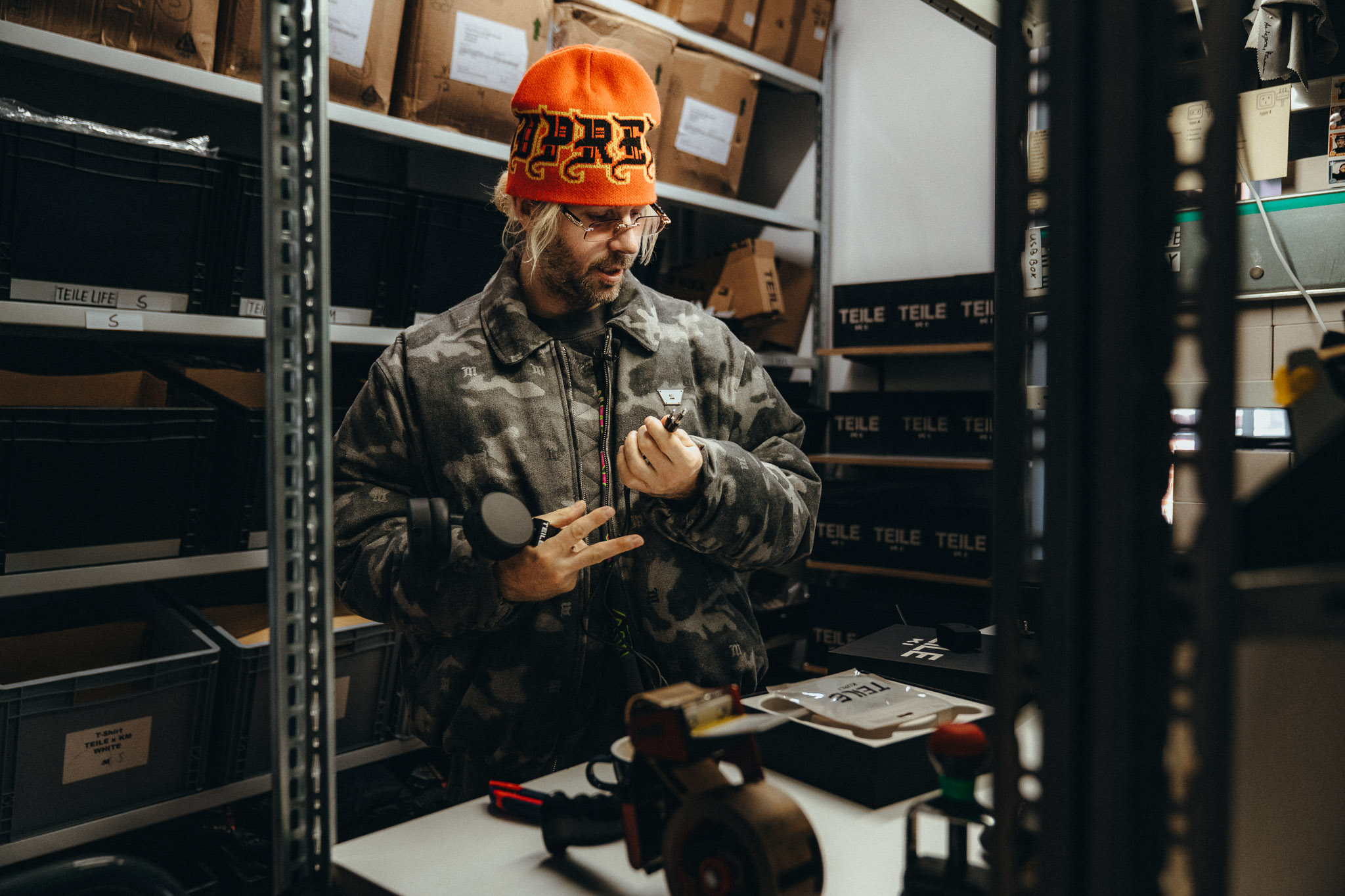
RampaThe music, the USB stick. Laptop, my passport. My phone. I actually travel extremely light.
-
FvF
How many hard drives?
RampaNone, it’s all in the cloud.

-
FvF
What is the biggest difference to the old Keinemusik Studio?
RampaThe size, obviously the equipment. The first studio was a shared studio with like two or three other friends. It was all in one: booking agency, label and studio, although there wasn’t much to manage. Our colleague Julia had to wear construction site headphones to be able to focus while we were making music. It was also more like an after hour hangout.


-
FvF
This is why this studio does not smell like a bar where people smoke.
RampaWell, we have a balcony, also I quit smoking three months ago.
-
FvF
Congrats, how does this go?
RampaI’m really good at quitting, but I’m also extremely good at starting again, so let’s see.



-
FvF
So when you are at the studio, I guess you can work in a really focused and structured way?
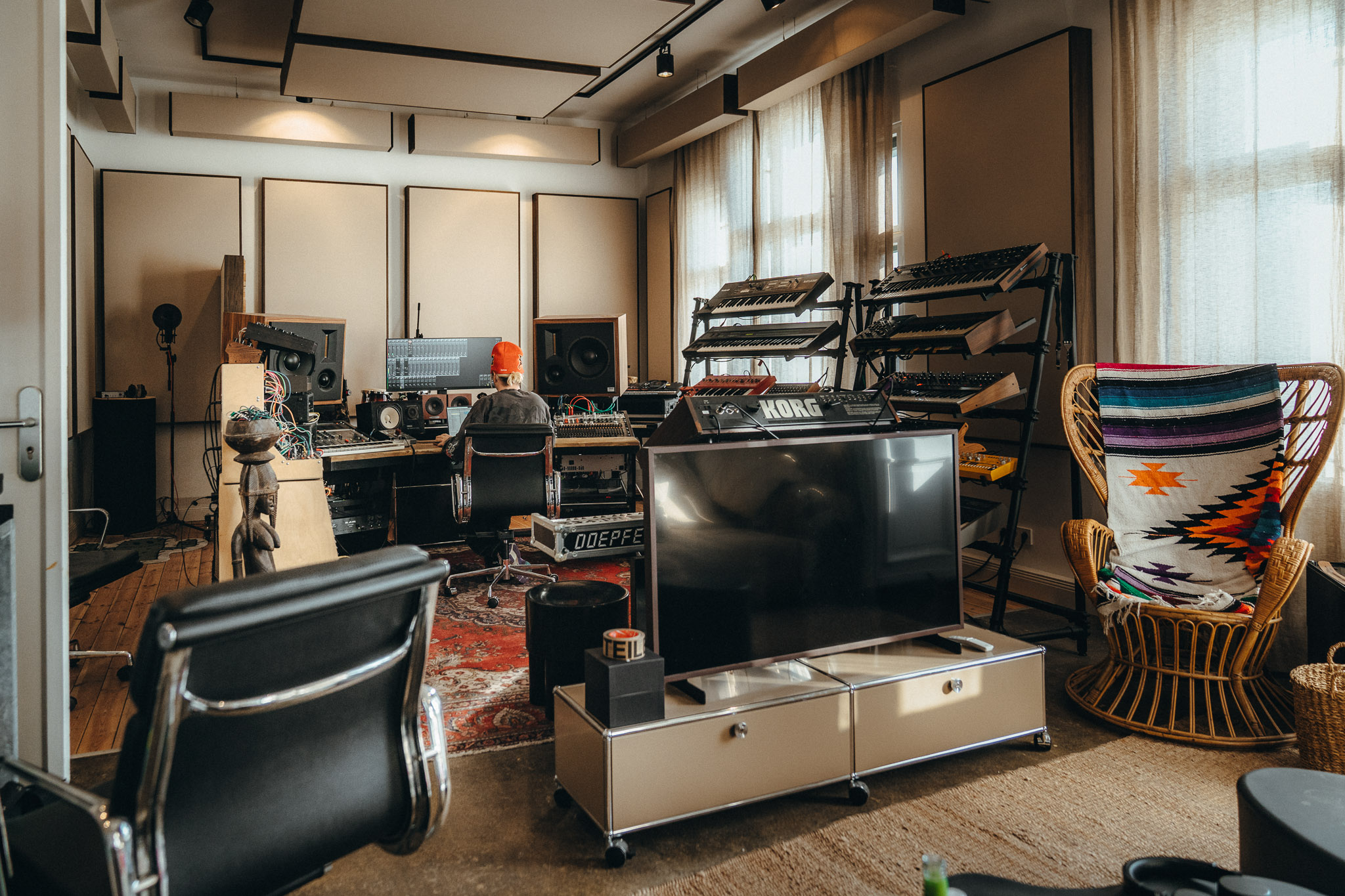
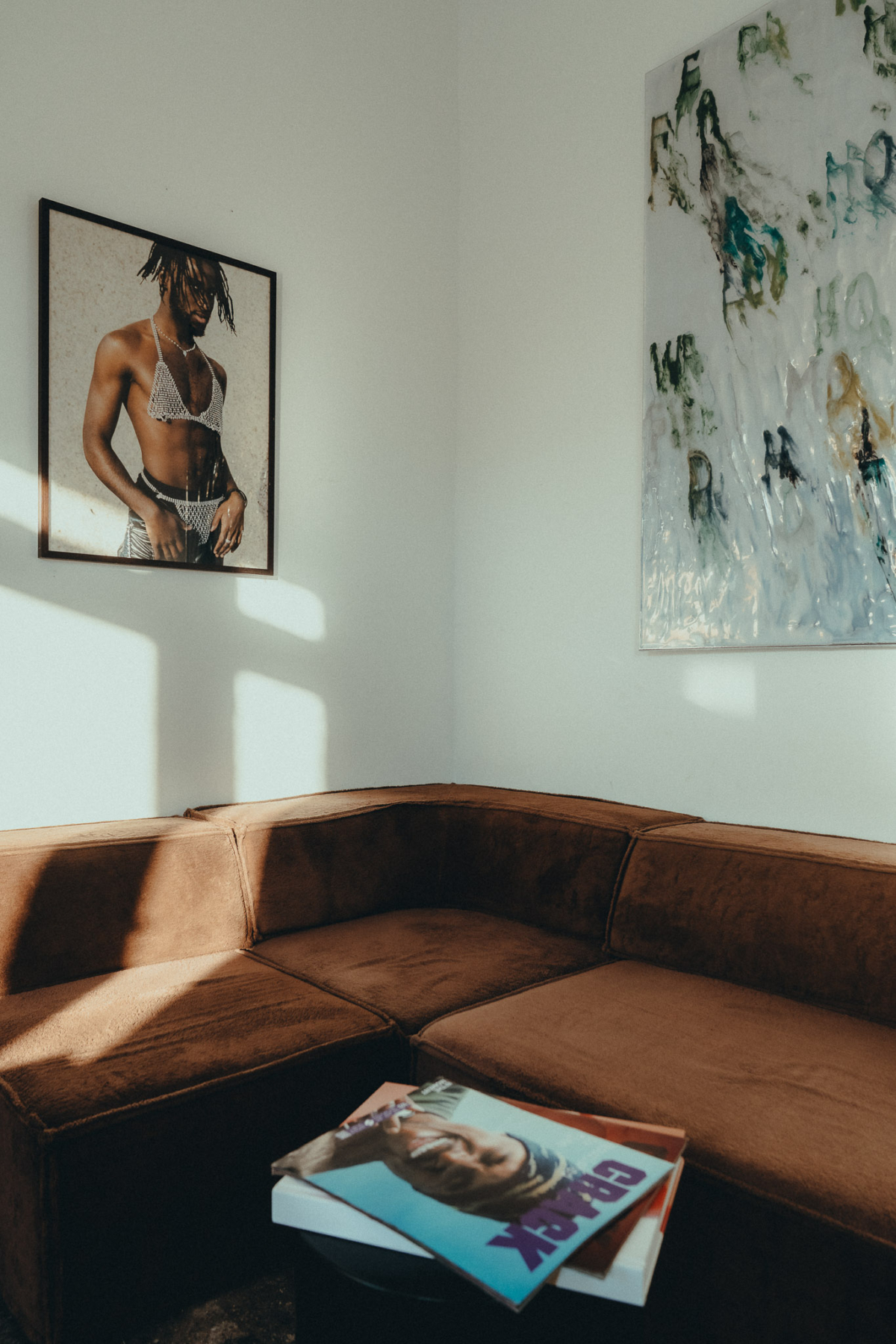
RampaWhen I arrive, I usually have a very long to-do list, because everything piles up while I’m on tour. So I try to get as much done as possible in a short time. At the same time, there’s a lot happening here. It’s not just the studio—we also have the label, the office, the store, graphic design, the TEILE setup. It’s almost like a small factory with different departments. So whenever I come here, there’s a lot of input. A lot of people, ideas, conversations. It’s very inspiring, but also a bit distracting sometimes. It’s a good kind of chaos. It keeps everything moving.
-
FvF
Do you need that chaos to be creative?
RampaI don’t think I could work in a completely isolated, super controlled environment. I need a certain level of exchange—people coming in, conversations, unexpected things happening. That’s often where ideas come from. This is why I produce a lot on the road.


-
FvF
What would you say is the most personal object in this studio?
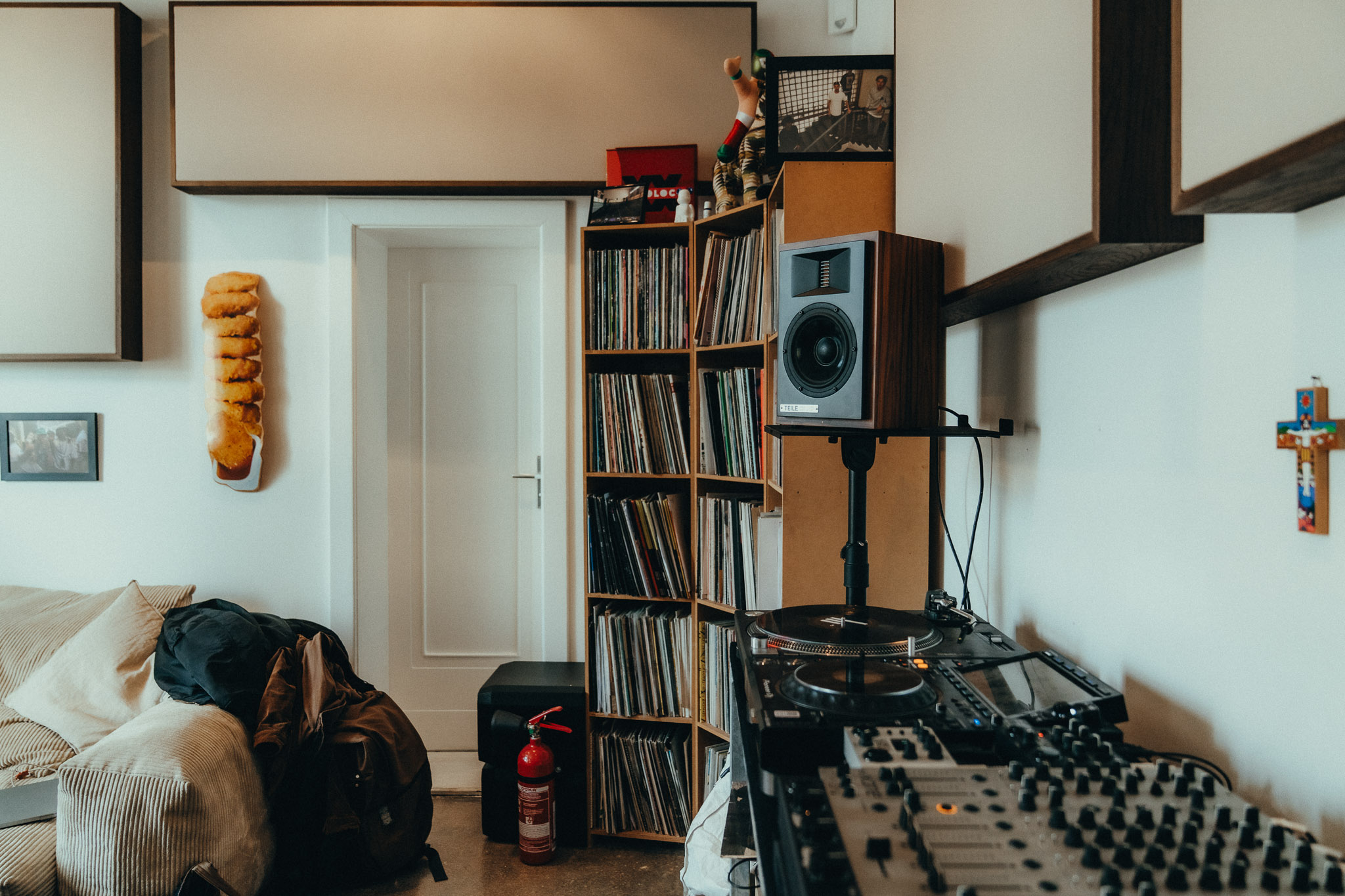
RampaI would say my drum set. Recently I went through some old documents and found the original receipt. It’s from July 24th, 1991 — that’s when I got my first drum set. It’s a Sonor Force 2000.
-
FvF
Do you still use it?
RampaNo, not really.
-
FvF
Why not?
RampaWell, it doesn’t sound that great—it’s a pretty average drum set. It’s more about what it represents. It was my first instrument, my first real connection to music. So I would never sell it. It’s too emotional. Wait! Actually we use the hi-hat a lot! Most of the songs from the early 2020s have some hats in it recorded from that very first hi-hat. That sounds raw and defines the groove of a song a lot maybe actually the most rhythmic defining thing in a song is actually the hats and shaker when I think about it. So yeah it’s still part of everything!


-
FvF
What is the most important object in this studio?
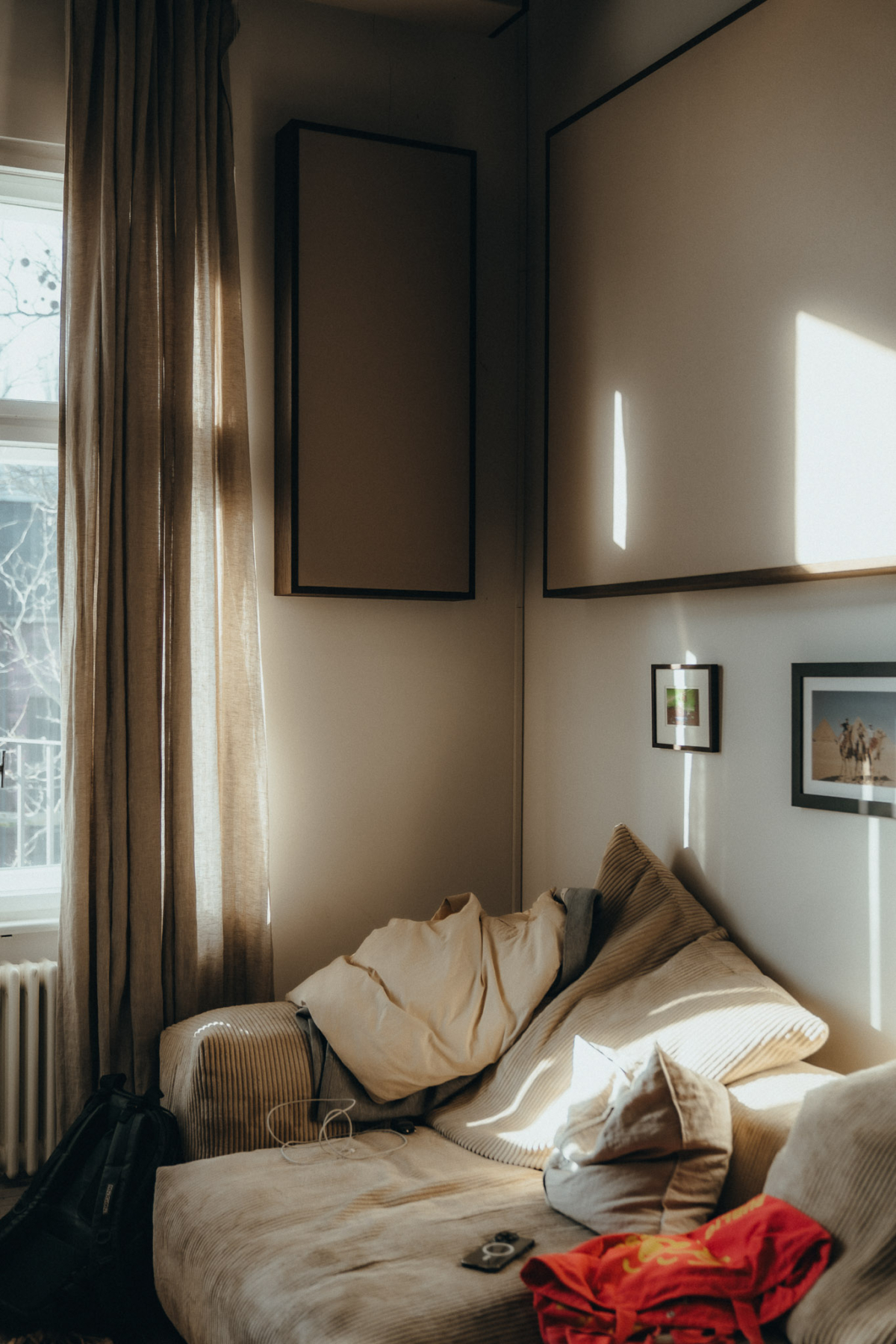
RampaI would say in general, the vibe is more important than anything else in a studio. Sometimes you don’t need much, only a laptop. This is why we kept it more like a living room.
-
FvF
The TEILE Speaker definitely wasn’t in the old Keinemusik studio …
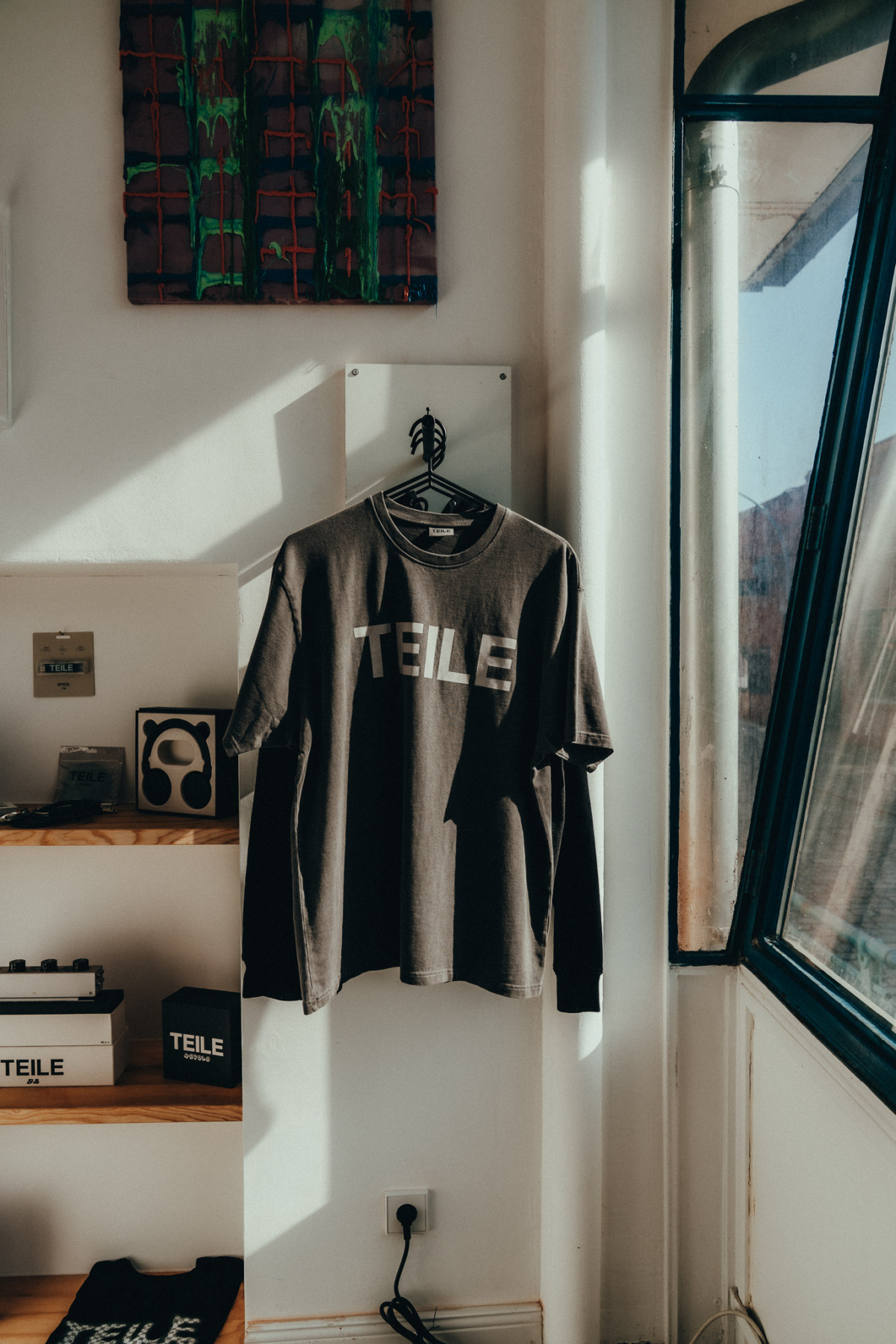
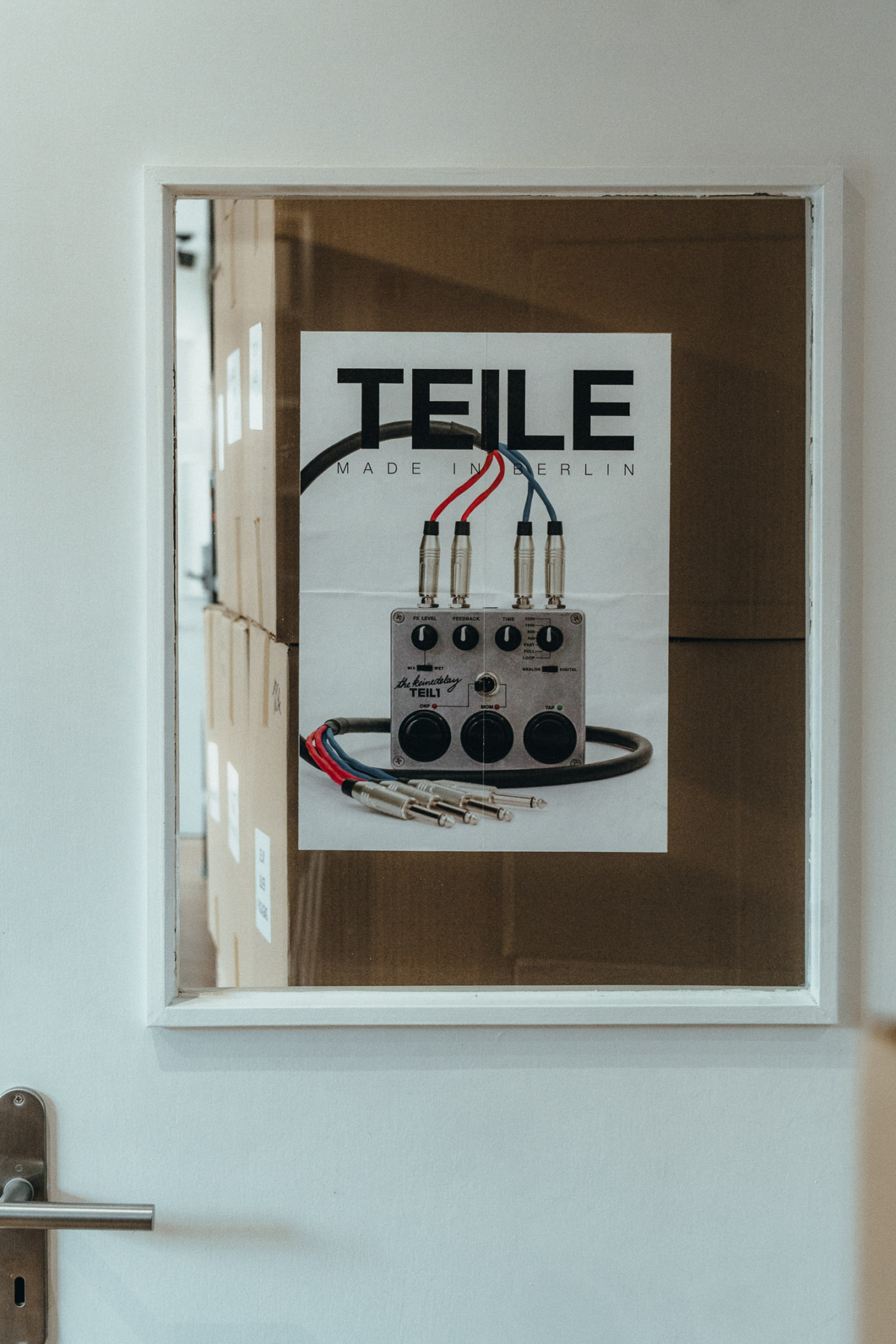
RampaExactly, this is our first studio monitor. I started the TEILE company around ten years ago. First, we modified effect pedals and stuff. The engineering part was always a passion of mine. Our first product was a delay. And when we needed new speakers for the studio, we thought we could also spend the money to develop our own one. It was fun to nerd out on that topic. We did it with Philip, a childhood friend of mine.
Back in the day as kids we already used to build the first speaker with leftover wood from his dad’s carpentry workshop. It’s next level. The company grew pretty fast; now we have something like 40 employees. A very motivated young team. I guess it’s fun to work here, because sometimes inspiring people like Thomas from Daft Punk come by and we have a lot cool collaborations going on and also it’s still this feeling of something new is growing here in the air.


-
FvF
Your success is really impressive – how did all this happen?
RampaI think we just did what we always did. We made a certain type of music. Obviously production skills shifted a little bit. But the vibe and energy is the same as in the beginning 15 years ago. There was always techno, there was always slow house. There was Disco. We enjoyed it all and kept doing our thing for years and years and years and I guess slowly the attention kind of gravitated more towards our sound. And then we had a few lucky shots with some bigger projects with GTA or Drake. It developed over time. Little steps.
-
FvF
How much of your success has to do with Berlin and its scene?
RampaBerlin has such a wide range of scenes and music. I mean, the playfulness back in the days for sure inspired us. Easy, vibey. It’s safe to say that Berlin influenced us more than we influenced Berlin and that we are grateful to have been at that place at that time.

-
FvF
Do you sometimes think about what will be the next thing? The kind of music people want next?
RampaI think about what’s the next thing that I want. They want everything and nothing. Some people will love it, some people will hate it, whatever it is. You get bored at some point of your own sound that is the same as with clothing style or your interior. But that’s also the fun part. You have to do it like you want it, because even if it doesn’t work out, you still like it.

-
FvF
Is it true that you don’t really organize your music before sets?
RampaYes, I have different folders but very messy ones. It’s so difficult to structure them. I tried a few times with tags, but I don’t know. It kinda worked like this the past years so I stick to the system of having no system.


-
FvF
Isn’t it exhausting when it’s always so crowded behind the decks and there’s so little space?
RampaThat’s fun. I mean, sometimes it’s too much. But it actually feels nice. I feel not 100% comfortable alone on stage in the spotlight.
-
FvF
And with all the phones in front of you directed at you.
RampaIt’s an interesting topic. A curse and a blessing at the same time. I guess we all agree that without phones it is way more joyful. People feel more free, focused and more in the present. But a dance floor is also a liberal space where the rules shouldn’t be too strict if you don’t hurt anyone else, then who am I to tell you what to do on the dance floor. If the phone makes you happy so be it … doesn’t mean that I like it … I’m pretty sure that at some point the next generation will bring an anti-phone movement and will not be so much into social media and stuff like this. The topic is much deeper than the dance floor … for example when I ask myself when was the last time I watched a movie without checking my phone? I don’t even remember and yeah I’d love to see a change and keep this topic open to find solutions at the same time I don’t know if I am the right artist to bring that change. I wish I had the ultimate answer to this!

-
FvF
What is your favorite DJ booth?
RampaIn general, I have a slight problem with the word favorite. Everything depends so much on the day and the situation, the time and the place. My favorite booth is the one that suits the purpose the most. I like it when it’s open and not too high. When our shows got bigger, we had to ask ourselves: How can we translate the feeling on a bigger scale? It’s very challenging. Most people don’t know that you face a very strict reality with regulations which are different in every country. And you wanna follow them because you wanna make sure everyone is safe.
-
FvF
How do you come up with stage design ideas like the Kloud?
RampaWe talk a lot about our ideas. Obviously, everybody kind of has to agree. The idea for the peace logo came up together with our friend Max Siedentopf, a really cool artist. And I thought, peace is a nice thing to promote. It developed slowly from a supermarket logo next to our apartment (laughs) we took the K and then added a peace hand to it. Max encouraged us to just use the peace logo and really promote it on a big scale as a big statement.

-
FvF
Are you currently working on any collaborations?
RampaThere are always collaborations happening. For example, I worked with Anima for his show at the sphere, we developed the controller. We built a few club sound systems but also stores, museums and restaurants. And then there are also collaborations on the design side, there is the couch project with Paulin, Paulin, Paulin. One with Audemars Piguet. Just did another pair of TEILE headphones with Chrome Hearts. And then just recently had this beautiful project “Warehouse Artefacts” for Art Basel with Julian Charrière and Thomas Bangalter.

-
FvF
I was wondering if you have someone in the team who is only responsible for all the guest list inquiries.
RampaWe don’t have a staff member who is solely responsible for the guest list, but at a certain level it does become a proper job. Not only writing people on the list but also dealing with the handling. People have questions, like “where is the entrance? Do I have to pick up a bracelet? Where?” The information must reach the door of the venues. So what we did is, we set up a new platform called FamFam, that handles all the details but also is used as a charity foundation. People on the guest list are asked to donate money, which we then give to local social projects. You don’t have to donate obviously, but you can. And I recommend it, if you wanna be on the guest list again hehe. We are now testing that platform with our team but it’s not exclusively for us, sooner rather than later, more artists or promoters can apply this for their shows or for their guest list management.

-
FvF
You don’t like the word favorite, but what was the most impressive moment in your career until now?
RampaIt’s a difficult question because it’s so blurry and everything happened so fast. I didn’t have much time to process all these things. Working with bigger artists and bigger projects might seem the most obvious answer. Maybe it should be. But the party we did in Ibiza on the beach Cala Gracioneta comes to my mind first. It was also an event for a local charity. Very intimate, one of the best parties ever. The Berlin show was special. It is hard to find the right words without sounding too cheesy. But to be back in Berlin on that scale was amazing and moving.


-
FvF
Are you a daytime or nighttime DJ?
RampaBack in the days, for sure nighttime. Nowadays I like daytime. I like sunsets. Having lunch, a few drinks. And then sunset, and you have a 50/50 option of, like, getting super fucked up or going home and sleep.
-
FvF
What’s your go-to strategy for calming down?
RampaI love skiing. Skiing is my favorite — here I use “favorite” once — thing to do. (laughs) It makes me so happy. It’s a certain rhythm. It’s very singular. It’s also always and still so impressive to be in the mountains and realize scale and dimensions.


-
FvF
Is it true that your mum came up with the name Keinemusik?
RampaYes, back in the days I was more into hard techno and she always was like: „This is only noise, this is keine Musik.“
-
FvF
Is she proud?
RampaI think now she is. Especially after I was invited to Harvard University to talk at the business school. I got kicked out of schools, and there was always a little drama about my career. I did not feel very comfortable speaking at Harvard, but I did it for my mum.