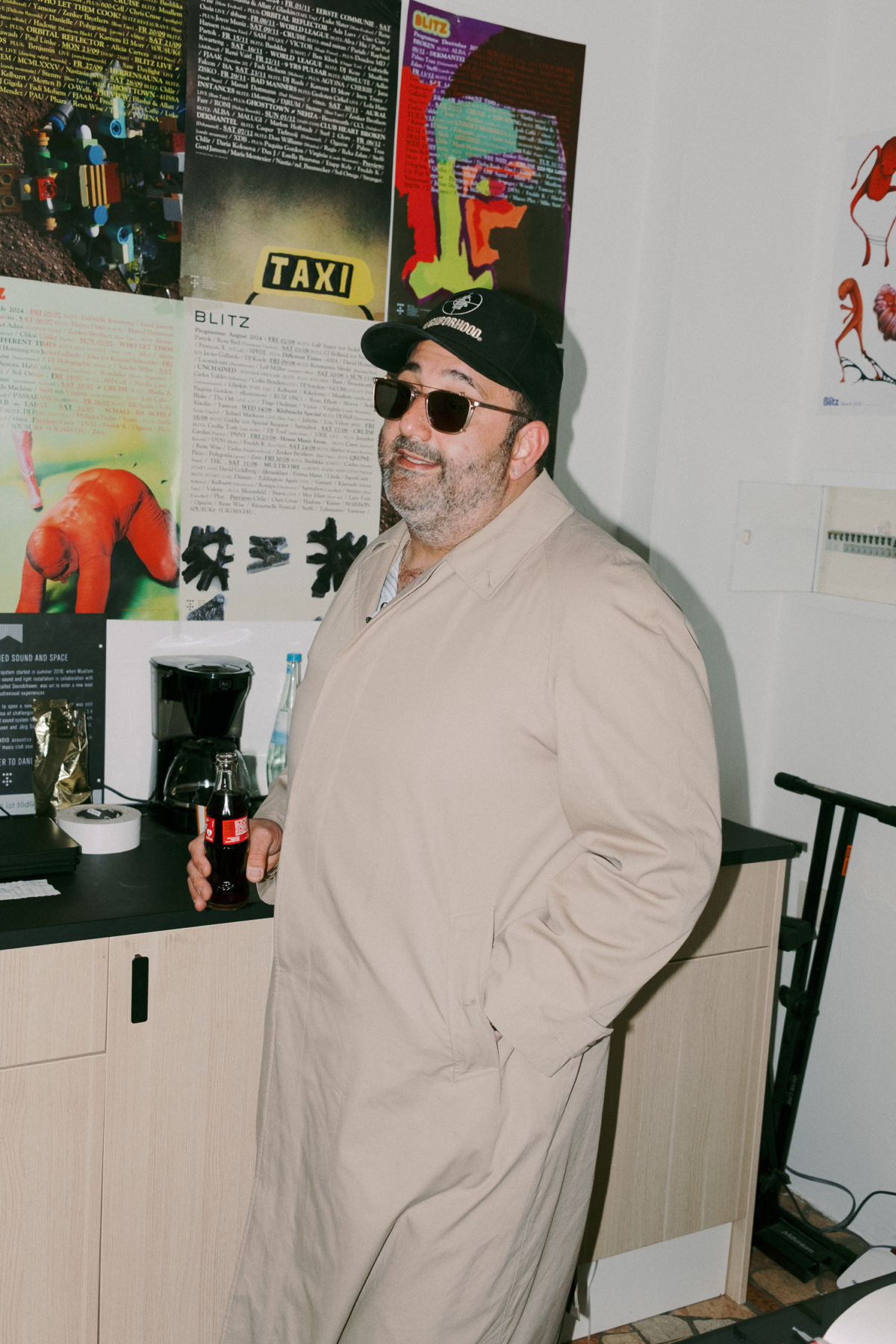
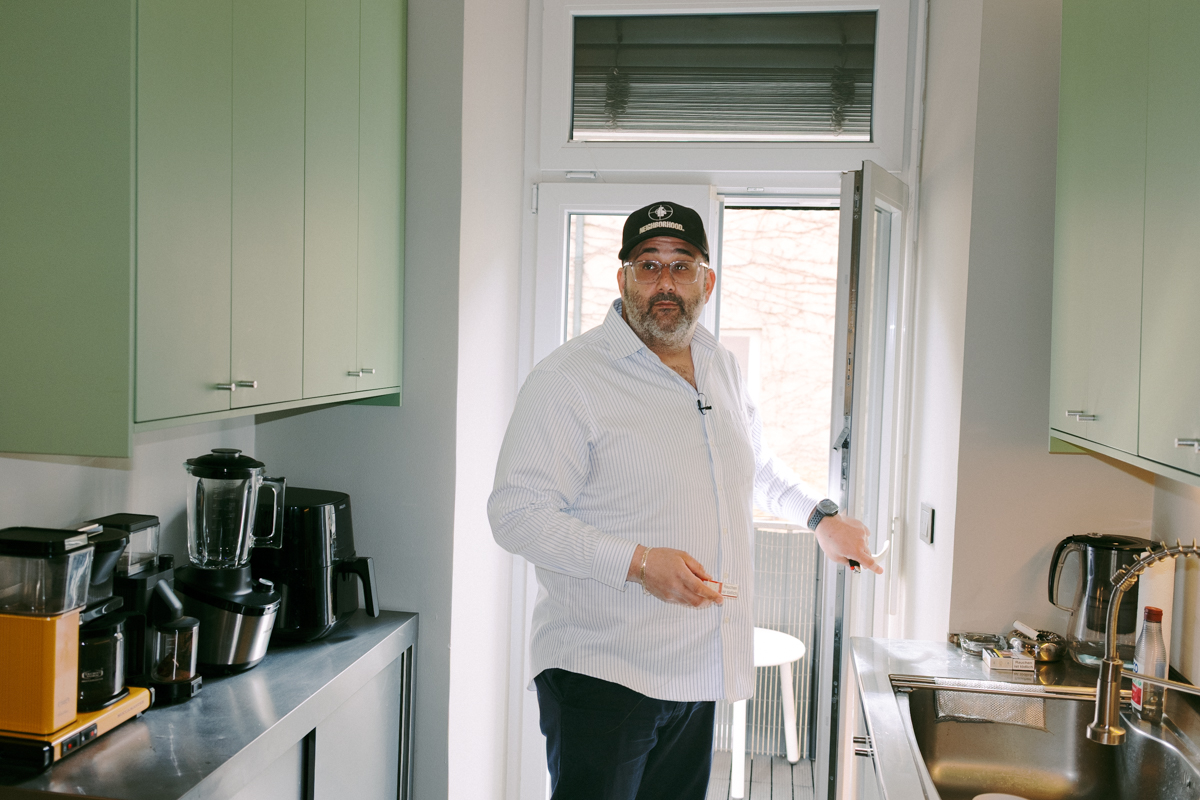
In the landscape of global nightlife, David Muallem is a figure defined by paradox: a craftsman of 110-decibel chaos who retreats into the hushed narration of nature documentaries; a veteran DJ who views himself not as an “alpha” leader, but as a servant to the room; and a visionary who built Munich’s Blitz Club as a sanctuary of counter-culture in a city often caricatured by its polish. For Muallem, the club is not merely a business or a party — it is a “temple” of high-fidelity sound where intimacy exists without commitment and where the grit of the underground provides a necessary friction against the mainstream. As Blitz approaches its final curtain in August 2026, we sit down with David to explore the internal world behind the decks. From the “sensory landscape” of his private life to the vulnerability required to play a “risky” track, we delve into the philosophy of a man who has spent decades proving that in the most abstract of art forms, love is the message and music is the only answer.


-
FvF
David, you’ve just finished a marathon set or closed a grueling weekend at Blitz. You step out of the club and into the Munich morning. The intense sonic focus shifts, and the adrenaline begins to fade. What is the very first, truly mundane thing you crave in that post-club space?
DavidI love to take a walk home. I do that a lot when I don’t play at Blitz, when I just have a night out. And I particularly love doing this in the summertime: It’s so beautiful when the sun rises. And I have a ritual, kind of: When I have a night out it’s hard for me to fall asleep – so I usually drink coffee, then go to bed and watch nature documentaries: Raw nature, animals, David Attenborough, super random stuff. I do that all the time, also when I travel. Recently I watched a documentary about Rhätische Bahn, and one about how roller coasters were invented – great stuff. It calms me down, and it definitely helps with falling asleep. Plus it expands your knowledge about the world.


-
FvF
Munich is often perceived as a polished, conservative city, yet you’ve created a space that is raw, inclusive, and uncompromising. Do you feel that the ‘friction’ of being in Munich is actually what gave Blitz its sharp edge? Could Blitz have existed with the same intensity in a ‘club-friendly’ city like Berlin?
DavidIn general it’s really hard to compare nightlife in different cities. Every city is different, the culture, the authorities. In Munich, the authorities are much stricter than in Berlin. But compared to the global scene, we’re very relaxed.
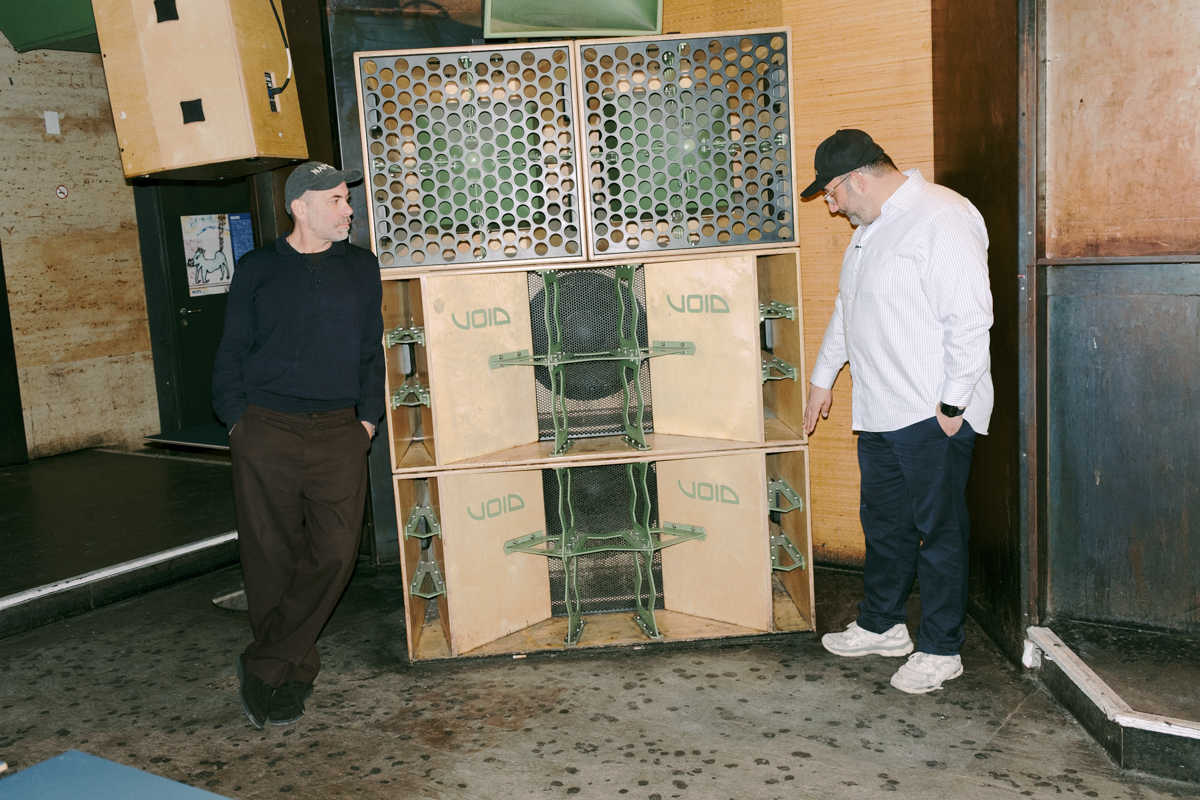
All the prejudices about Munich are true. I grew up here, and then left after high school, for over 10 years, as I almost felt imprisoned in the city. We all know the pros of Munich very well, too, though: It’s beautiful, the quality of life is great. So when I came back I had this vision to create a space here where I, myself, feel comfortable. I’m not sure if Blitz could have existed anywhere else, but Blitz, here in Munich, feels like proper counter-culture. What I’m doing is very valuable for the city, and the people living here. That’s one of my key motivations. If I was in Berlin, I would do something that a lot of people are trying to do. All this is mainstream culture in Berlin, attracting mainstream tourism, but here it’s a little more naive, a little less business-oriented. Being here, and countering the mainstream in Munich, is a great motivation, and gives me a good feeling, as I know why I’m doing this every single day. If I look at the past 20 years, I’m actually proud of myself, and the team I work with, of what we created, and the feedback from people from Berlin and other places saying things like “it’s crazy how nice everyone is”. That’s special, how welcome people feel. This is a space for people who might not fit into any other spaces in the city. For me, it doesn’t feel like living in Munich – I created my very own bubble.


-
FvF
The nightlife industry is built on ‘perceived’ connection, yet it can be incredibly isolating for those behind the decks or the business. How do you maintain deep, meaningful friendships when your peak working hours are when the rest of the world is asleep?
DavidIt’s really hard. During the week, my social life is reduced to a minimum level. Being social in nightlife is quite a big package, there’s so much chit-chat. A lot of people say nightclubs are superficial, but my experience is different: It’s intimacy without commitment. You meet random people and can have a deep conversation, a deep connection in a few minutes, from zero to one hundred. My closest friends are scattered all over the planet. I’m used to it now – as I’ve been living this life since I was a teenager, and I’m 47 now. A lot of my social environment live the same life. I have a child – and during the weekend I don’t have as much time, but during the week I am way more flexible. It all has pros and cons, but yes, it’s quite demanding. And it’s certainly not for everyone.
Music is what keeps me going. I’m not your typical gastronomy guy. When I opened Blitz, the energy came from being a DJ, and I created the space from that perspective. If it wouldn’t be about music and only about partying, I wouldn’t have the motivation to keep going.

-
FvF
In your private living space, what is one object that is absolutely essential to your well-being but has nothing to do with music or nightlife? What is the story behind this ‘silent’ anchor?
DavidMy sofa. And my books. Not one specific one, all of them together. I don’t like to single out things. My focus shifts and changes all the time, and my books, all of them, are a big source of inspiration. I own a lot of coffee table books, and literature, of course. I used to read a lot of literature, not so much in recent years though. I’m working on a new club project now, so going through different aesthetics, doing research with books, gives me a lot of inspiration. Blitz’s entire aesthetic came from a chair I saw in a book. The materials, the haptics, they all came from the “Standard SP chair” by Jean Prouvé in its original colour scheme, with the metal feet in the back and the wooden seating board. Steel, wood, and the colour green – that’s Blitz.


-
FvF
When you are not at the club or in the studio, what is the ‘sensory landscape’ you seek?
DavidI definitely love silence. There is hearing fatigue – when you work in the studio, and the music is too loud, or when you’re in a club with a bad sound system. So silence is very important, also for my mind. I love to have no input at all. I read a book about this recently, as nowadays, in the digital age, we never not have input. This goes way further than sound. You constantly listen to music, or somebody calls you, or you play a game, read the news. You’re never just with yourself. But being with yourself, and only with yourself, is crucial for your wellbeing. So after reading the book, I took a walk for three hours, just by myself. And after about half an hour, I realised that I’m quite a cool guy, that I actually really enjoy hanging out with myself. I try to incorporate that into my everyday life now.
I listen to all kinds of music – from Burt Bacharach to classical to jazz. Most of the music I listen to is essential black music, that’s what I grew up with. Some genres I don’t touch that often, but I strongly believe that every approach to music exists in a positive and in a negative way. There’s always a good taste and a bad taste version. Whatever approach you take, there’s always these two options. If you take German Schlager, for example: The German version of the French chanson – which is a very beautiful genre. But German Schlager is one of the worst. There are German Schlager songs that are very beautiful though – they are extremely rare, but they exist. There’s this one song, from the tv show “Tausend Jahre sind ein Tag” – a beautifully animated and designed show, with great visual language. And the intro song by Udo Jürgens is great. I’m always suspicious of DJs in the electronic music realm that only listen to electronic music. If you really love music, you can’t confine yourself to just one genre. There is an analytical way to work with music, yes, but it doesn’t make sense on an emotional level. Music is the most abstract form of art – it’s moving air. And because it’s so abstract, it touches us on a deep, emotional level.


-
FvF
What about lighting?
DavidWe always have discussions about lighting with my girlfriend. I care about ambience, creating a space that feels comfortable. I love lamps, I love interior design per se. At home, I don’t like ceiling lamps at all. Most of the time I like floor or table lights. On the ceiling I only have light bulbs in pretty sockets, but most of the time they are off.


-
FvF
And what’s your preferred olfactory experience?
DavidI love incense, and I use it a lot. And candles. I have these incense sticks my girlfriend gave me, and they smell fantastic, but I have no idea what they are exactly – I’m not going deep here, I just love a good scent. The scent of figs is beautiful. When it comes to perfume, I am using this particular one until it disappears from the market. It’s called Tam Dao by Diptyque. I’ve been using this for over 15 years, and I have no intentions to ever change it.


-
FvF
As AI begins to touch music production and even ‘intelligent’ lighting/sound systems, do you see these tools as potential collaborators in the club environment, or do they threaten the ‘human’ soul and unpredictability that makes a night at Blitz unique?
DavidI think the same is true for all kinds of technology: It always depends on how we use it. There’s huge potential. We all use AI all the time these days. When it comes to music production – I don’t see any value in creating a song with it, as it doesn’t have the same emotional quality. There is a lot of positive potential – not like social media, which I think is just bad, extremely bad for society as a whole. The tools are so poorly designed, creating anxiety, and constant comparison. That’s just awful.
There’s one thing about the social aspect of music culture, partying, enjoying music together. The concept is simple: It’s dancing together. Just these two words. Socially listening to music is not something you do alone. I think people always want inter-human connection, where they meet, can touch each other. If you have a sound system that scans the room and plays the music differently depending on the room, that’s a wonderful thing. I haven’t come across an intelligent light system that replaces a light jockey though. It can’t read the emotions in a room. But when it comes to ads and ticket sales, AI does a brilliant job.


-
FvF
DJing requires a certain ‘alpha’ energy to lead a room, yet the best sets often come from a place of deep emotional vulnerability. Where do you allow yourself to be vulnerable? Is it in the selection of a ‘risky’ track, or is that vulnerability something you guard closely for your private life?
DavidThis “alpha” energy is the single most counter-productive way to play a good set. This whole ego-centric attitude that social media has produced around the DJ being in the centre of it all is bullshit. The DJ is the servant. It’s fundamentally not about you. A lot of DJs get that wrong. You are the least important person in the room. And by being vulnerable you serve the context way better. The most important skill of a DJ is to be empathetic. Read the context, have an emotional connection and intuitively know what the room needs next. Playing risky tracks is very important. And some of my favorite DJs fail all the time. By definition, taking risks comes with failing. And without accepting failure you don’t have a chance to win.


-
FvF
Since the announcement that Blitz will close its current chapter in August 2026, the energy in the room has inevitably shifted. As someone who carefully curates ‘moments,’ how are you programming this final year? Is it a retrospective of the artists who built the club’s sound, or are you pushing even harder into the unknown to ensure the ‘last dance’ isn’t a funeral, but a transformation?
DavidIt’s actually both. When you run a club like Blitz over a decade in a city like Munich, there are some decisions in programming that have a pragmatic background. If I programmed the club to always satisfy myself, I would be bankrupt in 12 weeks. But it’s not about myself – I have to work in a range. So basically when we started programming the “end”, I was saying “I just want to treat myself, and the club” – so now there’s no more pragmatism. We invited a lot of people that have already played here, but also people that I’m a huge fan of that have never played at Blitz before. This is what touches me the most right now in electronic music. I feel most of the time when I please myself it also pleases others. I wanted every single booking to have value on a deeper emotional level.


-
FvF
Every DJ has a record that they love deeply but have never played at Blitz because the room is too perfect or the stakes are too high. What is that record for you?
DavidIt’s not one – there are many. Most of the time my favorite records are the ones that are hardest to play. People on the floor want to move, and are probably not up for going really deep. It’s a general thing, it sometimes takes me years to find the right moment. At Heideglühen in Berlin, the dancefloor – designed with a lot of love and care – is created for deephouse. It’s the one and only floor where putting in too much energy doesn’t work. So the deeper you go, the better it works for Heideglühen.


-
FvF
If you could have a long dinner with any creative figure under the rule that you cannot talk about their work, who would it be and what would you discuss?
DavidLarry David, for sure. And we’d talk about life, just random stuff, definitely not work. I just love his approach, he’s the funniest comedian around. I love everything he’s done so far. And maybe Fran Lebovitz. I read almost all of her books, and she’s pretty much a comedian, too, just talking about life in a very smart and very funny way. Both of them together at one dinner table would be quite legendary. We definitely wouldn’t talk about work, just about life. Their ways of thinking are just great.


-
FvF
If the floor at Blitz could talk—the actual physical wood and steel that has absorbed years of vibrations and sweat—what is one truth it would tell about you that the dancers never see? What does it know about your moments of doubt or your quietest breakthroughs during a 5 AM set?
DavidI’m used to people who only know me in the nightlife context having a very clear image of myself: David is loud, funny, extroverted. They often don’t believe that I also have a very introverted side, that a very thoughtful and quiet David exists, too. Being out there so much takes a lot of energy, so I need introspection to recharge. Sometimes people can even get irritated, properly angry, when you don’t fulfill their expectations. But hey: We need surprises, a lot of them actually. Apart from that: Love is the message. Music is the answer. Every dancer knows that.